China Stone Crusher Plant: A Comprehensive Guide to Minimum Order Quantity (MOQ) and Procurement
The global construction and mining industries are fundamentally dependent on aggregates, the processed materials derived from crushing rocks, stones, and minerals. At the heart of this supply chain lies the stone crusher plant—a sophisticated assembly of machinery designed to reduce large rocks into various sizes of gravel, sand, or dust. China has emerged as the undisputed global leader in manufacturing these plants, offering an unparalleled combination of scale, technology variety, and cost competitiveness. For international buyers, understanding the intricacies of procurement, particularly the Minimum Order Quantity (MOQ), is crucial for a successful investment.
This article provides a detailed, professional analysis of China’s stone crusher plant industry, with a focused examination of MOQ policies, factors influencing them, and strategic guidance for buyers.
1. The Chinese Stone Crusher Plant Industry Landscape
China’s dominance in this sector is not accidental. It is built upon decades of industrial development, massive domestic demand from infrastructure projects, and a mature manufacturing ecosystem.
- Manufacturing Hubs: Key production clusters are located in Zhengzhou (Henan Province), Shanghai, Shandong, and Guangdong. Regions like Henan host entire industrial parks dedicated to mining and construction machinery.
- Technology Spectrum: Chinese manufacturers cater to all market segments:
- High-End & OEM Suppliers: Companies like SBM (Shibang Industry & Technology Group) and Liming Heavy Industry offer technology comparable to Western brands, with advanced automation, R&D investment, and global service networks.
- Mid-Range Value Leaders: This vast segment provides robust, reliable plants with good performance-to-price ratios, suitable for most quarrying and contracting work.
- Economy Segment: Smaller workshops produce simpler plants or individual crushers (like jaw crushers), often with lower specifications but at very competitive prices.
- Product Range: Buyers can source everything from individual crushers (Jaw, Cone, Impact, Hammer) to fully integrated stationary plants (100-1000+ TPH), highly mobile portable crushers on tires or tracks (popular for contract crushing), and even environmentally focused solutions like dust suppression systems and noise enclosures.
2. Decoding Minimum Order Quantity (MOQ) for Stone Crusher Plants
Unlike commodity goods, MOQ for capital-intensive machinery like stone crusher plants is a flexible concept influenced by multiple variables.
A. Standard MOQ Frameworks: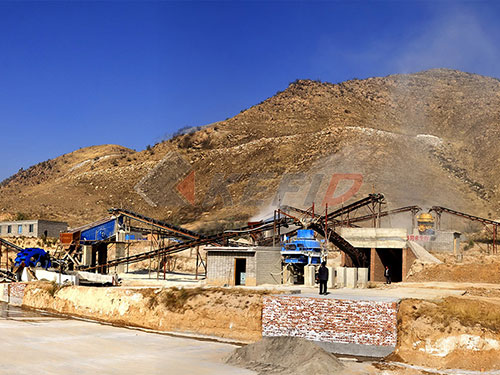
- By Unit: For complete plants or major primary crushers (e.g., a large jaw crusher or cone crusher), the MOQ is typically 1 unit. Given the high value (from tens of thousands to millions of USD per plant), manufacturers do not require multiple unit purchases for standard models.
- By Container Load (for Components/Spare Parts): This is a more common application of MOQ. Manufacturers may set an MOQ for wear parts (mantles, concaves,jaw plates), screens meshes , or smaller components like motors and bearings equivalent to one 20-foot or 40-foot container. This optimizes their logistics and makes shipping cost-effective.
- By Value: Some suppliers may specify a minimum monetary value for an order, especially when mixing different spare parts or ordering a plant with specific customizations.
B. Key Factors Influencing MOQ Negotiations:
- Plant Configuration & Customization:
- Standard Design: A pre-designed 200 TPH stationary plant will have a clear price and an MOQ of 1.
- Fully Customized Design: If a buyer requires specific steel grades,branded electrical components (Siemens,SCHNEIDER), unique layout adaptations ,or complex dust control systems,the manufacturer might impose higher costs or be less flexible on terms due to dedicated engineering resources required.
- Supplier Tier:
- Large Brand-Name Factories: Often have stricter policies but offer turnkey solutions,warranty,and after-sales support.They prioritize high-value projects.
- Medium-Sized Manufacturers: Offer greater flexibility on MOQ and are more open to negotiation on configuration.They represent the “sweet spot” for many buyers balancing quality and cost.
- Small Workshops/Trading Companies: May offer the lowest prices on simple plants or individual machines but often lack in-house engineering capability.Quality control can be inconsistent,and after-sales service may be limited.
- Payment Terms: Offering favorable terms like a higher deposit (e.g., 40% T/T upfront) or Letter of Credit can provide leverage to negotiate on MOQ or price.Buyers seeking extended credit will have less negotiating power.
3. Strategic Procurement Guide for International Buyers
Phase 1: Pre-Procurement Preparation
- Define precise technical requirements: Required capacity (TPH), feed size,input material hardness(abrasive index), final product gradation,and site conditions(e.g.,need for mobility).
- Determine budget range inclusive of shipping,inspection ,insurance,and installation costs(FOB,CIF,DAP terms).
- Research potential suppliers thoroughly.Use platforms like Made-in-China.com but verify legitimacy through business licenses(BV check),factory audit reports( e.g.,from SGS ),and visiting trade shows(bauma CHINA).
Phase 2: Supplier Engagement & Quotation
- Contact multiple suppliers(3-5 shortlisted)with detailed RFQs(Request for Quotation).
- Scrutinize quotations: Ensure they include full technical specifications,brand details of key components(electric motors,bearings ),packaging details,warranty period(typically 12 months for machinery ),and delivery timeline.
- Explicitly discuss MOQ: Ask,”What is your policy?” Clarify if it applies to the whole plant order or future spare parts procurement.
Phase 3: Due Diligence & Contract Finalization
- Insist on a factory inspection,either in-person or via third-party/video audit.Focus on workshop quality control,welding techniques,and assembly processes.
- Request customer references from similar regions/climates .
- Ensure the contract clearly specifies:
- 1.The exact machinery list with model numbers .
- 2.Technical performance guarantees(e.g.,capacity within +/-5%).
- 3.Warranty terms and scope of after-sales support(remote guidance ,onsite engineer dispatch cost structure).
- 4.Payment schedule tied to milestones(e.g.,30% deposit ,60% against copy of shipping documents ,10% after successful commissioning).
- 5.Acceptance criteria .
Phase 4: Logistics & After-Sales
- Plan logistics carefully.Larger plants are shipped knocked-down(KD)in multiple containers.Consider hiring an independent inspection companyfor pre-shipment inspection(PSI).
- Establish clear communication channels with supplier’s after-sales team.Discuss training provisionsfor your operators .
Plan spare parts inventory based on critical wear parts list provided by manufacturer .
4. Challenges & Risk Mitigation
| Challenge |
Risk Mitigation Strategy |
| Quality Inconsistency |
Conduct rigorous factory audits.Inspect material certificatesfor steel .Define precise acceptance tests in contract . |
| Hidden Costs |
Get detailed CIF/DAP quotes .Clarify responsibilitiesfor export clearance,inland China transport .Budget forexpediting services . |
| Communication Barriers |
Employ bilingual project managers.Use clear diagramsand technical specifications.Emphasize written confirmationof all changes . |
| Intellectual Property Concerns |
Sign NDAswith suppliers.For highly custom designs ,consider phased disclosureof information .Work with reputable firms . |
| After-Sales Service Gaps |
Negotiate comprehensive service agreements.Include remote diagnostic support.Stock critical spares locally.Consider third-party service contracts in your region . |
Conclusion
Procuring a stone crusher plant from China presents a significant opportunity for cost savingsand access to diverse technologies.The conceptof Minimum Order Quantityis generally straightforwardfor complete plants but requires careful attentionfor spare partsand customized solutions.The keyto success lies not merelyin findingthe lowest pricebutin identifyinga capableand reliable partner through thorough due diligence .
The dynamic Chinese market offers solutions forevery project scaleand budget,butthe buyer’s expertisein specifying requirements,navigating negotiations,and planningfor long-term operational support ultimately determines the returnon this critical capital investment.A strategic,focused procurement approach transforms potential challengesintoa competitive advantage,granting access toworld-class equipmentthat drives productivityfor years to come
