China’s Slag Crusher Plant Industry: A Pillar of Sustainable Industrial Development
Introduction
Within the vast landscape of China’s industrial machinery sector, slag crusher plant factories represent a critical and dynamic niche. These facilities are not merely producers of crushing equipment; they are enablers of a national circular economy strategy, transforming industrial waste into valuable resources. The industry has evolved from manufacturing basic hammer mills to designing sophisticated, integrated processing systems that cater to global sustainability demands. This article provides a detailed, professional, and objective examination of China’s slag crusher plant factories, exploring their technological evolution, market structure, operational strengths, challenges, and future trajectory.
1. The Product and Its Significance
Slag is a by-product of metallurgical processes—primarily from blast furnaces (ironmaking) and steel furnaces. Historically treated as waste, slag possesses significant potential as a secondary raw material for construction (cement additive, aggregate), road building, and soil amendment. A slag crusher plant is a complete processing system designed to reduce large chunks of slag into specified granular sizes. A typical plant includes:
- Primary Crusher: Often a jaw crusher or gyratory crusher for initial size reduction.
- Secondary and Tertiary Crushers: Cone crushers or impact crushers for further refinement.
- Screening Equipment: Vibrating screens to separate material by size.
- Conveying Systems: Belt conveyors for material transfer between stages.
- Dust Suppression/Collection Systems: Essential for environmental compliance.
- Control Systems: PLC-based automation for efficient operation.
Chinese factories produce these plants in stationary, portable (wheeled), and mobile (track-mounted) configurations to suit diverse project scales and sites.
2. Evolution and Technological Capabilities
The development of China’s slag crusher industry mirrors the nation’s industrial growth.
- Early Phase (1980s-1990s): Focused on imitation and basic manufacturing. Factories produced robust but relatively simple machines with an emphasis on low cost and meeting domestic demand from state-owned steel mills.
- Growth Phase (2000s-2010s): Driven by explosive infrastructure development and rising environmental awareness. Factories invested in R&D, began adopting international standards (like CE certification), and integrated technologies from global partners. The focus shifted towards improving efficiency, wear resistance (using better alloys for liners and hammers), and system reliability.
- Current State-of-the-Art (2020s-Present): Leading Chinese factories now compete on innovation. Key technological advancements include:
- Intelligent Control Systems: IoT-enabled monitoring allows for remote diagnostics, predictive maintenance (tracking wear parts), and optimized crushing parameters for energy savings.
- Hybrid Power Options: Plants designed with electric/diesel dual-power systems for flexibility in remote locations or areas with unstable grid power.
- Advanced Design Software: Use of DEM (Discrete Element Method) simulation and finite element analysis (FEA) to optimize crushing chamber geometry and structural integrity before physical manufacturing.
- Focus on Turnkey Solutions: Modern factories act as solution providers, offering not just hardware but also site planning, installation supervision, operator training, and after-sales service packages.
3. Market Structure and Key Factory Clusters
The industry is stratified into distinct tiers:
- Tier 1: Large-Scale Integrated Giants: Companies like SBM Machinery (Shibang Industry & Technology Group), Liming Heavy Industry (LZZG), and Shanghai Zenith Minerals. They possess full-cycle capabilities from R&D to global sales networks. They operate large-scale manufacturing bases (often in Shanghai, Zhengzhou, or Jiangsu) and are prominent in international export markets.
- Tier 2: Specialized Mid-Sized Enterprises: Numerous factories specialize in specific crusher types or highly customized plants. They are often clustered in industrial hubs like Zhengzhou (Henan province—known as “the machinery capital”), Liyang (Jiangsu), or Shandong province. They compete on deep technical expertise in specific applications, agility, and cost-effectiveness.
- Tier 3: Regional Small-Scale Manufacturers: These cater to local or regional markets with standardized or less complex equipment. Price is their primary competitive tool.
This ecosystem creates a resilient supply chain where components like motors, bearings, steel castings, and hydraulic parts are readily available from specialized suppliers within these clusters.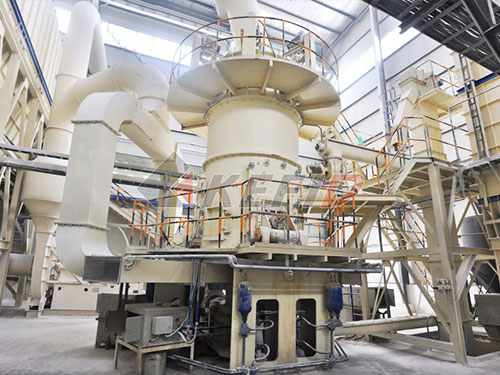
4. Operational Strengths Driving Global Competitiveness
China’s dominance in this field is underpinned by several key factors:
- Complete Industrial Chain: Proximity to raw material suppliers (steel), component manufacturers, and end-users (steel mills & construction firms) creates unparalleled supply chain efficiency and cost control.
- Scale Economics & Manufacturing Prowess: Massive production capacity allows for bulk procurement of materials and distributed fixed costs across many units. Advanced CNC machining centers, automated welding robots, and standardized assembly lines ensure consistent quality at competitive prices.
- Responsive Engineering & Customization: Chinese factories are renowned for their flexibility in adapting base designs to specific customer requirements regarding feed size, output size gradation capacity (>500 TPH plants are common), site constraints etc., often with shorter lead times than Western counterparts
- Government Policy Support: The industry aligns perfectly with national policies like “Made in China 2025” promoting advanced equipment manufacturing ,and the “Dual Carbon Goals” (Carbon Peak, Carbon Neutrality) which incentivize waste-to-resource technologies through various subsidies & favorable regulations.
5. Objective Challenges & Critical Perspectives
Despite its strengths the industry faces significant hurdles that must be acknowledged:
- Intellectual Property Perception Gap: While leading companies invest heavily in original R&D historical issues with design imitation have created lingering skepticism in some international markets affecting brand premium
- Quality Inconsistency Across the Spectrum. The vast difference between top-tier & lower-tier manufacturers can confuse buyers Unregulated small workshops may use inferior materials compromising long-term reliability & skewing market perceptions
- Intense Domestic Competition. Price wars within China can compress profit margins potentially impacting investment sustainability into next-generation R&D for some players
- After-Sales Service Logistics. For global clients timely provision spare parts & technical support remains challenging despite improvements Establishing reliable service networks outside Asia requires continuous investment & localization
*. Rising Domestic Costs.** Increasing labor environmental compliance raw material energy costs gradually erode the traditional low-cost advantage pushing factories towards higher value-added segments
6 Future Outlook Strategic Directions
The trajectory points towards consolidation sophistication further globalization
*. Green Intelligent Manufacturing. Factories will increasingly adopt solar power smart grids AI-driven optimization real-time emission monitoring within their own production processes aligning product message with operational practice
*. Deep Circular Economy Integration.* Future plants will be designed as material recovery hubs not just crushers incorporating sorting cleaning even preliminary beneficiation processes handle diverse industrial solid wastes beyond traditional metallurgical slag
. Service Model Innovation. Shift from one-time equipment sales toward long-term service contracts including remote operation performance guarantees based on output metrics per ton processed
*. Strategic Internationalization.** Leading firms will continue establishing overseas regional assembly centers warehouses joint ventures mitigate logistical risks better serve local markets
Conclusion
China’s slag crusher plant factories form a mature vital component global mining construction equipment sector They have successfully transitioned from being low-cost manufacturers becoming sources innovative reliable technology crucial for sustainable resource management worldwide Their continued success however hinges navigating complex challenges maintaining rigorous quality standards protecting intellectual property enhancing global service capabilities As world intensifies focus urban mining industrial symbiosis role these Chinese factories providing practical scalable solutions valorize waste streams will only grow more significant reflecting broader shift towards circular industrial model which China positioned be central player
