The Bedrock of Infrastructure: A Deep Dive into China’s Quarry Ballast Crushing Equipment Wholesale Sector

The global construction and railway industries are fundamentally dependent on a simple yet critical material: quarry ballast. This coarse aggregate, composed of crushed hard rock, forms the foundational layer for railway tracks, providing drainage, stability, and load distribution. The production of high-quality, specification-grade ballast is a precise science, reliant on robust and efficient crushing equipment. At the heart of this global supply chain lies China’s massive industrial ecosystem, which has positioned itself as a dominant force in the manufacturing and wholesale of quarry ballast crushing equipment. This article provides a comprehensive analysis of this sector, exploring its market structure, key technological offerings, the wholesale landscape, and critical considerations for international buyers.

1. The Central Role of Ballast and the Crushing Process

Before delving into the equipment market, it is essential to understand why specialized machinery is required. Quarry ballast is not merely crushed rock; it must meet stringent geometric and mechanical specifications. Particles must be angular to interlock effectively, have a specific size gradation (typically between 25mm and 50mm), be clean and free of fine dust, and possess high resistance to abrasion and weathering.

The production process to achieve this involves several stages:

  • Primary Crushing: Large blasted rocks (feed size can be up to 1 meter or more) are reduced to smaller pieces, typically under 200-250mm. Jaw crushers are the undisputed workhorses for this stage due to their ability to handle large feed sizes and their rugged simplicity.
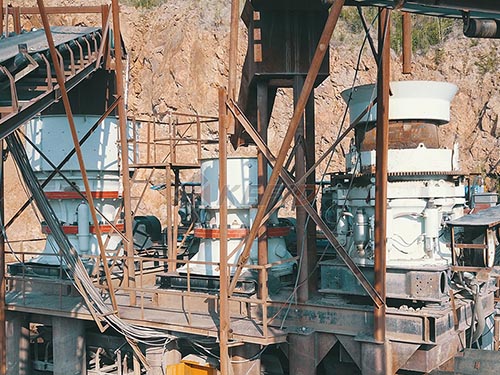
  • Secondary Crushing: The output from the primary crusher is further reduced to produce a wider range of particle sizes. Cone crushers are predominantly used here because they provide excellent control over product shape and size, producing the interlocking angular particles vital for ballast.
  • Screening: This is arguably as important as crushing. Vibrating screens separate the crushed material into specific size fractions. The target ballast size is separated out, while oversized material is recirculated back to the secondary crusher (in a closed-circuit loop).
  • Tertiary Crushing (if needed): For finer control or to produce other saleable products from by-products, tertiary impact crushers or vertical shaft impactors (VSIs) may be used. VSIs are particularly valued for their ability to enhance particle shape (cubicity).

This multi-stage process necessitates a coordinated “crushing circuit,” not just a single machine.

2. The Chinese Market Landscape: A Hub of Manufacturing Prowess

China’s ascendancy in heavy machinery manufacturing is no accident. It is the result of decades of industrial policy investment, massive domestic demand from its own infrastructure boom, and a relentless drive for technological improvement.

Key Characteristics of the Market:

  • Scale and Capacity: China hosts hundreds of manufacturers ranging from state-owned behemoths like SANY Group and Liugong Machinery to highly agile private enterprises such as Shanghai Zenith Minerals Co., Ltd., Liming Heavy Industry (LIMING), and Henan Hongxing Mining Machinery (HXJQ). This scale creates immense production capacity and competitive pressure.
  • Integrated Supply Chains: Manufacturers benefit from localized supply chains for key components like steel castings, hydraulic systems, motors, and bearings. This vertical integration reduces costs and lead times significantly compared to many Western counterparts.
  • Technological Evolution: While once perceived as producers of low-cost clones, leading Chinese manufacturers have invested heavily in R&D. Modern Chinese crushing equipment often incorporates advanced automation systems (like intelligent cavity control in cone crushers), hydraulic adjustment mechanisms for quick setting changes, and energy-efficient designs compliant with international standards.

3. An Overview of Wholesalers in the Supply Chain

In this context,”wholesalers” can refer to several types of entities operating between manufacturers and end-users:

  • Direct Sales Arms of Manufacturers: Many large manufacturers sell directly to large domestic quarries or international clients through their own export departments.
  • Specialized Heavy Equipment Distributors: These are classic wholesalers who purchase equipment in bulk from one or multiple manufacturers at preferential prices. They maintain inventory or arrange direct shipping from the factory floor.
  • Trading Companies: Particularly prominent in international trade hubs like Shanghai, Guangzhou, or Hong Kong; these companies act as intermediaries. They handle all aspects of export—sourcing from certified factories quality control logistics customs clearance—for a fee making them a one-stop shop for foreign buyers unfamiliar with the Chinese market
  • Online B2B Platforms: Giants like Alibaba.com Made-in-China.com have become de facto wholesale marketplaces connecting thousands small medium-sized manufacturers with global buyers

Value Proposition Wholesalers Offer:
For an international quarry operator or contractor sourcing from China wholesalers provide invaluable services:

  1. Sourcing & Vetting: They pre-qualify reliable manufacturers saving buyers from navigating complex landscape
  2. Price Negotiation: Bulk purchasing power allows them secure better prices than individual buyer might
    3 Logistics Expertise Managing shipment heavy machinery requires specialized knowledge which wholesalers possess
    4 After-Sales Support Coordination While direct manufacturer support may be limited geographically some wholesalers act regional hubs spare parts technical documentation

4 Critical Considerations When Sourcing From Chinese Wholesalers

While opportunities abound due diligence paramount ensure successful procurementChina Quarry Ballast Crushing Equipment Wholesalers
A Quality Compliance Standards
Not all equipment created equal It imperative verify that machinery meets relevant international standards ISO CE certification minimum requirement structural integrity electrical safety Buyers should insist detailed specification sheets factory test reports High quality ballast requires precise control over product shape demanding robust cone crushers high efficiency screens

B Total Cost Ownership TCO) vs Initial Price
The allure low sticker price strong but true cost includes shipping import duties installation maintenance spare parts availability downtime Reliable wholesalers transparent about these ancillary costs Investing slightly more reputable supplier known durability can yield significant long term savings through higher uptime better product yieldChina Quarry Ballast Crushing Equipment Wholesalers

C Intellectual Property Authenticity
Market still contains companies producing imitation designs patented technologies Reputable wholesalers will proudly represent original manufacturers provide authentic documentation Working with established well reviewed suppliers platform mitigates risk

D After Sales Service Technical Support
This arguably greatest challenge buying heavy machinery abroad Before committing buyer must have clear understanding

  • Availability spare parts lead times
  • Provision technical drawings schematics
  • Access remote technical support via phone video call
  • Availability on site engineers installation commissioning training
    Leading Chinese manufacturers now establishing service centers key regions Africa Southeast Asia Middle East but coverage not universal

E Customization Capability
Standard models may not suit every quarrys specific rock type hardness required capacity Top tier manufacturers wholesalers offer customizations feed hoppers conveyor configurations screen media types even control system languages

Conclusion: A Maturing Global Powerhouse

China’s position as leading wholesale hub quarry ballast crushing equipment undeniable It offers unparalleled choice competitive pricing increasingly sophisticated technology The wholesale sector plays crucial role bridging gap between global demand Chinese supply However success this endeavor hinges on strategic approach Buyers must look beyond initial price conduct rigorous due diligence on both manufacturer intermediary partner focus total cost ownership long term reliability By doing so they can effectively leverage power Chinese manufacturing build solid foundation—quite literally—for their infrastructure projects worldwide harnessing bedrock innovation efficiency defines this dynamic sector

Lorem ipsum dolor sit amet, consectetur adipisicing elit. Consectetur sequi saepe ut sunt eveniet perferendis excepturi, iste obcaecati. Qui tempore hic sed quia soluta obcaecati vel.