China’s Quarry Ballast Crushing Equipment Factory: The Engine of Global Infrastructure
The relentless pace of global infrastructure development, from high-speed rail networks to sprawling port expansions and highway megaprojects, rests upon a fundamental, often overlooked component: high-quality railway ballast. This layer of crushed stone provides drainage, stability, and load distribution for tracks. At the heart of producing this essential material lies a specialized and critical industry: China’s quarry ballast crushing equipment factories. These facilities are not merely manufacturing plants; they are sophisticated hubs of engineering innovation, scale, and strategic importance, powering both domestic ambitions and international projects.
The Core Mission: From Raw Rock to Precision-Graded Aggregate
The primary function of a ballast crushing equipment factory in China is to design, engineer, and manufacture the complete set of machinery that transforms blasted raw rock (typically granite, basalt, or limestone) into precisely graded, angular crushed stone that meets stringent railway specifications (e.g., AREMA, GB/T standards). The process demands equipment capable of exceptional durability, high throughput, and consistent product shaping.
A typical production line engineered by these factories includes:
- Primary Crushing: Utilizing robust jaw crushers or gyratory crushers to reduce large quarry-run stones (often up to 1-1.5 meters in size) into manageable 200-300mm fragments. Chinese manufacturers have excelled in producing heavy-duty jaw crushers with advanced kinematics and high manganese steel castings for extended wear life.
- Secondary and Tertiary Crushing: This stage is crucial for achieving the desired particle shape and size reduction. Cone crushers are the workhorses here. Leading Chinese factories produce multi-cylinder hydraulic cone crushers (HPY series, etc.) that offer automated control over crushing parameters, ensuring optimal particle shape—angular for interlocking stability rather than rounded. Impact crushers may also be used for softer rock.
- Screening: Efficient vibrating screens (linear, circular, or multi-frequency) separate the crushed material into specific size fractions. Ballast requires tight gradation control (e.g., 25-50mm or 30-60mm), rejecting both oversize material (returned for recrushing) and undersize fines (“quarry dust”).
- Material Handling: A network of belt conveyors, feeders, and transfer stations designed for heavy loads and abrasive materials connects the entire system. Modern factories focus on designing enclosed or dust-suppressed conveying systems.
- Control Systems: The heart of a modern plant is its integrated Programmable Logic Controller (PLC) system. Chinese equipment now commonly features fully automated control cabins allowing for remote monitoring, real-time adjustment of crusher settings, production data logging, and predictive maintenance alerts.
Competitive Advantages: Why China Dominates
The scale and success of China’s quarry ballast equipment sector are not accidental. They stem from a confluence of powerful factors:
- Unparalleled Domestic Demand: China’s own infrastructure boom over the past three decades—the world’s largest high-speed rail network, extensive national highway system (“Guodao”), and urban metro expansions—created a voracious domestic market. This demand fueled massive investment in R&D and allowed factories to achieve economies of scale unmatched elsewhere.
- Integrated Manufacturing Ecosystem: A complete industrial supply chain exists within China. From steel mills producing special wear-resistant alloys to foundries specializing in castings, bearing manufacturers, motor producers, and electronics firms—all are locally accessible. This reduces costs shortens lead times and facilitates close collaboration between component suppliers and OEMs (Original Equipment Manufacturers).
- Technological Evolution from Imitation to Innovation: Early stages involved technology transfer and reverse-engineering of European (e.g., Sandvik Metso) and American designs. Today leading Chinese manufacturers like SANY Heavy Industry LiuGong Shanghai Machinery Longyang Heavy Industry have established substantial R&D centers They now pioneer advancements in hydraulic systems intelligent control using IoT sensors energy-efficient motors hybrid power options for mobile plants
- Product Range Flexibility: Factories cater to every segment They produce:
- Stationary Crushing Plants: High-capacity permanent installations for large quarries directly supplying major rail projects
- Mobile Tracked Crushers: Self-propelled units like mobile jaw cone crusher-screen combiners offering flexibility for remote or temporary ballast production sites
- Portable Wheeled Plants: For quicker setup on semi-permanent sites
- Complete Turnkey Solutions: From plant design civil engineering installation commissioning to operator training
- Cost-Effectiveness: While premium European equipment still holds an edge in certain high-wear applications Chinese machinery offers a significantly better price-to-performance ratio This makes it exceptionally attractive for cost-sensitive projects in developing economies across Asia Africa Latin America Eastern Europe
Market Orientation Global Reach Strategic Challenges
The customer base for these factories is diverse:
- Domestic Large-Scale Quarry Operators & State-Owned Enterprises SOEs serving national railway construction
- International Construction Contractors particularly other Chinese SOEs undertaking overseas EPC projects under the Belt Road Initiative BRI who prefer familiar reliable equipment from home
- Independent Quarry Owners Worldwide seeking affordable yet capable machinery
Export markets have expanded dramatically Equipment is now shipped globally with strong penetration in Southeast Asia Africa the Middle East Russia South America However challenges persist:
- Perception Gap: Overcoming lingering perceptions about quality durability compared to established Western brands remains an ongoing effort requiring continuous investment in after-sales service networks
- Intellectual Property IP Sensitivity: Navigating IP regulations while continuing independent innovation is a delicate balance
- Logistics Support: Building comprehensive spare parts depots technical service teams in every export region is capital-intensive but critical for long-term success
- Customization Demands: Different regions have varying local standards rock characteristics environmental regulations requiring flexible engineering solutions
Future Trends Shaping the Industry
The future trajectory of China s quarry ballast crushing equipment factories is being shaped by several key trends: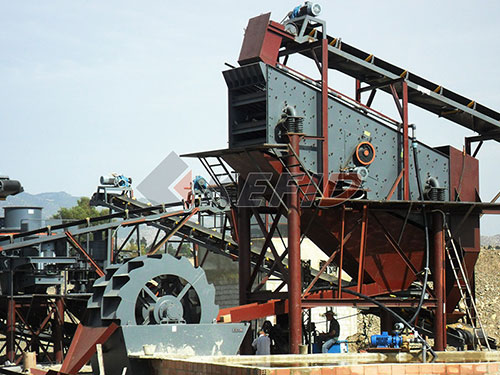
- Intelligence Automation AI Integration: Beyond basic PLC control future plants will feature AI-driven optimization systems that adjust crusher settings in real-time based on feed size hardness maximizing yield minimizing energy consumption Predictive maintenance using vibration acoustic emission analysis will prevent unplanned downtime
- Green Technology Sustainability Emphasis: Factories are developing more energy-efficient drives dust suppression systems noise reduction technologies water recycling plants There is growing demand for fully electric or hybrid mobile crushing stations reducing carbon footprint at urban or environmentally sensitive quarries
- Belt Road Initiative BRI as Catalyst BRI continues to drive overseas demand for integrated infrastructure packages including ballast production capabilities This provides stable long-term orders encourages factories to tailor products for diverse climates geologies from Siberian frosts to tropical humidity
- After-Sales Service as Key Differentiator The competitive frontier is shifting from pure hardware sales to offering value-added services Remote diagnostics online spare parts ordering virtual reality VR assisted troubleshooting lifetime performance guarantees are becoming standard expectations
Conclusion The Strategic Linchpin
China s quarry ballast crushing equipment factories represent a formidable segment within the global heavy machinery landscape Born from unprecedented domestic need refined through intense competition they have evolved into technologically advanced solution providers Their output forms the literal bedrock upon which modern railroads are built As global infrastructure needs continue to grow particularly in emerging economies these factories stand poised not merely as suppliers but as strategic partners Their ability to deliver scalable efficient customized crushing solutions will directly influence the pace cost quality of transportation infrastructure worldwide Therefore understanding their capabilities evolution market dynamics is essential for any stakeholder in the construction mining or infrastructure development sectors They are indeed a pivotal engine powering the physical connectivity of our world
