China Quarry Ballast Crushing Equipment Company: An In-Depth Industry Analysis
Introduction
The global railway infrastructure network is the backbone of modern transportation, and at its core lies a seemingly mundane yet critically important material: ballast. Composed of angular crushed stone, ballast provides stability, drainage, and load distribution for railway tracks. The production of this high-specification aggregate is a specialized industrial process, requiring robust machinery capable of handling abrasive rock under extreme conditions. In this context, “China Quarry Ballast Crushing Equipment Company” represents a category of manufacturers that have risen to global prominence. This article provides a professional, objective, and detailed examination of this sector, covering the nature of ballast production, the technological landscape, the leading players, market dynamics, and future trends.
1. The Technical Imperative of Ballast Crushing
Before analyzing the equipment, it is essential to understand the product. Railway ballast is not merely crushed rock; it is a precisely graded aggregate. According to standards such as AREMA (American Railway Engineering and Maintenance-of-Way Association) and UIC (International Union of Railways), ballast particles must be angular, durable, and free of deleterious materials. The typical size range is 25–50 mm, with strict limits on flakiness index, elongation index, and crushing value.
This specification drives the design of crushing equipment. Unlike general construction aggregate, ballast production requires a multi-stage crushing process:
- Primary Crushing: Large quarry boulders (up to 1 meter) are reduced to 150–200 mm using jaw crushers or gyratory crushers.
- Secondary Crushing: The material is further reduced to 50–80 mm using cone crushers or impact crushers.
- Tertiary Crushing and Screening: This is the critical stage for ballast. The material must be reduced to the 25–50 mm envelope while preserving cubical shape. This is achieved using specialized cone crushers (e.g., Symons or HP series) or vertical shaft impactors (VSI) in closed circuit with high-frequency vibrating screens.
The key challenge is cubicity. A flaky or elongated particle will not interlock properly, leading to track settlement. Therefore, Chinese equipment manufacturers have invested heavily in chamber geometry, stroke speed, and crushing force control to maximize the percentage of cubical particles.
2. The Chinese Manufacturing Ecosystem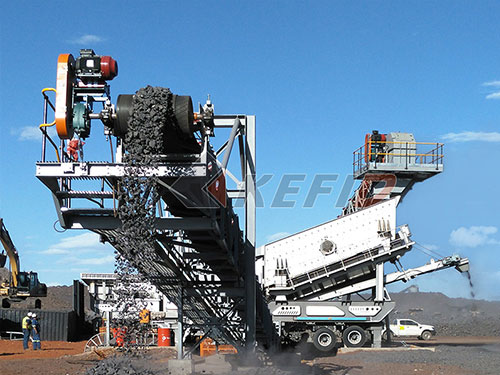
China is the world’s largest producer of crushing and screening equipment, with a supply chain that spans from raw steel casting to advanced electronic control systems. The “Quarry Ballast Crushing Equipment Company” segment is not a monolithic entity but a tiered ecosystem:
-
Tier 1 – Global Conglomerates: Companies like Sany, Zoomlion, and XCMG (primarily known for construction machinery) have divisions that produce large-scale mobile crushing plants. However, for dedicated ballast production, the most relevant names are Metso Outotec (with Chinese manufacturing bases) and Sandvik (also with local production). These multinationals often partner with Chinese foundries and assembly plants to produce localized models.
-
Tier 2 – Specialized Domestic Leaders: This is the core of the “China Quarry Ballast Crushing Equipment Company” identity. Notable players include:
- Shanghai Shibang Machinery (SBM): A veteran in the field, SBM offers the VSI5X and VSI6X series of vertical shaft impact crushers, specifically marketed for high-quality ballast and sand making. Their HPT multi-cylinder hydraulic cone crushers are widely used in ballast plants.
- Zhengzhou Yifan Machinery: Known for its mobile crushing and screening plants, Yifan provides complete turnkey solutions for railway ballast projects, particularly for high-speed rail (HSR) lines in China and Southeast Asia.
- Henan Liming Heavy Industry: Offers the HST series single-cylinder hydraulic cone crusher, which is praised for its high efficiency and low operating costs in hard rock applications like granite and basalt—the preferred rock types for ballast.
- Chengdu Dahongli Machinery: A specialist in high-end crushing, Dahongli has developed the “PLK” series vertical shaft impact crusher, which is specifically designed to produce the ideal cubical shape required for ballast.
-
Tier 3 – Regional Fabricators: Hundreds of smaller workshops in provinces like Henan, Hebei, and Shandong produce low-cost jaw crushers and hammer crushers. While these are often used for local construction, they rarely meet the stringent quality standards for mainline railway ballast. However, they serve the secondary market for light rail or industrial sidings.
3. Core Equipment Types and Technological Features
A professional ballast crushing line from a Chinese company typically includes the following equipment, each with distinct technological attributes:
a) Jaw Crushers (Primary Stage)
- Technology: Deep-chamber, single-toggle design with hydraulic adjustment.
- Chinese Innovation: Many Chinese manufacturers now use finite element analysis (FEA) to optimize the crushing chamber profile, reducing wear and increasing throughput. For example, the PEW series from SBM uses a wedge-adjustment system that is faster and safer than traditional shim plates.
- Specifications: Feed opening up to 1200×1500 mm, capacity up to 800 t/h, motor power 160–220 kW.
b) Multi-Cylinder Hydraulic Cone Crushers (Secondary/Tertiary)
- Technology: The “full hydraulic” cone crusher is the workhorse of ballast production. It features automatic tramp iron release, hydraulic clearing, and closed-side setting (CSS) adjustment under load.
- Chinese Innovation: The HPT series (SBM) and HST series (Liming) incorporate “laminated crushing” principles. By adjusting the eccentric throw and stroke, the crusher forces rock-on-rock compression, which produces a high proportion of cubical particles. Advanced models include an intelligent control system that monitors power draw and adjusts the CSS in real-time to maintain product gradation.
- Key Metric: The “flakiness index” of the output is typically below 10%, meeting the strictest UIC 815-1 standards.
c) Vertical Shaft Impact Crushers (VSI) (Shape Correction)
- Technology: VSI crushers use a high-speed rotor to throw rock against a crushing chamber or a “rock shelf.” This is the final step to polish particle shape.
- Chinese Innovation: The VSI6X series features a patented “deep rotor” design with a higher sand-making rate and lower energy consumption. For ballast, the crusher is often run in “rock-on-rock” mode to minimize metal wear and produce a rough, high-friction surface texture—essential for ballast interlock.
d) Vibrating Screens (Classification)
- Technology: Multi-deck, circular-motion or linear-motion screens with high g-force.
- Chinese Innovation: Chinese manufacturers produce screens with polyurethane mesh panels that last 3–5 times longer than steel wire mesh. For ballast, a “banana screen” (multi-slope) is often used to handle the high feed rates and achieve precise separation at the 25 mm and 50 mm thresholds.
e) Mobile vs. Stationary Plants
- Stationary Plants: These are permanent installations at quarry sites, with capacities ranging from 200 to 1000 t/h. They are preferred for long-term railway projects (e.g., a 500 km HSR line).
- Mobile Plants: Chinese companies like Yifan and SBM offer wheeled or track-mounted mobile cone crushers and screens. These are used for short-term projects, tunnel spoil recycling, or for quarries that need to relocate. The Y3S1860HP220 mobile cone plant is a popular choice for ballast production in mountainous regions where road access is limited.
4. Quality Control and Standards Compliance
A professional “China Quarry Ballast Crushing Equipment Company” does not simply sell machines; it provides a system that guarantees product quality. Key aspects include: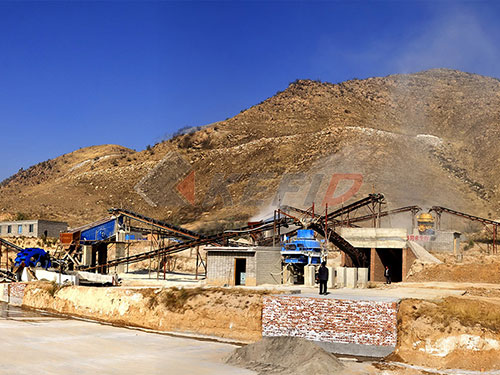
- Material Testing: Leading companies offer laboratory testing services to analyze the rock’s abrasiveness (Los Angeles Abrasion Test), compressive strength, and silica content. This determines the optimal crusher configuration.
- Automation and PLC Control: Modern Chinese plants are equipped with centralized control rooms using Siemens or ABB PLCs. These systems monitor vibration, temperature, oil pressure, and power consumption, automatically shutting down the line if a parameter deviates.
- Dust Suppression: Ballast crushing generates significant silica dust. Chinese manufacturers now integrate water spray systems and baghouse dust collectors as standard options, complying with both Chinese GB standards and international environmental regulations (e.g., EU MACHINE DIRECTIVE 2006/42/EC).
5. Market Dynamics and Export Competitiveness
The global demand for ballast crushing equipment is driven by:
- High-Speed Rail Expansion: China’s Belt and Road Initiative (BRI) has led to the construction of HSR lines in Indonesia, Thailand, and Eastern Europe. Chinese equipment companies often win these contracts due to their ability to provide “one-stop” solutions—from primary crusher to final screening—with financing options from Chinese banks.
- Infrastructure Renewal: Developed countries like the US and Australia are upgrading aging rail networks, requiring new ballast. Chinese equipment offers a 30–40% cost advantage over European or American equivalents, with comparable quality.
- After-Sales Service: The competitive edge of Chinese companies lies in their spare parts availability. A Chinese cone crusher’s wear parts (mantle and concave) can be manufactured locally in the target country or shipped within 2 weeks, whereas European parts may take 8–12 weeks.
6. Challenges and Limitations
Despite their growth, Chinese ballast crushing equipment companies face objective challenges:
- Perception of Durability: While the core components (main shaft, eccentric bushing) are made from high-grade alloy steel, some buyers report that Chinese crushers have a shorter bearing life compared to premium brands (e.g., Metso HP series). This is often due to lower-grade bearings sourced from domestic suppliers. However, top-tier Chinese manufacturers now offer optional SKF or FAG bearings.
- Energy Efficiency: Chinese hydraulic systems sometimes consume 5–10% more energy per ton of crushed material than the most advanced European models. This is a critical factor for quarries operating in regions with high electricity costs.
- Technical Documentation: Some smaller Chinese companies provide incomplete manuals or lack detailed CAD drawings, making integration into existing plants difficult. Reputable firms, however, provide full engineering support.
7. Future Trends and Innovation
The next decade will see significant evolution in this sector:
- Artificial Intelligence (AI) and Digital Twins: Leading Chinese companies are developing “smart crushers” that use AI to predict wear patterns and optimize CSS automatically. For example, a digital twin of the crushing chamber can simulate rock flow and adjust the eccentric speed to maximize yield.
- Electric and Hybrid Drives: With global carbon neutrality goals, Chinese manufacturers are introducing fully electric mobile crushers powered by onboard battery packs or external grid connections. This reduces diesel consumption by up to 70%.
- Recycling and Circular Economy: Ballast from old railway lines is often contaminated with soil and organic matter. New Chinese equipment is being designed with integrated washing systems (log washers and scrubbers) to clean recycled ballast, making it reusable for secondary lines.
8. Selecting a Reliable Partner
For a quarry operator or railway contractor, choosing the right “China Quarry Ballast Crushing Equipment Company” requires due diligence:
- Verify Certifications: Look for ISO 9001 (quality), ISO 14001 (environmental), and CE certification for export to Europe.
- Request a Pilot Test: Reputable Chinese companies will allow you to send 5–10 tons of your rock to their test facility in Shanghai or Zhengzhou. They will provide a detailed report on particle shape distribution and wear part consumption.
- Check Reference Projects: Ask for a list of ballast plants in operation for over 5 years. Contact the plant manager directly to verify uptime and maintenance costs.
- Negotiate Service Contracts: Ensure the contract includes a performance guarantee (e.g., throughput of 300 t/h at 90% uptime) with penalties for non-compliance.
Conclusion
The “China Quarry Ballast Crushing Equipment Company” is not a single entity but a dynamic, competitive, and technologically advanced industry. From massive stationary cone crushers to agile mobile screening units, Chinese manufacturers have proven their capability to produce machinery that meets the world’s most demanding railway standards. While challenges in durability and energy efficiency remain, continuous investment in R&D, automation, and after-sales support is rapidly closing the gap with Western incumbents. For any global infrastructure project requiring high-quality railway ballast, a Chinese equipment partner—selected with rigorous technical evaluation—offers an optimal balance of cost, performance, and scalability. As global rail networks expand and modernize, this sector will remain a critical enabler of safe, efficient, and sustainable transportation.
