The Manufacturing of Iron Ore Crushing Plants in China: Engineering the Backbone of Global Steel
The manufacturing of iron ore crushing plants in China represents a sophisticated intersection of heavy industry, mechanical engineering, and strategic economic development. These plants are not mere collections of machinery; they are meticulously engineered systems designed to transform raw, often formidable, iron ore into precisely sized feedstock for the blast furnace. As the world’s largest producer and consumer of steel, China’s prowess in creating these critical installations is a cornerstone of its industrial dominance and a key enabler for global infrastructure.
1. The Core Function: From Lump Ore to Blast Furnace Feed
The primary objective of an iron ore crushing plant is to reduce the size of mined ore (which can range from massive lumps over a meter in diameter to finer particles) into a consistent, optimal size for subsequent processing—typically sintering, pelletizing, or direct feed into a blast furnace. The process involves several key stages:
- Primary Crushing: This first stage handles the raw, run-of-mine ore. Giant gyratory crushers or heavy-duty jaw crushers are employed here, capable of exerting immense force to break down meter-sized lumps into fragments roughly 200-300 mm in diameter. Durability and brute strength are paramount.
- Secondary Crushing: The output from the primary crusher undergoes further reduction via cone crushers. These machines provide more controlled size reduction through compression and attrition, producing material typically smaller than 75 mm.
- Tertiary and Quaternary Crushing: For finer requirements or harder ores, additional stages using cone crushers or high-pressure grinding rolls (HPGR) may be implemented to achieve product sizes down to 10 mm or less. HPGR technology is increasingly adopted for its energy efficiency.
- Screening: Integral to every stage, vibrating screens separate the crushed material by size. Oversized material is recirculated back to the crusher (closed-circuit crushing), while correctly sized material proceeds along the process flow.
2. The Chinese Manufacturing Ecosystem: Scale and Integration
China’s manufacturing strength in this sector stems from a deeply integrated ecosystem:
- Heavy Machinery Giants: Companies like NHI Group (Northern Heavy Industries), Shanghai Electric, Zhongye Changtian, and LIMING Heavy Industry lead the design and fabrication of core crushing equipment. They operate massive foundries and fabrication workshops capable of casting and machining colossal components like crusher mantles, concaves, main frames, and rotors.
- Specialized Component Suppliers: A robust network of suppliers produces high-wear parts (manganese steel liners, blow bars), precision bearings, heavy-duty motors (often collaborating with giants like WEG or Siemens localized production), gearboxes, and vibration isolation systems.
- Engineering & Design Institutes: Entities like MCC (Metallurgical Corporation of China) possess comprehensive engineering capabilities. They handle plant design, flow sheet development (ensuring optimal mass balance), structural engineering for massive transfer towers and feed bins, and full EPCM (Engineering, Procurement, Construction Management) services.
- Automation and Control Integration: Chinese manufacturers now seamlessly integrate advanced automation systems from companies like Siemens or domestic leaders such as Hollysys. This includes PLC-controlled sequencing, variable frequency drives for energy optimization, predictive maintenance sensors on bearings and motors, and centralized control rooms that monitor the entire plant.
3. Key Technological Drivers and Innovations
Chinese manufacturers have evolved from pure replicators to innovators:
- Focus on Efficiency & Yield: Modern plant designs prioritize minimal downtime through modular layouts that allow maintenance access without full shutdowns. Crusher designs aim for better particle shape (cubical) which improves downstream sintering permeability.
- Energy Consumption: As energy costs rise HPGR technology is a key focus area. Chinese manufacturers are developing their own HPGR models which can reduce specific energy consumption by up to 30% compared to traditional circuits.
- Adaptability to Ore Variability: With Chinese steel mills sourcing ore globally—from high-grade Australian hematite to more complex Brazilian itabirite or domestic low-grade magnetite—plants must be flexible. Modular designs allow circuits to be reconfigured for different hardnesses and moisture contents.
- Digitalization & Smart Plants: The next frontier involves embedding IoT sensors across the crushing line feeding data into AI-powered platforms for real-time optimization of crusher settings based on feed conditions predictive failure alerts moving from scheduled to condition-based maintenance.
4. Material Science: The Battle Against Wear
The crushing process is intensely abrasive; thus materials technology is critical:
- High manganese steel remains standard for liners subject to high-impact wear
- For abrasion-dominated zones advanced composite materials with ceramic inserts or chromium carbide overlays extend service life
- Research focuses on nano-structured alloys offering better wear resistance without compromising toughness reducing downtime for liner changes significantly
5. Logistics Project Execution & Global Reach
Manufacturing such plants involves monumental logistics:
- Modules are prefabricated in shipyard-like facilities often located near major ports like Shanghai Tianjin or Dalian
- These mega-modules—weighing hundreds of tons—are shipped directly to global mine sites
- On-site Chinese engineering teams oversee assembly commissioning training local workforce
This turnkey project model has been deployed successfully across Australia Africa Southeast Asia South America making Chinese suppliers dominant players not just domestically but internationally competing fiercely with traditional European leaders like Metso FLSmidth ThyssenKrupp
Challenges Facing the Industry
Despite its strengths challenges persist:
1 Environmental Compliance Domestic environmental regulations have tightened dramatically requiring dust suppression systems water recycling zero-discharge designs adding complexity cost
2 Core Component Reliance While excelling at structural fabrication some high-end bearings precision hydraulic systems specialized alloys still rely on imports creating supply chain vulnerabilities
3 Market Cyclicality The sector is tied directly to steel demand iron ore price volatility leading boom-bust cycles impacting order books R&D investment continuity
4 Intense Price Competition Fierce domestic competition sometimes prioritizes cost over innovation pressuring margins potentially affecting long-term quality sustainability
Future Outlook: Green Intelligent Integrated
The future trajectory points toward: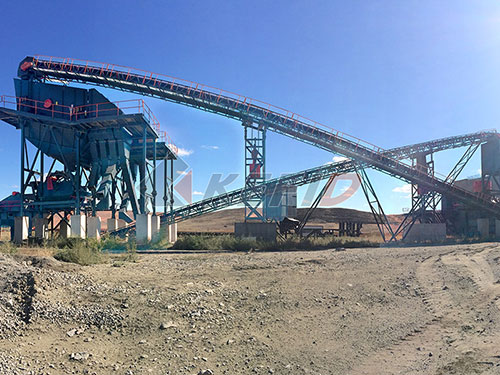
Green Manufacturing Plants will incorporate more renewable power sources electrification carbon footprint tracking becoming part mine operators ESG reporting requirements
Intelligence Deepening AI will not just predict failures but autonomously adjust entire circuit parameters optimize product size distribution energy use per ton real-time
System Integration Closer coupling with upstream mining downstream beneficiation processes creating fully digitized continuous material handling streams blurring lines between discrete plants holistic processing hubs
Conclusion
China’s manufacturing capability in iron ore crushing plants stands as testament decades strategic industrial investment It combines colossal scale engineering pragmatism increasingly sophisticated innovation Today’s Chinese-built plant far cry from simple copy represents integrated efficient technologically advanced system backbone global steel production chain As industry pivots sustainability digitalization China’s established ecosystem capacity adapt innovate likely ensure its central role shaping future mineral processing technologies worldwide
