China’s Iron Ore Crushing Plant Fabricators: Engineering the Backbone of Global Steel
China’s position as the world’s largest steel producer is a story written in iron ore, machinery, and engineering prowess. At the heart of this narrative are the nation’s iron ore crushing plant fabricators—specialized industrial giants who design, manufacture, and integrate the massive systems that transform raw, mined ore into the calibrated feedstock for blast furnaces and direct reduction plants. These fabricators are not merely equipment suppliers; they are strategic enablers of China’s domestic steel industry and key exporters of mineral processing technology worldwide.
The Industrial Ecosystem and Key Players
The landscape of Chinese crushing plant fabricators is stratified, comprising state-owned heavyweights, large private conglomerates, and specialized regional manufacturers.
-
State-Owned Enterprises (SOEs) and Heavy Industry Giants: Companies like China First Heavy Industries (CFHI), CITIC Heavy Industries, and Northern Heavy Industries Group (NHI) represent the apex of this sector. With histories intertwined with national industrialization, they possess unparalleled capabilities in designing and building complete turnkey plants. Their offerings span from primary gyratory crushers capable of handling run-of-mine ore blocks larger than a car to entire processing flowsheets including conveying, screening, secondary/tertiary crushing (via cone crushers), and often preliminary beneficiation modules. Their projects are typically mega-scale, serving domestic giants like China Baowu Steel Group or major overseas mining ventures in Australia, Africa, and South America.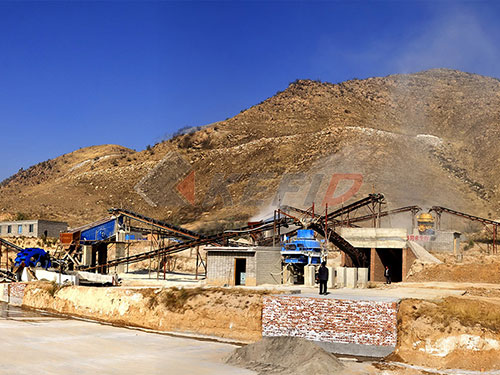
-
Leading Private Equipment Specialists: Firms such as Shanghai Shibang Machinery (SBM) and Liming Heavy Industry have carved out dominant global niches. While他们也提供完整解决方案,they are particularly renowned for their high-performance, standardized crusher lines (jaw crushers, cone crushers, impact crushers) and grinding mills. They excel at modular plant designs that offer flexibility and faster deployment. Their strength lies in aggressive R&D, advanced automation integration, and a vast global supply chain for aftermarket parts.
-
Regional Fabricators and System Integrators: A network of specialized manufacturers in hubs like Zhengzhou, Shanghai, Shenyang, and Changsha focuses on specific components or mid-sized plant packages. They often collaborate with larger players or serve regional mining markets with cost-effective solutions.
Core Technological Capabilities & Innovations
Modern Chinese fabricators have moved far beyond reverse-engineering to become sources of genuine innovation:
- Scale & Durability Engineering: They manufacture some of the world’s largest jaw crushers (with feed openings exceeding 1.5m) and high-capacity hydraulic cone crushers. Materials science advancements in manganese steel castings for liners/mantles and robust bearing designs ensure equipment can withstand the immense abrasion and shock loads of iron ore.
- Intelligent Crushing Systems: The integration of IoT sensors, AI-powered process optimization, and centralized PLC/DCS control systems is now standard in premium offerings. Real-time monitoring of parameters like crushing chamber pressure, main shaft position (for CSS adjustment), power draw, and bearing temperature allows for predictive maintenance and automatic adjustment for optimal throughput product size.
- Energy Efficiency & Sustainability Focus: Driven by China’s “Dual Carbon” goals (peak carbon by 2030, carbon neutrality by 2060), fabricators prioritize energy-saving designs. This includes high-efficiency motors optimized drive systems for cone crushers,and overall plant layout designs that minimize material transfer distances reduce overall power consumption per ton of ore processed.
- Adaptability to Diverse Ore Characteristics: Chinese fabricators design systems tailored to specific ore properties—whether it’s the hard magnetite ores requiring multiple crushing stages or softer hematite ores where high-pressure grinding rolls (HPGRs) might be integrated for more efficient comminution lower energy use downstream beneficiation.
- Modular & Semi-Mobile Designs: A significant trend is offering pre-assembled modular crushing stations.This drastically reduces on-site construction time costs in remote greenfield mining sites allowing faster project commissioning.
Driving Forces Behind Their Dominance
Several interconnected factors underpin the success strength sector:
- The Domestic Demand Engine: China consumes over 70% seaborne iron ore.Its vast diverse domestic mining operations (from Hebei to Sichuan), coupled with massive coastal steel mills processing imported ore provide a continuous demanding testing ground for fabricators enabling rapid iteration scale economies.
- Integrated Supply Chain Mastery: From steel plate production foundries for castings to precision bearing gearbox manufacturers China hosts a complete localized supply chain.This reduces lead times costs enhances production flexibility.
- Cost Competitiveness Value Proposition: While no longer always cheapest Chinese fabricators offer compelling value through complete lifecycle cost management—balancing initial capital expenditure with operational reliability maintenance costs.They offer financing packages through partnerships with Chinese banks making them attractive partners developing economies.
- “Belt Road Initiative” Synergy: As BRI facilitates infrastructure resource development across continents Chinese crushing plant fabricators are often embedded these projects providing localized technical support establishing service centers along key trade routes.
Challenges Critical Perspectives
Despite their strengths sector faces significant headwinds requires continuous evolution:
- Overcapacity Quality Dispersion: The lower end market suffers from oversupply some manufacturers compromising on component quality tarnishing “Made-in-China” brand reputation for others.Differentiating based on genuine quality intellectual property remains challenge.
- Dependence on Global Ore Markets: A prolonged downturn global steel iron ore demand directly impacts capital expenditure mines thus orders new crushing plants making business cyclical.
- Intellectual Property Scrutiny: While innovation is real historical accusations IP infringement lingering perception some markets require ongoing effort build trust through original R&D transparent patent portfolios.
- Rising Domestic Costs Environmental Compliance: Increasing labor costs stringent environmental regulations production bases forcing automation relocation some manufacturing while also pushing development greener technologies.
- Geopolitical Supply Chain Risks: Trade tensions potential decoupling pressure supply chains particularly for high-end components software potentially disrupting integrated global delivery models.
The Future Trajectory: Digitalization Green Technology
Future leaders among China’s iron ore crushing plant fabricators will defined by their mastery following areas:
- Full-Plant Digital Twins: Creating virtual replicas physical plants simulate optimize performance test control strategies before implementation enabling zero-downtime optimization remote expert intervention.
- AI-Driven Autonomous Operation: Implementing machine learning algorithms can automatically adjust crusher settings real-time based feed grade wear conditions maximizing yield target size fraction while minimizing energy waste.
- Circular Economy Integration: Designing plants easier re-location re-configuration incorporating more recycled materials construction developing solutions process lower-grade complex ores tailings reprocessing support mine site sustainability.
- Deep Electrification Hybrid Power Solutions: For remote mines developing fully electric crushing stations powered renewable sources hybrid systems reduce diesel dependency operational carbon footprint.
Conclusion
China’s iron ore crushing plant fabricators form critical pillar global heavy mining equipment industry.Their journey from domestic suppliers international technology providers reflects broader trajectory Chinese manufacturing.They have successfully leveraged scale learning home market to build formidable capabilities compete globally on basis technology price service completeness.As industry stands cusp digital green revolutions these companies face test transitioning from being masters mechanical scale becoming leaders intelligent sustainable mineral processing solutions.Their ability innovate manage quality navigate geopolitical complexities will determine whether they remain indispensable engineers backbone global steelmaking decades come shaping not just flow raw materials but also flow industrial technology worldwide
