China’s Iron Ore Crushing Plant Fabricators: Engineering the Backbone of Global Steel
The relentless growth of China’s steel industry, which now accounts for over half of the world’s production, is underpinned by a colossal and often overlooked industrial sector: the fabrication of iron ore crushing plants. These fabricators are not mere equipment manufacturers; they are sophisticated engineering powerhouses that design, manufacture, and integrate the massive systems responsible for transforming raw, mined iron ore into the finely sized feedstock essential for blast furnaces and direct reduction plants. Their evolution mirrors China’s own industrial journey—from import-dependent to globally competitive innovators.
The Strategic Imperative: Why Crushing Plants Are Critical
Iron ore, as mined, is heterogeneous. It arrives as coarse rocks, often containing low-grade ore, gangue minerals, and impurities. The primary function of a crushing and screening plant is to reduce this run-of-mine (ROM) ore to a consistent, optimal size for subsequent beneficiation (processing to increase iron content) and agglomeration (sintering or pelletizing). Efficient crushing directly impacts:
- Energy Efficiency: Properly sized ore improves permeability in sinter plants and blast furnaces, reducing coke consumption.
- Downstream Process Stability: Consistent feed size is crucial for grinding circuits and beneficiation machinery like jigs or magnetic separators.
- Logistics and Cost: Pre-processing at the mine site reduces the mass and improves the handling characteristics of shipped ore.
China’s fabricators serve this need across the entire value chain: from domestic mega-mines in provinces like Hebei and Liaoning to Chinese-funded mining projects from Africa to Australia.
The Fabricator Ecosystem: From Giants to Specialists
The landscape of Chinese fabricators is diverse, stratified by capability, scale, and focus.
1. The State-Owned Heavyweights (SOEs):
Companies like CNHHI (China National Heavy Machinery Corporation), CITIC Heavy Industries, and subsidiaries of Sinosteel represent the apex. They offer full “turnkey” solutions—handling everything from geological data analysis and plant design to manufacturing, installation, commissioning, and lifecycle support. Their projects are typically large-scale (>10 million tons per annum), highly automated greenfield or brownfield expansions. They possess in-house R&D for developing proprietary equipment like high-pressure grinding rolls (HPGR) and super-heavy-duty apron feeders, competing directly with Western giants like Metso Outotec and FLSmidth.
2. Large Private Enterprises:
Firms such as Shanghai Shibang Machinery (SBM) and Liming Heavy Industry have carved out significant global market share through agility and cost-effectiveness. They often excel at standardized modular plant designs that offer shorter delivery times. SBM, for instance, is renowned for its mobile and portable crushing stations that cater to medium-sized mines or remote deposits where fixed infrastructure is prohibitive.
3. Specialized Component & Technology Focused Fabricators:
A robust supply chain supports the industry with specialists: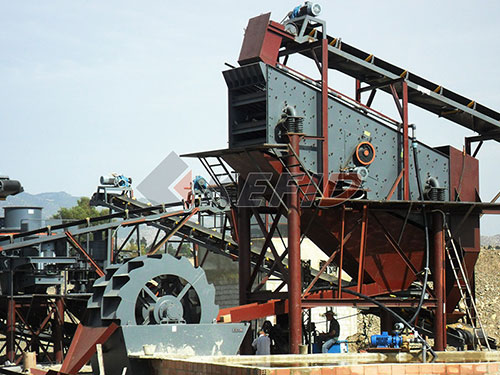
- Crusher Specialists: Companies focusing on jaw crushers, gyratory crushers (for primary crushing), cone crushers (secondary/tertiary), and vertical shaft impactors.
- Screen & Feeder Manufacturers: Producing vibrating screens, trommels, and various feeders critical for classification.
- Dust Suppression & Environmental Control System Fabricators: An increasingly vital niche as environmental regulations tighten globally.
Core Competencies & Technological Evolution
Modern Chinese fabricators have moved far beyond reverse engineering. Their key competencies now include: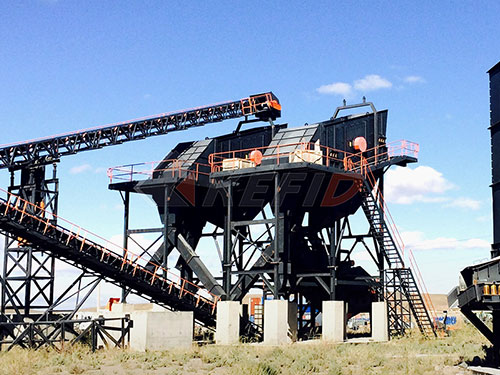
- Integrated Process Design: Mastery over entire flowsheets—crushing stages (primary-secondary-tertiary/quaternary), closed/open circuit screening configurations—optimized for specific ore characteristics (abrasion index, moisture content, clay content).
- Heavy Manufacturing Prowess: Ability to cast, forge, weld,and machine massive components (crusher frames >100 tons,mainshafts) with advanced CNC centers.
- Modularization & Off-site Construction: To reduce on-site labor costs in high-wage countries or harsh environments,fabricators pre-assemble entire plant sections into skid-mounted or containerized modules.This slashes installation time dramatically.
- Automation & Digitalization: Integration of Programmable Logic Controllers(PLCs),Supervisory Control And Data Acquisition(SCADA) systems,and increasingly,Predictive Maintenance platforms using IoT sensors.They offer remote monitoring hubs from Shanghai or Shenyang capable of diagnosing issues at a mine in Peru.
- Adaptability to Harsh Conditions: Designing plants for extreme cold(Siberian winters),tropical humidity(Southeast Asia),or arid deserts(Middle East/Africa).
Driving Forces Behind Their Global Success
- Domestic Market Scale: The sheer volume of China’s domestic mining industry provided an unparalleled testing ground.Allowed rapid iteration,cost optimization,and scaling up of manufacturing.
- Complete Industrial Chain: Proximity to steel mills,motor manufacturers,bearing suppliers,and foundries creates an unbeatable cluster effect.This reduces lead times,costs,and logistical complexity.
- Cost Competitiveness: A combination of engineering talent,supply chain efficiency,and economies of scale results in capital cost advantages often cited at 20-40% lower than Western equivalents without necessarily sacrificing core reliability.
- Financing Synergy: Many projects are packaged with financing from Chinese policy banks(China Exim Bank,BRI funds)or equipment leasing from associated financial institutions.This “one-stop-shop” model is highly attractive for developing nations.
- Government Policy Support: “Going Out” policies under the Belt & Road Initiative(BRI) explicitly encourage exportsof complete industrial plants,incentivizing technological upgrading.
Challenges & Future Trajectory
Despite their strengths,fabricators face significant headwinds:
- Quality Perception vs.Reality Gap: While top-tier firms match global standards,a long tailof smaller fabricators can produce variable quality.This sometimes tarnishes the “MadeinChina”brandfor heavy machinery requiring sustained trust over decades-long asset lifecycles.Best-in-class firms combat this with international certifications(ISO,CEmarking)and transparent quality control processes.
- Intellectual Property Scrutiny: Past accusationsof IP infringement have ledto cautiousness among some Western miners.Todayleading firms invest heavilyin their own patents particularlyin wear materialsand energy-efficient comminution technologieslike HPGR circuits
- After-Sales Service Network Depth Buildinga responsive global partsand service network remainsa challenge comparedto established competitors whohave decades-longpresenceinfar-flung mining regions.Joint ventureswith local partnersare becoming common strategy
- Sustainability Imperative Future demandis drivenby needsfor lower carbon footprintplants This means designingforenergy efficiency water recycling noise reductionand minimal ecological disturbance duringinstallation Digital twinsfor simulationand optimizationare becomingkey differentiators
Conclusion
China’s ironore crushing plant fabricators embodythe nation’s transformationinto an advancedindustrial powerhouse.They have progressedfrom being passive copiersto active innovatorsand formidableglobal competitors By leveragingunrivaled domestic scalemastering integratedengineering solutionsand continuously climbingthe technology curve theynow buildthe literal foundationupon whichmuchofthe world’ssteelproduction depends Their future successwill hingeon consistently deliveringreliability deepeningtheir servicecapabilities worldwideandleadingthe charge towardsthe more sustainableautomatedmineral processingplantsofthe21stcentury Asglobal miningseeksbalancebetween productivity costandenvironmental stewardship theseChinese engineeringfirmsare poisedto remainatthe verycenterofthis criticalindustry
