China’s Gold Ore Crushing Equipment: A Comprehensive Analysis of Technology, Market, and Minimum Order Quantity (MOQ) Dynamics

The gold mining industry stands as a critical pillar of the global economy and financial systems. At the heart of extracting this precious metal lies a fundamental process: comminution, where gold ore crushing is the indispensable first mechanical step. China has emerged not only as the world’s largest gold producer but also as a dominant global manufacturer and supplier of the crushing equipment that makes this production possible. Understanding this sector requires a deep dive into the equipment landscape, technological evolution, market drivers, and the crucial commercial aspect of Minimum Order Quantity (MOQ), which governs procurement from Chinese manufacturers.

1. The Technological Spectrum: Key Crushing Equipment from China

Chinese manufacturers offer a complete suite of crushing equipment, catering to every stage of the size reduction process, from primary run-of-mine ore to finely crushed feed for grinding mills.

a) Primary Crushers: The First Line of Defense

  • Jaw Crushers: These are the workhorses of primary crushing. Chinese-made jaw crushers, such as PE (Primary Efficiency) and PEX (Primary Efficiency Extended) series, are renowned for their robust construction, simple design, and high reliability. They employ a compressive force between a fixed and a reciprocating jaw plate to break large ore blocks (often up to 1.5 meters) down to ~200-250 mm. Advancements include modular designs for easier maintenance and hydraulic adjustment systems for quick setting changes.
  • Gyratory Crushers: For high-capacity primary crushing stations in large-scale mines, Chinese firms now produce sophisticated gyratory crushers. These offer higher throughput than jaw crushers for similar feed sizes and are characterized by a continuous crushing action. Domestic innovation has focused on improving mantle and concave materials for longer wear life in abrasive ores.

b) Secondary and Tertiary Crushers: Precision Reduction

  • Cone Crushers: This is an area where Chinese engineering has made significant strides. Ranging from spring cone crushers to advanced hydraulic cone crushers (single-cylinder and multi-cylinder models), they provide intermediate and fine crushing. Modern Chinese hydraulic cone crushers feature automated control systems for closed-side setting (CSS) adjustment, real-time monitoring of load and pressure, and chamber optimization for improved product shape and throughput. They reduce material from ~250 mm to sizes as fine as 10-30 mm.
  • Impact Crushers: While less common for hard, abrasive gold ores (where abrasion wear is a major concern), impact crushers find application in softer ore types or for specific product shape requirements. Chinese vertical shaft impactors (VSIs) are sometimes used in tertiary applications for shaping.

c) Mobile and Semi-Mobile Crushing Plants: The Flexibility Revolution
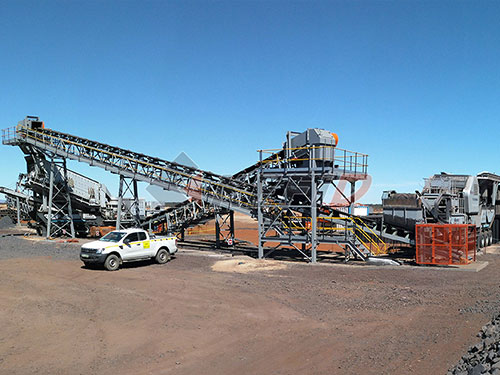
A defining trend led by Chinese manufacturers is the proliferation of track-mounted or wheel-mounted mobile crushing stations. These integrate feeders, crushers (jaw or cone), screens, and conveyors on a single chassis. For gold mining, especially in remote or geographically challenging deposits, mobile plants offer unparalleled flexibility—they can be relocated alongside advancing mine faces or between different satellite pits, drastically reducing truck haulage costs and infrastructure investment.

2. Market Drivers & Manufacturing Landscape

China’s dominance in this field is not accidental but driven by interconnected factors:

  • Domestic Demand: As the top gold producer (~370 tonnes in 2023), China’s vast domestic mining industry provides a massive testing ground and demand driver for equipment manufacturers.
  • Industrial Ecosystem: A complete supply chain—from steel casting and forging (for wear parts like mantles/concaves/jaw plates) to heavy machining, hydraulics, and motor production—exists within China, ensuring cost competitiveness and manufacturing agility.
  • Technological Catch-up & Innovation: From initially replicating Western designs, leading Chinese firms like SBM Machinery, Liming Heavy Industry (LONGPING), Zhejiang MP Mining Equipment Corp., etc., now invest heavily in R&D. Focus areas include energy efficiency (crushing accounts for a major portion of a mine’s power bill), automation (“smart crushing” with IoT sensors), wear-resistant material science (high-manganese steel variants with micro-alloying), and system integration.
  • Global “Belt & Road” Initiative: This state-backed strategy has directly facilitated the export of complete mineral processing plants—with crushing circuits at their core—to resource-rich countries across Asia, Africa, and Latin America.

3. The Critical Factor: Minimum Order Quantity (MOQ)

When sourcing from China,MOQ is not just a number; it’s a reflection of production economics, supply chain structure,and target market segment.It varies dramatically based on equipment type,customer type,and manufacturer scale.

a) Factors Determining MOQ:

  1. Equipment Complexity & Value:

    • Standard Wear & Spare Parts (Jaw Plates,Mantles,Bowls): These are produced in batch casting runs.MOQs can be relatively low,e.g.,2-10 sets per part number,making them accessible for small mines or maintenance contractors.
    • Complete Crusher Units: For a standard jaw or cone crusher,the MOQ is typically 1 unit.Large manufacturers may accept single-unit orders,but pricing may be less favorable compared to volume purchases.
    • Complete Crushing Plants or Lines: For an engineered system involving multiple crushers,screens,and conveyors,the project itself is unique.MOQ here translates to “one complete plant/project.” Negotiation focuses on total contract value rather than unit count.
  2. Manufacturer Profile:

    • Large-Scale OEMs: Branded giants have higher overheads but offer full-service engineering.They often prefer larger projects but maintain standard product inventories with lower MOQs to serve aftermarkets.
    • Specialized Medium-Sized Factories: They often compete on price for specific equipment types(e.g.,cone crushers)and may offer more flexible MOQs(including single units)to attract international clients.
    • Small Workshops/Foundries: Primarily focused on spare parts replication with very low MOQs(possibly even 1 piece),but quality control,material certification,and intellectual property can be significant risks.

3.Customer Type & Relationship:

  • First-time international buyers may face higher effective MOQs or stricter payment terms until trust is established.
  • Distributors or large mining corporations signing long-term frame agreements secure much lower per-unit MOQs across an entire catalog of parts/equipment.

b) Navigating MOQ Negotiations:
Procurement strategies must align with business needs:
For Small-Scale Miners/Startups: Focus on medium-sized,supplier factories open to single-unit sales.Consider purchasing standard models from stock.Consolidate orders for spare parts to meet batch MOQs.
For Large Mining Companies & EPC Contractors: Use project scale as leverage.Negotiate not just on equipment price,but on package deals including design,warranty,training,and long-term parts supply agreements which effectively nullify per-item MOQ constraints.
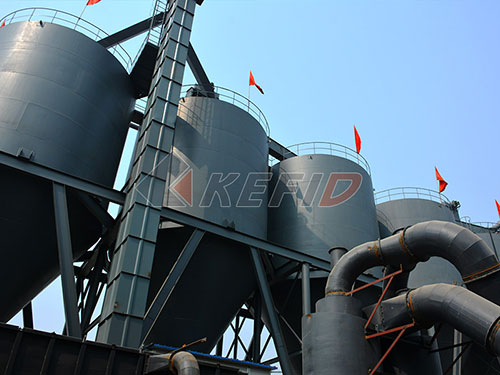
For Distributors: The core business model involves committing to an initial inventory order(MOQ based on container load optimization,e.g.,several machines or hundreds of wear parts)to secure exclusive regional rights or preferential pricing.China Gold Ore Crushing Equipment Moq
4.Technological Trends Shaping Future Orders

Future procurement decisions will be influenced by these evolving technologies:

1.Digitalization & Intelligence: Next-generation Chinese equipment comes embedded with sensors monitoring vibration,temperature,lubrication pressure,and wear.Predictive maintenance algorithms reduce unplanned downtime.This adds value but may influence order structures towards service-inclusive contracts rather than simple equipment sales.China Gold Ore Crushing Equipment Moq
2.Energy-Efficient Designs: With rising global energy costs,crushers featuring variable frequency drives(VFDs),optimized kinematics,and hybrid power systems(mobile plants with diesel-electric options)are becoming premium products.Their higher upfront cost can be offset by life-cycle cost analysis,a factor that influences fleet standardization orders(lower MOQ per model but higher total value).

3.Modularity & Containerization: A growing trend is designing semi-fixed plants using pre-assembled,mine-duty container modules(crusher module,screen module,pump module).This reduces site installation time.MOQs here apply per module,facilitating phased expansion purchases.

China’s position as a powerhouse in gold ore crushing equipment manufacturing is built on a triad of scale,technology,and supply chain maturity.The market offers solutions spanning from rugged,jaw-crusher simplicity to fully automated,mobile intelligent plants.For global buyers,the key to successful procurement lies in understanding that while physical machinery forms the core transaction,the surrounding ecosystem—from nuancedMOQ policiesthat differ between spare parts turnkey projects-to deepening technological integration-defines true value.Conducting thorough due diligence aligning operational needs with supplier capabilities negotiating beyond mere unit price towards total cost ownership partnership will unlock maximum benefit from this dynamic vital industrial sector

Lorem ipsum dolor sit amet, consectetur adipisicing elit. Consectetur sequi saepe ut sunt eveniet perferendis excepturi, iste obcaecati. Qui tempore hic sed quia soluta obcaecati vel.