
For over nine decades, the name Cedarapids has been synonymous with durability, innovation, and reliability in the crushing and screening industry. A Cedarapids crushing operation represents more than just the sum of its machinery; it embodies a legacy of engineering excellence tailored to meet the rigorous demands of the aggregate, mining, and recycling sectors. This article provides a comprehensive overview of a modern Cedarapids crushing operation, delving into its core equipment, operational principles, system configurations, and the technological advancements that keep it at the forefront of material processing.
A typical Cedarapids crushing operation is built upon a portfolio of specialized equipment designed for specific stages of size reduction. Understanding this equipment is fundamental to appreciating the operation as a whole.
1. Jaw Crushers: The Primary Workhorse
The primary crushing stage is often the first point of contact for raw material, such as quarry run or large demolition concrete. Cedarapids jaw crushers, like the JS Series, are engineered for this demanding role. They utilize compressive force to break down large boulders into manageable sizes (typically 6-8 inches and below). The key features that define their operation include:
2. Cone Crushers: Precision in Secondary and Tertiary Crushing
Following primary crushing, material often requires further reduction to produce specific aggregate shapes and sizes. This is the domain of the Cedarapids cone crusher, such as the TG Series (Spider Bearing) or the MVP Series. Cone crushers operate on the principle of gyratory compression within an eccentrically driven mantle.
3. Impact Crushers: For Shape and Versatility
When producing highly cubical product or processing softer, non-abrasive materials like limestone or recycled asphalt pavement (RAP), impact crushers are often preferred. Cedarapids horizontal shaft impactors (HSI) like the IP1516 or vertical shaft impactors (VSI) like the Turbo™ series use high-speed impact forces to fracture material.
4. Screening Equipment: The Key to Gradation
No crushing operation is complete without precise screening. Cedarapids vibrating screens separate crushed material into specified size fractions. Key types include:
A Cedarapids crushing operation can be configured in multiple ways to suit specific project requirements, from massive stationary plants serving a quarry for decades to highly mobile units moving between job sites.
Stationary Plants: These are permanent installations designed for high-volume production over long periods. They are custom-engineered with extensive infrastructure—deep foundations, large surge piles, complex conveyor networks—and often incorporate multiple stages of crushing and screening to produce a wide range of products simultaneously.
Portable Crushing Plants: Mobility is a cornerstone of Cedarapids’ offering. Their portable plants—jaw plants, cone plants, screen plants, and HSI plants—are mounted on robust chassis with fifth-wheel pins for easy transport between sites. This configuration is ideal for contractors working on multiple projects or remote mining sites where fixed infrastructure is not feasible.
Modular Crushing Systems: Representing a modern approach, modular systems like the CRC/Cedarapids MVP380X cone plant combine portability with stationary-plant performance. Key components are pre-assembled on structural steel skids that can be quickly set up and connected on-site without requiring heavy concrete foundations.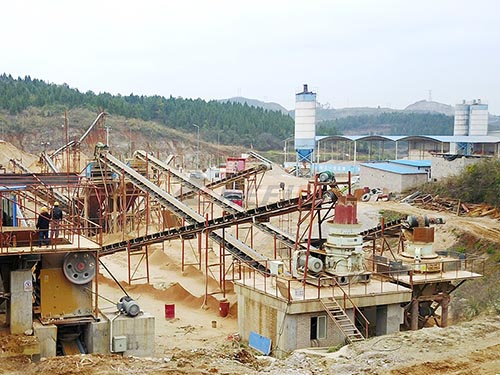
A standard three-stage Cedarapids crushing operation might proceed as follows:
Throughout this process,material handling equipment, primarily belt conveyors engineered by Superior Industries (a Terex brand partner), forms the circulatory system that binds all components together efficiently.
Modern Cedarrapid operations leverage technology far beyond mechanical engineering:
The versatility inherent within its equipment lineup allows tailored solutions across diverse sectors:
In conclusion,a well-executed Cedarpd crushng operaton represents sophisticated interplay between purpose-built machinery intelligent system design cutting-edge technology .From foundational strength jaw cones precision shaping capabilities impactors efficiency modern screening solutions every component plays critical role delivering consistent high-quality end products .By continuously evolving integrating automation data analytics Cedarpd remains pivotal force enabling industries build sustain world’s infrastructure efficiently sustainably .Its enduring reputation built not just upon historical legacy but persistent commitment solving practical challenges faced by aggregate producers miners recyclers globally
Lorem ipsum dolor sit amet, consectetur adipisicing elit. Consectetur sequi saepe ut sunt eveniet perferendis excepturi, iste obcaecati. Qui tempore hic sed quia soluta obcaecati vel.