
The procurement of a stone crusher plant is a significant capital investment with long-term implications for productivity, operational cost, and regulatory compliance. When the requirement includes the CE Marking, the process transcends mere equipment purchase and becomes a strategic acquisition of a certified, safe, and legally compliant industrial system. This detailed guide explores the critical facets of procuring a CE-marked stone crusher plant, providing a professional and objective framework for buyers.
The CE mark (Conformité Européenne) is not a quality seal but a mandatory declaration by the manufacturer that the product complies with the essential health, safety, and environmental protection requirements of relevant European Union (EU) directives. For stone crusher plants, several directives apply concurrently:
Procurement Implication: A genuine CE mark signifies that the manufacturer has undergone a rigorous process: Hazard Analysis/Risk Assessment, application of harmonized standards (e.g., EN ISO 12100 for safety, EN 294 for safety distances), compilation of a comprehensive Technical File, issuance of an EU Declaration of Conformity (DoC), and affixation of the mark. The buyer’s right to request the DoC is crucial.
A successful procurement begins long before contacting suppliers.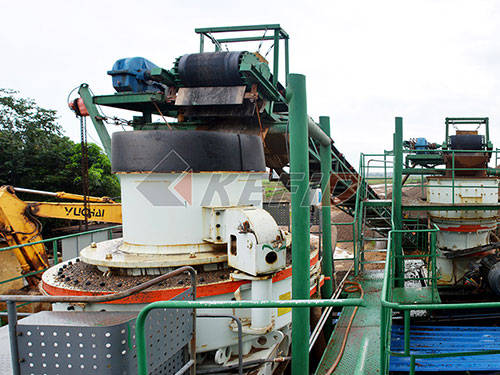
Technical Specifications:
Commercial & Logistical Requirements:
Regulatory & Site-Specific Requirements:
Step 1: Supplier Identification & Prequalification
Source reputable manufacturers with proven experience in building CE-compliant plants. Attend international trade fairs Bauma). Require potential suppliers to submit evidence:
Step 2: Request for Quotation RFQ)/Tender Documentation
The RFQ must be exhaustive:
Step 3: Technical & Commercial Evaluation
Do not evaluate on price alone. Use a weighted scoring matrix:
| Criteria | Weight | Evaluation Method |
| :— | :— | :— |
| Technical Compliance & Innovation | 30% | Review offered technology vs spec |
| CE Compliance Assurance | 25% | Audit DoC process; review manuals |
| Total Cost of Ownership TCO) | 20% | Price + estimated energy consumption + wear part cost/lifetime |
| Warranty & Service Support | 15% | Network proximity; response time guarantees |
| Delivery Time & Terms | 10% | Project schedule alignment |
Step 4: Contract Negotiation & Finalization
Key contractual clauses:
This phase is critical to realizing the value of your procurement.
Documentation Review: Upon receipt from manufacturer prior to shipping), meticulously review the EU Declaration of Conformity. It must list all applicable directives harmonized standards used name/number). Cross-check this against your RFQ requirements.
Physical Inspection Pre-Shipment Inspection PSI)): Engage a third-party inspector if necessary verify: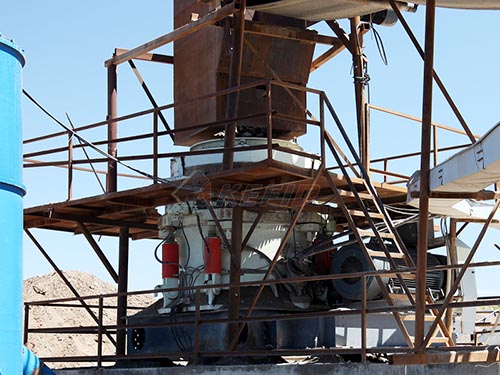
Commissioning Training):
Technical File Archiving: While held by manufacturer/importer minimum years you as end-user have right access relevant parts authorities request Maintain complete copy project records This vital demonstrating due diligence event incident regulatory audit
Pitfall #1 Assuming All “CE Marks” Are Equal
Risk Low-cost suppliers may engage improper self-certification without adequate risk assessment using non-harmonized standards
Mitigation Conduct rigorous supplier audit demand see evidence internal processes test reports
Pitfall #2 Overlooking “Partly Completed Machinery”
Risk Some plants supplied without final drives motors integrated control system classified partly completed machinery come Declaration Incorporation not full DoC Buyer assumes responsibility final assembly into another machine creating legal liability
Mitigation Clarify scope supply contract insist full completed machinery unless you prepared undertake complex conformity assessment yourself
Pitfall #3 Ignoring National Variations
Risk Certain EU member states have additional national regulations supplementing directives e.g., stricter noise limits Germany)
Mitigation Declare intended country use supplier confirm awareness any such national provisions
Pitfall #4 Focusing Only Crushing Unit Neglecting Ancillaries
Risk Conveyors generators etc., must individually carry own marks integrated system overall plant safety assessed
Mitigation Specify entire package including ancillaries must covered under single coherent DoC plant system
Procuring CE-marked stone crusher plant systematic disciplined engineering commercial endeavor primary goal securing productive asset secondary equally important objective transferring legal responsibility regulatory compliance correctly designed manufactured product onto supplier Properly executed this process minimizes long-term risks ensures workforce protection facilitates obtaining local operating licenses enhances operational reliability ultimately safeguarding return investment By embedding stringent verification each stage—from specification final commissioning—buyers transform regulatory requirement into strategic advantage securing state-of-the-art compliant sustainable crushing solution poised deliver value across its entire lifecycle
Lorem ipsum dolor sit amet, consectetur adipisicing elit. Consectetur sequi saepe ut sunt eveniet perferendis excepturi, iste obcaecati. Qui tempore hic sed quia soluta obcaecati vel.