CE-Marked Stone Crusher Machine: A Comprehensive Technical Specification
Introduction
The CE mark on a stone crusher machine is not merely a label; it is a declaration of conformity with the stringent health, safety, and environmental protection requirements of the European Economic Area (EEA). It signifies that the equipment has been designed, manufactured, and tested to meet the essential requirements of applicable EU Directives, primarily the Machinery Directive (2006/42/EC) and often aspects of the Electromagnetic Compatibility Directive (2014/30/EU). This article provides a detailed, objective specification for a CE-marked stone crusher machine, covering its core components, technical parameters, operational principles, and the critical facets of its CE compliance.
1. Machine Overview & Classification
A CE-marked stone crusher is a heavy-duty industrial machine designed to reduce large rocks, quarry stones, or demolition concrete into smaller, graded aggregates such as gravel, sand, or dust. These machines are fundamental to the construction, mining, and recycling industries.
Primary Types Covered by this Specification:
- Jaw Crushers: Utilize compressive force between a fixed and a reciprocating jaw. Ideal for primary crushing.
- Cone Crushers: Employ gyrating cones within a concave bowl for secondary or tertiary crushing, producing finely shaped aggregates.
- Impact Crushers (Horizontal Shaft Impactors – HSI & Vertical Shaft Impactors – VSI): Use high-speed impact forces from hammers or rotors to shatter material. Excellent for softer materials and producing cubical products.
- Gyratory Crushers: Similar in concept to jaw crushers but with a conical head and concave surface, typically used in high-capacity primary crushing stations.
Regardless of type, the CE marking process imposes unified standards on their design and safety features.
2. Core Technical Specifications
Specifications vary by model and manufacturer but are defined within a strict framework under CE guidelines.
A. Performance & Capacity Parameters:
- Feed Opening Size: Dimensions (e.g., 1000mm x 650mm for a jaw crusher) determining maximum feed lump size.
- Throughput Capacity: Measured in tonnes per hour (tph), ranging from small mobile units at 50 tph to large stationary plants exceeding 1000 tph.
- Closed Side Setting (CSS): The minimum gap between crushing members at their closest point (e.g., jaws, concaves/mantles), directly controlling product size output.
- Power Rating: Prime mover power typically from 75 kW to over 400 kW, supplied by electric motors or diesel engines compliant with relevant directives.
- Reduction Ratio: The ratio of feed size to product size; can range from 4:1 to 10:1 per crushing stage.
B. Mechanical & Structural Specifications: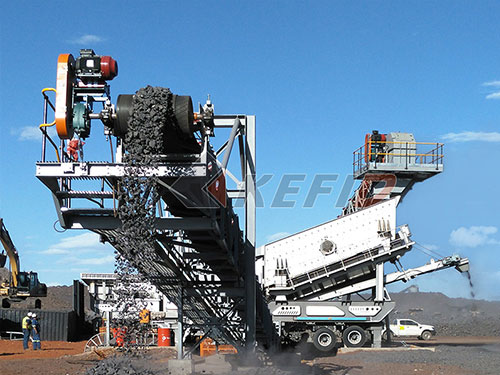
- Frame: Fabricated from high-grade steel plate (e.g., S355J2), stress-relieved to prevent deformation. Robust design ensures stability under dynamic loads.
- Crushing Components: Jaws, concaves, mantles, blow bars are made from wear-resistant materials like manganese steel (Mn14% – Mn22%) or composite alloys with documented mechanical properties.
- Drive System: Includes V-belts/sheaves or direct drives with fluid couplings/hydraulic systems for smooth start-up and overload protection. All rotating parts must be guarded.
- Adjustment System: Hydraulic or mechanical systems for safely adjusting CSS while ensuring zero accidental movement during operation.
3. Detailed Safety Specifications Mandated by CE Compliance
This is the most critical differentiator for a CE-marked machine. Compliance is non-negotiable.
A. Guards & Physical Protection:
- Fixed Guards: Permanently attached guards enclosing all moving parts (belts, flywheels shafts) requiring tools for removal.
- Interlocked Guards: Guards on access hatches or inspection doors equipped with safety switches that immediately cut power when opened. A “lock-out” function is mandatory during maintenance (Zero Mechanical State – ZMS principle).
- Feed Hopper Design: Prevents access to the crushing chamber during operation; may include grids (“grizzlies”) to scalp oversize material.
B. Emergency & Control Systems:
- Emergency Stop Systems: Red mushroom-head buttons compliant with ISO 13850 must be strategically placed around the machine in easily accessible locations. They must initiate a Category 0 stop (immediate power removal).
- Control Panel & Electrical Safety: The panel must have an IP rating suitable for the environment (typically IP54 minimum). All electrical components comply with IEC/EN standards. Main disconnect switch with lock-out capability is required.
- Safety-Related Control Systems: Must perform according to Performance Level “d” or “e” (ISO 13849-1) depending on risk assessment.
C. Noise & Dust Emission Control:
CE marking requires adherence to permissible sound power levels.
- Noise Specification: Enclosures lined with acoustic damping materials. Crushers often specify sound power levels below 110 dB(A) at operator positions through design measures.
- Dust Suppression System: Integrated spray systems with nozzles at feed/discharge points or connections for external dust extraction/filtration units to protect operators’ health and the environment.
4. Documentation & Conformity Assessment
The machine’s physical attributes are only part of the specification; comprehensive documentation is legally required.
A. Technical File (Held by Manufacturer):
Includes detailed risk assessment records according to ISO 12100:2010), design calculations, test reports (noise/vibration), circuit diagrams bills of material lists of harmonized standards applied e.g., EN ISO 14120 Guards EN ISO 13857 Safety distances).
B. Accompanying Documents Provided User):
1 . Declaration Conformity DoC): Legal document stating manufacturer’s name address details machinery type serial number listing all applicable EU Directives harmonized standards used date place signature This what authorizes affixing mark
2 . Instruction Manual Exhaustive manual containing:
- Clear instructions safe installation commissioning use
- Comprehensive maintenance schedules lubrication guides
- Step-by-step procedures clearing blockages (“jamming”) wearing part replacement using lock-out/tag-out LOTOTO)
- Transport lifting diagrams weight information center gravity)
- Basic troubleshooting guide spare parts list
3 . Logbook Recommended record maintenance repairs
Operational Environmental Considerations
CE-marked crushers designed operate within defined parameters:
- Ambient Temperature Range Typically -20°C +40°C
- Material Hardness Abrasiveness Defined via indices like Bond Work Index Los Angeles Abrasion Value)
- Moisture Content High moisture can affect capacity lead clogging addressed design feed chutes)
Conclusion Choosing CE-Marked Crusher
Selecting CE-marked stone crusher machine therefore choosing system engineered holistic balance performance reliability foremost operator safety environmental stewardship Specifications extend beyond raw crushing power encompass integrated fail-safe engineering comprehensive procedural documentation Ultimately provides assurance regulatory compliance EEA reduces liability end-user ensures foundational level protection personnel working alongside powerful potentially hazardous equipment investment CE-marked equipment investment productivity within framework responsible modern industrial practice
