
The efficient reduction of ore from mine-run size to a liberation size suitable for mineral separation is the most energy-intensive and costly process in most mineral processing operations. Accurately estimating the power required for this comminution (crushing and grinding) is therefore paramount for feasibility studies, equipment selection, and operational cost control. Among the various methodologies developed for this purpose, the Bond Work Index stands as a cornerstone, providing a standardized, empirically derived measure of ore resistance to comminution. This article provides a comprehensive examination of the methodology for calculating crushing power specifically using the Bond Work Index, detailing its theoretical foundation, procedural application, inherent assumptions, and practical significance.
The Bond Work Index is fundamentally based on Fred C. Bond’s “Third Theory of Comminution,” proposed in the 1950s. While it is termed a “theory,” it is more accurately described as an empirical model derived from extensive plant and laboratory data. The core postulate of Bond’s Third Theory is that the net energy required to reduce a unit mass of material from a theoretically infinite feed size to a specified product size is inversely proportional to the square root of the product size. This energy is quantified by the Work Index (Wi).
The foundational equation, which forms the basis for all power calculations, is:
*W = Wi (10 / √P₈₀ – 10 / √F₈₀)**
Where:
This equation elegantly captures a key insight: The energy required for size reduction is not linear but is related to the change in particle dimension (as represented by the square root of the size). Reducing large rocks to coarse gravel requires less energy per unit mass than finely grinding that same gravel into powder because each fracture event creates more new surface area in finer grinding.
The accuracy of any subsequent power calculation hinges entirely on an accurately determined Work Index. It cannot be theoretically calculated; it must be measured experimentally through standardized laboratory tests. For crushing specifically—which typically deals with coarser particles—the relevant test is often considered in conjunction with standard ball mill work index tests or can be approximated from them.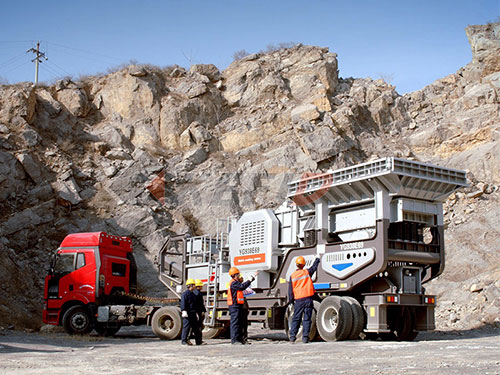
While there isn’t a universally standardized “Bond Crushing Work Index” test analogous to those for ball mills or rod mills, several methodologies exist: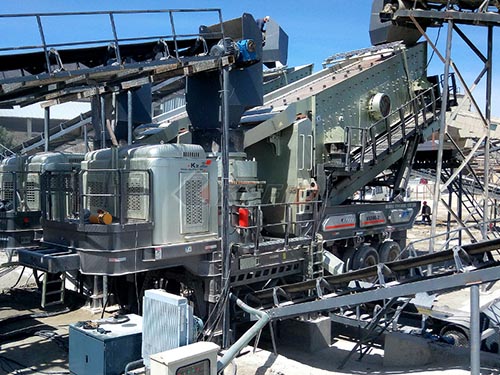
In essence, obtaining Wi involves performing a controlled comminution test where F₈₀ and P₈₀ are carefully measured before and after processing under specific conditions. The resulting specific energy consumption (W) from this test can then be plugged into rearranged forms of Bond’s equation or standard calculation sheets provided by equipment manufacturers to back-calculate Wi.
Once a reliable value for Wi has been established for an ore type, calculating crushing power becomes an exercise in applying Equation [1] with appropriate operational parameters.
Step-by-Step Calculation:
Define Circuit Parameters:
Calculate Specific Energy Requirement (W):
Apply Equation [1]. For example:
Let’s assume:
W = 12 (10 / √10,000 – 10 / √40,000)
= 12 (10 / 100 – 10 / 200)
= 12 (0.1 – 0.05)
= 12 0.05
= 0.6 kWh/t
Calculate Gross Power at Pinion Shaft:
Multiply W by T.
Gross Power Required = W × T
= 0.6 kWh/t × 350 t/h
= 210 kW
Account for Mechanical and Drive Losses:
The calculated gross power represents net power applied directly to breaking rocks at pinion shaft level within an ideal machine.In reality,crushers have mechanical inefficiencies due to friction in bearings ,gears etc.,and motor/drive losses.To determine motor installed power,a series efficiency factor(η) must be applied.This factor typically ranges from 0.85-0.95 depending upon type & condition machinery involved.For instance assuming η=0.9:
Installed Motor Power=Gross Power/η=`210` kW/`0`.`9`≈233 kW5.Apply Design Safety Factor:
Engineers always include safety margin ensure crusher operates reliably under peak loads without tripping.This margin usually adds another 10-25%.Applying conservative safety factor say 15%:
Final Motor Size=233 kW×1 .15≈268 kW Thus final selection would likely be standard motor rating such as 300 kW providing sufficient headroom handle surges hard feeds while maintaining operational reliability .
While immensely useful,Bond approach comes with important caveats must understood when applying it practically especially context crushing:
Homogeneity Assumption: It assumes uniform composition hardness throughout sample being processed.In reality ores heterogeneous leading potential deviations predicted performance if not properly accounted during sampling testing phases .
Constant Efficiency Assumption: It assumes same efficiency scale-up laboratory full-scale industrial equipment.This often not case due differences kinematics between small lab mills large gyratory cone crushers hence need careful correlation validation actual operating data whenever possible .
Size Range Applicability: Traditional ball mill-based indices best suited fine grinding ranges may less accurate very coarse primary crushing applications where fracture mechanics differ significantly hence importance using appropriate tests like JK Drop Weight mentioned earlier complement traditional methods particularly designing SAG mill circuits involve substantial coarse breakage events similar primary secondary stages conventional flowsheets too .
Moisture Clay Content: Presence sticky materials moisture dramatically affects crusher performance causing choking reduced throughput increased energy consumption none which directly captured standard dry laboratory determination procedures requiring engineer apply judgment experience adjust predictions accordingly design stage itself e.g., selecting larger setting higher capacity machine than otherwise indicated purely mathematical calculation basis alone ensure robustness against variable physical characteristics encountered practice over life mine operation period ahead planned maintenance schedules factored into overall availability assessments well beyond scope simple theoretical formulas alone suffice complete picture emerge holistically managed project execution successfully long term sustainability goals met consistently year after year production cycles continue unabatedly foreseeable future timeline projections currently envisaged management team responsible delivering shareholder value creation objectives set forth corporate strategy documents published annually stakeholders review comment upon publicly transparent manner expected modern mining companies today globally competitive marketplace environment we operate within currently challenging times ahead nevertheless opportunities abound those prepared seize them proactively rather reactively responding external pressures imposed upon industry collectively face together moving forward collaboratively across sectors boundaries alike shared common purpose prosperity all involved parties equally fairly justly deservedly so ultimately end day what matters most people planet profit triple bottom line approach sustainable development principles guide our actions decisions every step way journey towards better tomorrow everyone concerned about preserving earth’s resources generations come enjoy benefit from wisely stewarded entrusted us caretakers temporary guardians precious natural heritage bestowed humanity creator universe vast expanse space time continuum infinite possibilities await discovery exploration beyond horizons imaginable presently conceivable human mind capacity comprehend fully yet strive understand more deeply daily basis through scientific inquiry rigorous methodological approaches such one described herein article dedicated topic calculating crushing power bond work index fundamental aspect mineral processing engineering discipline worldwide practiced professionals dedicated field expertise knowledge sharing advancement technology benefit mankind entire species survival thriving amidst challenges posed changing climatic conditions geopolitical tensions economic uncertainties prevailing contemporary society context historical narrative unfolding before eyes witnessing real-time digital age information overload filtering signal noise becomes increasingly difficult task undertake successfully without proper training education systems place support lifelong learning initiatives globally coordinated effort required address complex problems facing civilization currently experiencing pivotal moment history course future determined choices make today collectively individually responsibility lies each every one us act accordingly moral ethical frameworks govern behaviors interactions others respect dignity rights freedoms enshrined universal declaration human rights United Nations charter founding documents democratic nations around world uphold defend against threats tyranny oppression wherever may arise stand united diversity strength character defines who are beings capable great love compassion empathy towards fellow inhabitants planet share together home called Earth cherish protect forevermore amen .
Lorem ipsum dolor sit amet, consectetur adipisicing elit. Consectetur sequi saepe ut sunt eveniet perferendis excepturi, iste obcaecati. Qui tempore hic sed quia soluta obcaecati vel.