The Bulk Stone Crusher Plant Factory: Engineering the Backbone of Modern Infrastructure
In the vast ecosystem of industrial manufacturing and construction, few facilities are as fundamental yet technologically sophisticated as the bulk stone crusher plant factory. This is not merely a production site for machinery; it is a specialized engineering hub where raw steel, advanced hydraulics, and digital control systems converge to create the stationary and mobile heartbeats of quarrying, mining, and large-scale construction projects worldwide. A bulk crusher plant factory is responsible for designing, fabricating, assembling, and testing integrated systems that transform colossal boulders into precisely graded aggregates—the essential materials for everything from concrete and asphalt to railway ballast and erosion control.
Core Function and Product Spectrum
The primary output of such a factory is not a single machine, but a complete processing system—a “plant.” These plants are engineered in bulk, meaning standardized modular designs are produced efficiently while allowing for customization to meet specific client needs regarding capacity, feedstock, and final product specifications.
The product range typically includes:
- Stationary Crushing & Screening Plants: Designed for long-term installation at a quarry or mine. These are heavy-duty, high-capacity systems built for decades of service. The factory produces massive components like primary jaw crushers (capable of swallowing rocks measured in feet), secondary cone or impact crushers, multi-deck vibrating screens, conveyor systems spanning hundreds of meters, and centralized control cabins.
- Mobile & Track-Mounted Plants: A growing segment driven by demand for flexibility and rapid deployment. The factory integrates crushers, screens, and conveyors onto single or multiple tracked chassis, creating self-propelled units that can be moved between sites or within a large project area. Engineering focuses on optimizing power-to-weight ratios, compact design, and quick setup times.
- Portable Plants: Often wheel-mounted for highway towing between sites. These represent a balance between mobility and capacity.
- Modular Plants: The epitome of factory-based efficiency. All major components (crusher modules, screen towers, feed hoppers) are built as self-contained skid-mounted units. They are shipped globally in standard containers and bolted together on-site with minimal civil work, drastically reducing installation time and cost.
The Factory Floor: A Symphony of Heavy Engineering
A tour through an active bulk plant factory reveals a complex operation segmented into specialized zones:
- Design & Engineering Hub: Before any metal is cut, plants are modeled in 3D CAD/BIM software. Engineers perform finite element analysis (FEA) on critical parts like crusher frames to ensure structural integrity under immense cyclical loads. Process flow simulations optimize material throughput and gradation.
- Steel Fabrication Bay: This is where raw materials meet brute force. High-strength steel plate (often AR400 abrasion-resistant steel for wear parts) is cut using CNC plasma or laser cutters for precision. Massive sections are then welded by robotic arms and skilled welders using submerged arc welding (SAW) techniques to create crusher bodies, hoppers, and chassis frames.
- Machining & Assembly Lines: Critical components like crusher shafts (for cones or impactors), eccentric assemblies (for jaws), and screen bearing housings undergo precision machining on large lathes and milling centers. In dedicated assembly bays, these parts come together: bearings the size of truck tires are fitted; hydraulic cylinders for adjustment and clearing are installed; manganese alloy crushing liners—the consumable wear surfaces—are mounted.
- Electrical & Control Systems Integration: Modern plants are “smart.” Panels housing PLCs (Programmable Logic Controllers), variable frequency drives (VFDs) for controlling motor speed/ torque ,and sophisticated sensor networks are wired into the machine. This enables automated operation, remote monitoring via telematics ,and real-time diagnostics to prevent costly unplanned downtime.
- Paint & Weatherization: After assembly ,components undergo surface preparation (shot blasting) and receive multiple coats of industrial-grade paint in climate-controlled booths ,ensuring corrosion resistance for harsh outdoor environments.
- Testing & Commissioning Area: No reputable factory ships without testing .This may involve running the plant at no-load to check alignment ,vibration ,and electrical functions .Some advanced facilities have test stands where crushers process actual rock to verify performance metrics against design specifications before disassembly for shipment.
Key Technological Drivers
The evolution of these factories is driven by several key trends:
- Automation & Digitalization: IoT sensors monitor vibration ,temperature ,pressure ,and wear in real-time .Predictive maintenance algorithms analyze this data to schedule part replacements before failure .Automated setting adjustment systems on crushers ensure consistent product size while optimizing energy use.
- Energy Efficiency & Sustainability: Crushers are significant energy consumers .Factories now focus on designing systems with high-efficiency motors ,regenerative drives that capture energy ,and optimized crushing chambers that reduce waste power .Dust suppression systems(using mist cannons or foam) and noise encapsulation modules are now standard offerings to minimize environmental impact .
- Material Science Advancements: The development of superior alloys for wear parts extends liner life dramatically ,reducing operating costs and downtime for customers .Composite materials are used in non-structural areas to reduce weight .
- Modularity & Scalability: The shift towards modular design allows clients to start with a basic configuration(primary + screen)and later add secondary/tertiary crushing stages or washing systems as their business grows .This “Lego-block” approach is manufactured efficiently in the factory .
Market Dynamics & Strategic Importance
Bulk stone crusher plant factories serve a global market tied directly to infrastructure spending ,mining activity ,and urbanization trends .Their clients range from multinational mining conglomerates(requiring mega-plants processing thousands of tons per hour)to regional aggregate producers serving local construction markets .
Strategic factors include: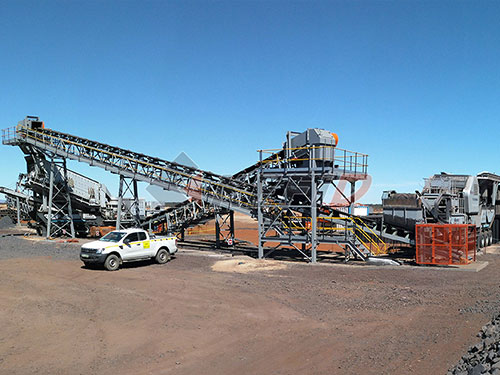
- Logistics Mastery: Transporting multi-ton components requires meticulous planning .Factories often need direct rail spurs or access to deep-water ports .
- After-Sales Ecosystem: The factory’s role extends beyond delivery .It supports a global network providing spare parts(leveraging just-in-time inventory systems),technical field service,and operator training—a crucial source of recurring revenue .
- Customization vs Standardization Balance: The core challenge is producing cost-effective bulk designs while accommodating specific client requirements like unique rock hardness(measured by Los Angeles Abrasion Index or Bond Work Index),desired product shapes(cubical vs flaky),or space constraints .
Challenges Facing the Industry
Factories face persistent challenges: volatile raw material(steel)prices; intense global competition; stringent emissions regulations governing diesel engines on mobile plants; skilled labor shortages(welders,machinists);and pressure from clients demanding ever-higher reliability with lower total cost of ownership(TCO).
Conclusion
The bulk stone crusher plant factory is far more than an assembly line ;it is a center of applied mechanical,civil,and electrical engineering.It transforms abstract process requirements into rugged,tangible assets that literally build our physical world.From its drawing boards emerge not just machines,but entire material production ecosystems.The relentless innovation within these factories—towards greater efficiency,intelligence,and sustainability—directly enables progress in construction,making them indispensable yet often unseen pillars of modern industrial civilization.As global demand for aggregates continues its upward trajectory,the strategic importance,and technological sophisticationof these specialized manufacturing hubs will only continue to grow
