The BULK JC5000 Jaw Crusher: A Detailed Technical Analysis for High-Capacity Primary Crushing
In the demanding world of mineral processing, mining, and large-scale aggregate production, the primary crushing stage sets the fundamental tone for downstream efficiency, product quality, and overall operational cost. At this critical juncture, robustness, capacity, and reliability are non-negotiable. The BULK JC5000 Jaw Crusher positions itself as a formidable solution engineered specifically for these high-tonnage, heavy-duty applications. This detailed technical analysis delves into the design philosophy, mechanical specifications, operational features, and ideal application scenarios of this primary crushing workhorse.
1. Design Philosophy and Core Positioning
The BULK JC5000 is unequivocally designed as a high-capacity, heavy-duty primary crusher. Its core mission is to accept large feed material (typically run-of-mine ore or blasted quarry rock) at high volumes and reduce it to a manageable size for secondary crushing circuits. The design prioritizes: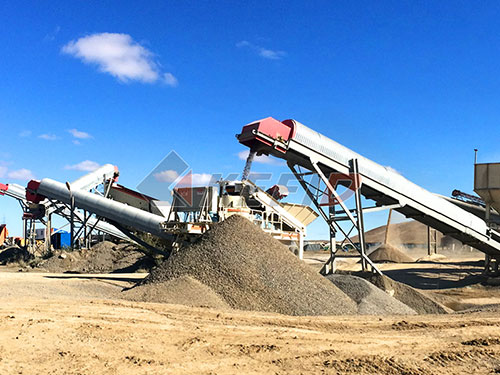
- Structural Integrity: To withstand immense cyclical forces and abrasive feed materials.
- Operational Uptime: Minimizing maintenance requirements and simplifying service access.
- Process Efficiency: Delivering consistent product gradation with optimal power utilization.
- Safety & Control: Integrating modern safety features and control systems for stable operation.
It is a machine built not merely to crush rock but to serve as the reliable, high-production foundation of a processing plant.
2. Key Technical Specifications & Mechanical Architecture
A datasheet for the JC5000 reveals a machine of substantial proportions and power. While specific figures may vary slightly by manufacturer or model year, the general specification range is indicative of its class.
Crushing Chamber & Feed Opening:
- Feed Opening: Approximately 1500mm x 2000mm (59″ x 79″). This large gape allows it to accommodate sizable boulders, reducing the need for pre-splitting in many operations.
- Chamber Design: Typically features a deep, symmetrical crushing chamber with aggressive nip angles. This geometry ensures efficient grip on the feed material, promotes inter-particle crushing for better reduction ratios (often in the range of 6:1 to 8:1), and minimizes the risk of bridging or choking.
Drive System & Power:
- Power Plant: Driven by a high-torque electric motor typically rated between 200 kW to 315 kW (270 HP to 420 HP), depending on configuration and desired capacity.
- Drive Mechanism: Employs a robust eccentric shaft mounted on heavy-duty spherical roller bearings. This shaft is larger in diameter than those found in smaller crushers to handle the significant stress. The motion is transmitted via durable toggle plates to the moving jaw.
Capacity & Throughput:
- Nominal Capacity: Throughput is highly dependent on feed material characteristics (hardness, abrasiveness, density), feed size distribution, crusher setting (closed side setting – CSS), and chamber profile. For medium-hard materials like granite or basalt, the JC5000 can achieve capacities ranging from 750 to 1,500 metric tons per hour. For harder ores or with tighter settings, throughput would be proportionally lower but still substantial.
Machine Weight & Dimensions:
As a stationary or semi-mobile primary unit, the JC5000 is a significant structure. Total weight often exceeds 85,000 kg, with dimensions requiring careful planning for transportation and foundation design. Its solid mass contributes directly to its stability under load.
3. Critical Components & Advanced Features
Beyond basic specs, the value of the JC5000 lies in its component selection and engineered features.
Jaw Dies (Liners):
- Constructed from high-grade manganese steel (often 18-22% Mn) with possible alloying elements like chromium for enhanced wear life in abrasive conditions.
- Designs often include multiple tooth profiles (e.g., corrugated, quasi) optimized for different materials.
- A reversible design maximizes liner utilization before replacement.
Frame Construction:
- The frame is not fabricated from plate steel but is frequently a massive cast steel or fabricated steel structure. A cast frame offers superior fatigue resistance and integrity under shock loads compared to welded alternatives.
- Finite Element Analysis (FEA) is used during design to optimize stress distribution and eliminate potential failure points.
Adjustment System (CSS):
- Utilizes a hydraulic toggle tensioning system or shim plates for setting adjustment.
- Hydraulic Systems: Allow remote adjustment via hydraulic rams integrated into the toggle seat. This enables quick setting changes for product size alteration or clearing blockages safely from a distance—a major operational advantage.
- Shim Systems: A traditional mechanical method using inserted metal plates; robust but more time-consuming.
Safety & Protection:
- Non-contact labyrinth seals protect bearings from dust ingress while avoiding friction-based wear.
- Integrated overload protection devices are standard:
-
- Mechanically fractured toggle plates designed to break under extreme uncrushable overloads (e.g., tramp metal), protecting more expensive components like the shaft and frame.
-
- Hydraulic systems may incorporate relief valves that allow temporary opening of the swing jaw under pressure before automatically resetting—minimizing downtime after an event.
4. Operational Characteristics & Product Gradation
The JC5000 operates on the principle of compressive force through cyclic motion (Elliptical Crushing Action). The moving jaw crushes material against the fixed jaw during its forward stroke; on the return stroke, crushed material gravitates down through the chamber until small enough to discharge at the bottom.
The resulting product gradation curve is influenced by CSS but will inherently be relatively coarse—as expected from any primary jaw crusher—with significant portions in larger size fractions suitable as feed for secondary cone crushers or gyratories. Its strength lies not in producing fine sand but in reliably creating minus-250mm to minus-300mm product from meter-sized feed at very high rates.
5. Application Suitability
The BULK JC5000 excels in specific environments:
- Large-Scale Hard Rock Mining: Primary crushing of copper-, gold-, or iron-ore directly from haul trucks.
- Major Aggregate Quarries: Primary reduction of blasted limestone, granite,dolomite feeding high-volume asphalt/concrete plants.
- Industrial Mineral Processing: Handling large volumes of phosphate rock,bauxite etc..
It may be less suited for smaller quarries due to its capital cost footprint or applications requiring very fine primary product where an impact crusher might be considered
6 Installation Maintenance Considerations
Successful deployment requires:
- A massive reinforced concrete foundation capable absorbing dynamic loads
- Potentially apron feeder ensure consistent even feeding across full width chamber
- Ample space around crusher safe walkways liner replacement shaft servicing
- Routine maintenance focuses lubrication monitoring bearing temperatures regular inspection jaw dies toggle plates Hydraulic system checks
7 Conclusion
The BULK JC5000 Jaw Crusher represents classic brute-force engineering refined modern reliability features It stands solution where throughput durability paramount By combining massive structural strength intelligent protective systems straightforward yet highly effective crushing action provides plant operators dependable high-capacity first stage reduction Its value realized continuous operation under punishing conditions making cornerstone any circuit designed process thousands tons material daily essence embodies principle doing one thing doing exceptionally well serving unchallenged titan primary crushing landscape
