Bulk Iron Ore Crushing Plant Wholesale Price: A Comprehensive Analysis
The global iron ore industry is the foundational pillar of modern steel production and, by extension, global infrastructure and manufacturing. At the heart of this vast supply chain lies a critical, capital-intensive process: bulk iron ore crushing. For mining companies, contractors, and large-scale buyers, understanding the dynamics of Bulk Iron Ore Crushing Plant Wholesale Price is not merely a procurement exercise but a strategic financial decision impacting project viability, operational efficiency, and long-term profitability. This article provides a detailed, professional analysis of the factors influencing wholesale pricing, the components of a typical plant, market trends, and key considerations for investment.
1. Deconstructing the “Bulk” in Crushing Plants
Firstly, it is crucial to define “bulk” in this context. A bulk crushing plant refers to a high-capacity, stationary or semi-mobile system designed to process millions of tonnes of run-of-mine (ROM) iron ore annually. These are not small-scale or portable units. Capacities typically range from 1,000 to over 6,000 tonnes per hour (tph). The “wholesale price” encompasses the complete engineered system—from design and manufacturing to delivery and commissioning—purchased as a single package or major modules from specialized OEMs (Original Equipment Manufacturers).
2. Core Components & Technological Spectrum: The Price Drivers
The wholesale price is not a single figure but an aggregation of costs from a complex system. Key components and their technological variations significantly drive the final price.
-
Primary Crusher: The first reduction stage handles the largest feed size.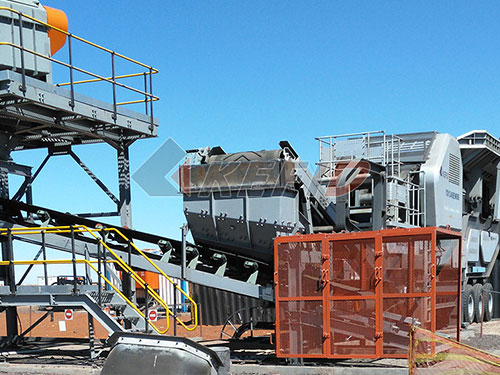
- Gyratory Crushers: Dominant in high-capacity (>1,000 tph) operations. Higher capital cost but offer greater reliability, throughput, and lower energy-per-tonne in continuous operation.
- Jaw Crushers: Common for slightly lower capacities or harder ores. Lower initial cost but may have higher long-term maintenance in bulk applications.
- Price Impact: A premium gyratory crusher can account for 15-25% of the total plant equipment cost.
-
Secondary & Tertiary Crushing Stages: These stages achieve the final product size (typically lump ore <31.5mm and fines <6.3mm).
- Cone Crushers: The standard for secondary/tertiary crushing. Prices vary widely based on horsepower, chamber design (for finer product shape), and automation features (like automatic setting adjustment).
- High-Pressure Grinding Rolls (HPGR): An increasingly adopted technology for competent ores. HPGRs offer superior energy efficiency (up to 30% savings) and produce micro-cracks in particles, benefiting downstream grinding. They command a significant price premium over traditional cone crushers but offer life-cycle cost savings.
-
Screening System: Critical for classification and efficiency.
- Multi-deck vibrating screens (banana screens for high efficiency) are standard.
- Price scales with size, deck number, material (polyurethane vs. rubber decks), and vibration mechanism.
-
Material Handling Conveyance: In bulk plants, kilometers of conveyor belts with advanced drives (VFDs), transfer stations, dust suppression systems, and sophisticated control systems represent a massive portion—often 30-40%—of the total installed cost.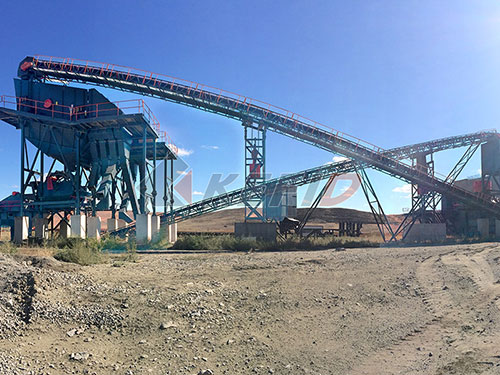
-
Electrical & Control Systems: The plant’s “nervous system.” A state-of-the-art Distributed Control System (DCS) with PLCs (Programmable Logic Controllers), motor control centers, advanced process control software for optimization, and robust instrumentation adds substantial cost but is non-negotiable for modern efficiency.
-
Structural Steel & Civil Works: While sometimes quoted separately from equipment wholesale price; modular plants include heavy structural skids. Site preparation foundations are almost always excluded from OEM quotes.
-
Mobility Concept:
- Stationary Plant: Lowest per-tonne equipment cost for ultra-high capacity greenfield sites with >20-year mine life.
- Semi-Mobile/Skid-Mounted: Higher unit cost due to modularization but allows relocation within a large mine pit every few years, reducing truck haulage distance.
- Fully Mobile/Fully Mobile In-Pit Crushing & Conveying (IPCC): Highest equipment capital cost per tonne but offers dramatic reductions in operating costs (fuel labor tires) by eliminating mine trucks.
3. Key Factors Influencing Wholesale Price
Beyond component selection:
- Capacity & Throughput: This is the primary driver. A 2x increase in capacity does not mean 2x price due to economies of scale on larger components.
- Ore Characteristics: Abrasiveness (Silica content), moisture content (<3% vs >10%), clay content (“sticky ore”), work index/hardness directly influence material choices wear liners alloy selection crusher type all impacting price
- Product Specifications: Required final sizing determines number stages complexity circuit
- Automation Level: Basic control vs fully automated with AI-driven optimization remote monitoring predictive maintenance
- Supplier/OEM Brand & Origin: Premium European/North American brands command higher prices than some Asian manufacturers reflecting differences engineering standards service warranties intellectual property
- Scope of Supply (“Battery Limits”): Does quote include just equipment? Or also engineering design shipping erection commissioning spares? An EPC LSTK Lump Sum Turnkey contract will be multiples higher than FOB equipment-only quote
7 Market Conditions Steel prices component availability global supply chain pressures labor costs all fluctuate
4 Market Trends Shaping Investment & Pricing
- Sustainability & Energy Efficiency: There is growing willingness pay premium technologies like HPGRs that reduce overall energy consumption carbon footprint This aligns with Scope emissions reporting ESG Environmental Social Governance goals mining companies
- Digitalization & Smart Plants: Integration Industrial Internet Things IIoT sensors data analytics platforms becoming standard expectation adding upfront cost delivering long-term operational savings through optimized performance reduced downtime
- Modularization Pre-assembly: To reduce risky costly on-site construction time OEMs increasingly offering highly pre-assembled modules tested before shipment This shifts work factory adds some manufacturing cost reduces overall project risk schedule
*Focus on Life-Cycle Cost LCC vs Initial Capital Expenditure CAPEX Sophisticated buyers now evaluate total cost ownership over + years rather than just purchase price This makes technologies higher upfront CAPEX more attractive if they lower OPEX operating expenditure through better wear life energy use availability
Conclusion Strategic Procurement Perspective
The wholesale price bulk iron ore crushing plant represents significant investment ranging tens millions hundreds millions USD depending scale sophistication There no one-size-fits-all figure However informed buyer must approach procurement strategic framework:
1 Conduct thorough geometallurgical testwork understand ore body characteristics guide technology selection avoid costly underperformance
2 Develop detailed Total Cost Ownership TCO model comparing different technology scenarios across -year horizon
3 Clearly define scope supply early process engage reputable OEMs early front-end engineering design FEED studies
4 Consider financing options partnerships where OEMs share risk reward performance-based contracts
5 Prioritize flexibility future expansion potential changes ore body
Ultimately cheapest plant may most expensive long run Conversely intelligent investment robust efficient automated plant tailored specific ore deposit despite higher initial wholesale price will deliver lowest cost per tonne over life mine securing competitive advantage volatile global iron market
