
In the vast, interconnected chain of global heavy industry, the Bulk Iron Ore Crushing Plant Producer occupies a critical, though often overlooked, position. These specialized engineering firms are not miners, nor are they steelmakers. Instead, they are the architects and builders of the industrial digestive system that transforms raw, blasted ore—massive, irregular lumps often exceeding a meter in size—into a precisely graded, transportable, and furnace-ready commodity. Their work forms the indispensable link between extraction and beneficiation, setting the stage for all downstream value addition. This article delves into the multifaceted role of these producers, exploring their technological expertise, plant design philosophies, key market drivers, and their pivotal contribution to modern mining efficiency and sustainability.
A bulk iron ore crushing plant is designed to handle thousands of tons of material per hour with maximum reliability and minimum downtime. The producer of such a plant is responsible for its entire lifecycle: conceptual design, engineering, manufacturing of key components (or sourcing them from specialized suppliers), installation, commissioning, and often ongoing maintenance support.
The strategic importance of their work cannot be overstated. The primary objective of crushing in iron ore processing is size reduction to liberate iron-bearing minerals (magnetite or hematite) from gangue (silica, alumina). However, for bulk shipping via rail or capesize vessels—where density and flowability are paramount—crushing also ensures optimal blending and homogenization. A well-designed plant produces a consistent product size (typically -30mm to +6mm for direct-shipping ore, or finer for concentrates), which directly impacts:
The technological prowess of a leading crushing plant producer is demonstrated in their application of a multi-stage crushing circuit:
Primary Crushing: This is the first line of attack against run-of-mine (ROM) ore. Producers typically employ massive gyratory crushers or heavy-duty jaw crushers, chosen based on ore hardness (Bond Work Index), abrasiveness (Silica content), and required throughput. Modern gyratory crushers feature advanced hydraulic systems for setting adjustment and clearing tramp metal, designed for continuous operation under extreme stress.
Secondary & Tertiary Crushing: For further reduction to a size suitable for screening and beneficiation. Cone crushers are the workhorses here. Leading producers offer advanced models with hydraulic adjustment, automated wear compensation (like ASRi systems), and chamber optimization software to maintain product gradation as liners wear.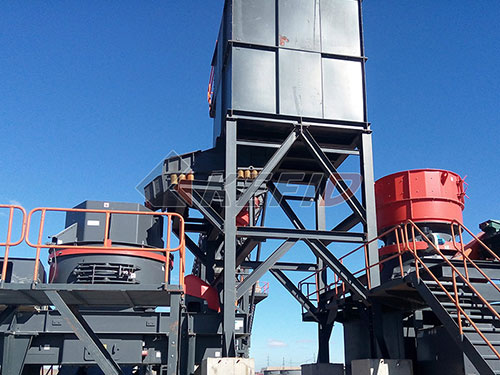
Screening: Integral to closed-circuit operations. Producers design robust vibrating screens (banana screens for high-capacity sizing) that separate crushed material into on-spec product and oversize for re-crushing. The entire circuit flow is simulated using dynamic process simulation software beforehand to optimize screen deck configurations and crusher settings.
Material Handling: A bulk plant is as much about moving material as breaking it. Producers engineer complex networks of high-capacity belt conveyors with sophisticated transfer stations, employing impact beds and skirtboards to minimize degradation and dust generation. Dust suppression systems (water sprays) and full enclosure with baghouse filters are now standard environmental features.
Automation & Digitalization: The modern hallmark of a top-tier producer is the integration of advanced process control systems. These include:
Plant producers tailor designs based on client needs and deposit characteristics:
The demand for new plants or upgrades is shaped by macro forces:
Producers face constant challenges volatile commodity prices force clients demand faster ROI stringent capital discipline need adapt diverse geologies highly abrasive high-silica ores versus sticky clay-rich ores each posing unique clogging wear problems supply chain disruptions critical specialty steel castings large gearboxes
Future directions clear digitalization will deepen integration Internet Things IoT sensors cloud analytics enable fully autonomous self-optimizing circuits artificial intelligence predict optimal shift settings based real-time ore feed characteristics sustainability focus will intensify development hybrid electric drives potential use renewable power sources hydrogen fuel cells remote sites circular economy principles designing easier liner replacement recycling worn components
The bulk iron ore crushing plant producer operates at nexus mechanical engineering materials science process control digital innovation They provide not just heavy machinery but engineered solutions that determine fundamental economic viability mining project By delivering plants combine brutal strength raw processing power with surgical precision data-driven intelligence these firms empower mining companies meet world insatiable appetite steel sustainably efficiently As iron ore remains literal bedrock industrial civilization role these specialized producers will continue be essential transforming inert rock into foundation modern infrastructure global economy Their evolution towards smarter more connected more sustainable systems mirrors broader transformation heavy industry itself proving even most traditional sectors can be frontiers technological advancement
Lorem ipsum dolor sit amet, consectetur adipisicing elit. Consectetur sequi saepe ut sunt eveniet perferendis excepturi, iste obcaecati. Qui tempore hic sed quia soluta obcaecati vel.