Bulk Iron Ore Crushing Plant: A Comprehensive Guide to Optimizing Investment and Operational Efficiency
The procurement and operation of a bulk iron ore crushing plant represent one of the most capital-intensive and technically critical decisions in the mining value chain. The phrase “best price” in this context is a multifaceted concept, extending far beyond the initial capital expenditure (CAPEX) to encompass total cost of ownership (TCO), operational efficiency, plant availability, and final product quality. Achieving the optimal balance between performance and cost requires a deep understanding of engineering principles, operational demands, and lifecycle economics.
1. Deconstructing “Best Price”: From CAPEX to TCO
The quest for the “best price” begins with a fundamental shift in perspective. A low initial bid for equipment can be catastrophically expensive if it leads to high downtime, excessive energy consumption, or inadequate product sizing that penalizes downstream processing.
Key TCO Components:
- Capital Expenditure (CAPEX): The purchase price of crushers, screens, feeders, conveyors, steel structures, electrical systems, and dust suppression units.
- Operational Expenditure (OPEX):
- Energy Consumption: Crushing is highly energy-intensive. The efficiency of the drive systems and the selected comminution circuit directly impacts power costs.
- Wear Parts Consumption: The cost and lifespan of mantles, concaves, jaw plates, liners, and screen meshes are dominant OPEX factors. Material quality (e.g., premium manganese steel) is paramount.
- Maintenance Labor & Downtime: Plant design dictates maintenance accessibility. Modular designs can reduce downtime. Unplanned stoppages are the single largest cost multiplier.
- Spare Parts Inventory: Holding critical spares is essential but ties up capital. Reliability engineering minimizes this need.
- Implied Costs of Poor Performance:
- Sub-Optimal Product Size: Incorrect size distribution reduces blast furnace efficiency or pellet plant throughput, incurring massive hidden costs.
- System Inefficiency: Bottlenecks at one stage limit the entire plant’s capacity, wasting invested capital in other areas.
2. Core Components & Technology Selection: The Heart of the Plant
The “best price” is intrinsically linked to selecting the right technology for the specific ore characteristics (abrasion index, moisture content, silica content, compressive strength) and required throughput.
Primary Crushing: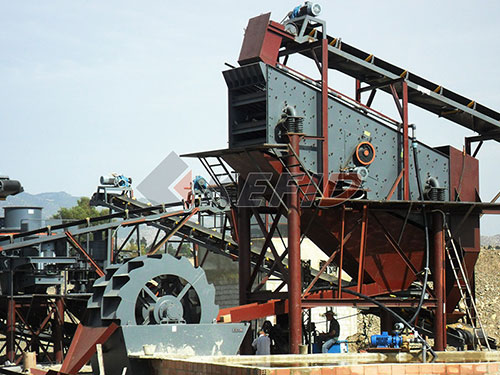
- Gyratory Crushers: The undisputed choice for high-capacity operations (>1,000 t/h). They offer lower installed height than jaw crushers of similar capacity but are more complex and expensive initially. Their continuous action provides high productivity and are ideal for abrasive ore. Best Price Scenario: For large-scale, hard/abrasive ore mines where throughput and reliability outweigh initial cost.
- Jaw Crushers: Robust, simpler in design, with lower initial cost. Well-suited for medium-capacity plants or where ore is less abrasive. Their reciprocating motion can lead to higher wear in very abrasive applications. Best Price Scenario: For mid-sized operations or as a primary unit for moderately abrasive ores where CAPEX sensitivity is high.
Secondary & Tertiary Crushing:
- Cone Crushers: Essential for precise size reduction. Modern models with hydraulic adjustment and clearing systems allow real-time optimization and automatic handling of tramp metal. High-pressure grinding rolls (HPGR) are increasingly used as a tertiary or quaternary stage for energy-efficient liberation.
- High-Pressure Grinding Rolls (HPGR): While high in CAPEX, HPGRs offer significant OPEX savings through dramatically lower energy consumption (20-50% less than conventional circuits) and micro-cracking that improves downstream beneficiation recovery. Their inclusion must be justified by a detailed metallurgical study.
Auxiliary Systems:
- Screening: Efficient classification prevents over-crushing (wasting energy) and ensures specification compliance. Banana screens provide high efficiency in limited space.
- Material Handling: Conveyor design (width, speed), transfer point engineering, and dust sealing are critical for continuous flow.
- Dust Suppression & Control: Not an optional extra. Systems using fine mist or foam suppressants protect equipment, ensure worker health/safety, and maintain environmental compliance—avoiding costly fines.
3. Engineering & Design Philosophy: The Blueprint for Value
The plant layout is not just about fitting equipment; it’s about optimizing flow.
- Modular vs. Fixed Design: Modular plants fabricated off-site can reduce construction time/risk and offer future relocation flexibility but may carry a premium. Fixed plants allow more customization for specific site constraints.
- Reliability-Centered Design: This includes walk-in maintenance platforms around crushers; monorails or hoists for heavy liner changes; redundant conveyor loops; and easy-access chutes with wear liners.
- Automation & Control Systems: A modern PLC/SCADA system is non-negotiable for achieving “best price” operation. It enables:
- Constant cavity level control (choke-fed crushing) for optimal performance.
- Real-time monitoring of power draw, pressure, temperature.
- Automated wear compensation in cone crushers.
- Data logging for predictive maintenance analytics.
4.The Procurement Strategy: Achieving True Value
A strategic procurement process is vital to translate technical requirements into commercial reality.
- Define Specifications Rigorously: Develop a detailed technical document covering ore characteristics (including variability), required annual throughput (+ peak capacity), product size specifications (% passing target size), availability targets (>90%), and site-specific conditions (altitude,temperature).
- Lifecycle Cost Analysis (LCA): Mandate bidders to provide not just equipment prices but estimated OPEX data: power draw per ton crushed; expected wear part life in specific tons; recommended spare parts list with pricing.
- Partner vs.Vendor Approach: Consider long-term service agreements or partnerships with OEMs who can guarantee performance metrics (tons per hour at specified size using your ore). This aligns their incentive with your operational success.
4.Financing Considerations:”Best price” may involve evaluating different financing models like leasing to preserve capital or performance-linked payment terms.
5.Hidden Cost Drivers & Risk Mitigation
Ignoring these areas erodes any perceived savings from a low initial bid:
- Logistics & Installation: Remote site location impacts transportation costs of oversized components.Foundation requirements(civil works)can vary significantly between crusher types.Simplicity of erection should be evaluated
.*
Ore Variability :A plant designed only for “average”ore will struggle when harder or wetter sections are encountered.Design must include margins( e.g., motor power ,cavity volume )to handle these variations without becoming a bottleneck.
Future Expansion :Is the plant design scalable?Can another module be added?This foresight protects long-term investment.
Training & Commissioning Support :Adequate budget must be allocated for comprehensive training of operations/maintenance staff by the supplier,andfor proper commissioning with ore on site.This ensures rapid ramp-up to design capacity.
Conclusion:The Holistic Definition of “Best Price”
In conclusion,the best-priced bulk iron ore crushing plant is not merelythe cheapest capital purchase.Itisacompletely integrated system engineeredforlowestcostpertoncrushedoverits20-30yearlifespan.Itisbornfromacollaborativeprocessbetween themineoperatorandexperiencedengineeringpartnersthatprioritizes:
1.Technical Suitability :Matchingcrushertechnologytotheorebody’scharacteristics.
2.Operational Efficiency :Maximizingavailabilityandreliabilitywhileminimizingenergyandwearcosts.
3.Design Intelligence :Facilitatingmaintenanceandenablingfutureexpansion.
4.Strategic Procurement :Basingdecisionsonlifecyclecostanalysisandperformanceguaranteesratherthanstickerpricealone.
Ultimately,theplantthatdeliversthetrue”bestprice”istheonethatactsasareliable,predictable,and efficientfoundationfortheentireminingoperation,turningrawironoreintoprofitableproductswithmaximumyieldandminimumoperationalrisk.Theinvestmentindiligentfront-endengineeringandqualityequipmentinvariablypaysmultifolddividendsthroughdecadesofstable,hassle-freeproduction
