Bulk Gold Ore Crushing Equipment Design Service: A Comprehensive Guide to Optimized Mineral Processing
In the high-stakes, capital-intensive world of gold mining, the journey from solid rock to precious metal begins with a critical, yet often under-optimized, stage: bulk ore crushing. The efficiency, reliability, and design of the crushing circuit directly dictate downstream recovery rates, operational costs, and overall project viability. This is where specialized Bulk Gold Ore Crushing Equipment Design Service transitions from a technical consideration to a strategic imperative. It represents a holistic engineering discipline focused on designing, specifying, and integrating crushing systems tailored to the unique characteristics of gold ores and the specific economic goals of a mining operation.
1. The Critical Role of Crushing in Gold Processing
Gold ores are notoriously heterogeneous. They can range from soft, clay-rich oxides to exceptionally hard and abrasive sulphides (e.g., pyrite-bearing ores). The primary objective of crushing is to reduce run-of-mine (ROM) ore to a size suitable for the downstream liberation and recovery process—typically grinding (via SAG/Ball mills) or, in some cases, direct leaching for heap leach operations.
A poorly designed crushing plant becomes a bottleneck, causing:
- Throughput Limitations: Inability to feed the milling circuit at its design capacity.
- Poor Liberation: Inadequately sized feed to grinders reduces gold exposure to leaching agents (cyanide) or recovery surfaces (in gravity/flotation).
- Excessive Energy Consumption: The grinding circuit is the single largest energy consumer in a gold plant. Inefficient crushing that delivers coarser feed forces grinding mills to work harder, exponentially increasing power costs.
- High Maintenance Costs: Equipment not matched to ore abrasiveness or hardness suffers premature wear, leading to frequent downtime and high parts replacement costs.
- Inconsistent Product: Variable feed size disrupts downstream process stability and metallurgical performance.
Therefore, a professional design service aims not merely to select machines but to engineer an integrated system that maximizes availability, optimizes product size distribution at minimum cost per ton, and ensures seamless interface with downstream processes.
2. Core Components of a Professional Design Service
A comprehensive design service is multi-phased and iterative, involving geology, metallurgy, mechanical engineering, and economics.
Phase 1: Ore Characterization & Testwork
This foundational phase involves rigorous analysis of the ore body.
- Geotechnical & Geometallurgical Data: Understanding ore hardness (Bond Work Index, Axb Drop Weight Test), abrasiveness (AI – Abrasion Index), moisture content, clay content (“stickiness”), and mineralogy.
- Crushability Studies: Laboratory-scale testing determines breakage patterns and energy requirements.
- Throughput Requirements: Defined by mine plan and plant lifecycle (e.g., 10 Mtpa for large open-pit vs. 500 tpd for underground).
Phase 2: Flowsheet Development & Circuit Configuration
Based on testwork data, engineers develop the optimal crushing circuit topology.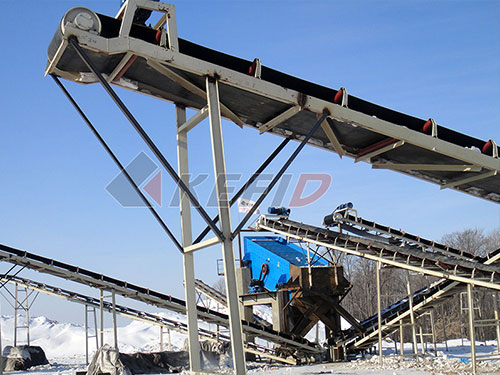
- Stages of Crushing:
- Primary Crushing: Typically performed by gyratory crushers for high-tonnage operations (>5,000 tpd) or jaw crushers for smaller/underground mines. Located close to the mine for ROM size reduction.
- Secondary Crushing: Cone crushers are standard here. They provide further reduction and are often in closed circuit with screens (product is screened; oversize is returned).
- Tertiary/Quaternary Crushing: Additional cone crusher stages for finer product sizes required for milling or heap leach (<12mm). High-Pressure Grinding Rolls (HPGRs) are increasingly used here as an energy-efficient alternative.
- Circuit Type Selection: Open vs. Closed Circuit decisions impact product control. Screening strategy (vibrating screens—type, deck configuration) is integral.
Phase 3: Equipment Selection & Sizing
Precise machine selection balances performance with capital expenditure (CAPEX) and operating expenditure (OPEX).
- Crusher Technology Choice:
- Jaw Crushers: Robust for primary duty; simple design but limited reduction ratio.
- Gyratory Crushers: Higher capacity than jaws; more expensive but more efficient for high-tonnage primary.
- Cone Crushers: Versatile for secondary/tertiary duties; modern models offer advanced automation (like ASRi) for real-time setting adjustment.
- HPGRs: Offer significant energy savings (~20-30% in downstream grinding), produce micro-cracks beneficial for leaching operations like gold recovery from refractory ores.
- (Optional) Impact Crushers: Sometimes used for softer ores but less common due to wear on abrasive gold ores.
- Sizing Calculations: Using empirical models (e.g., Bond’s Law) and manufacturer’s data to select crusher chamber sizes, drive power motors etc., ensuring ample capacity without over-design.
Phase 4: Plant Layout & Infrastructure Design
This “big picture” engineering ensures constructability and operability.
- Material Handling Integration: Designing feeders (apron/vibrating), conveyors (belt width/speed/incline), transfer points with proper chute geometry to minimize spillage/dust/impact wear.
- Dust Suppression & Containment: Critical for environmental compliance and worker health; designing baghouses/filters/misting systems specific to crush points.
- Structural & Civil Design: Foundations capable of handling dynamic loads from vibrating equipment; access platforms for maintenance; building enclosures if required.
Phase 5: Automation & Process Control Strategy
Modern plants are digitally integrated.
Instrumentation: Installing sensors measuring power draw cavity level pressure etc.
Control Logic: Designing PLC/SCADA systems that automate start-up sequences regulate feed rates maintain choke-fed conditions optimize CSS settings ensure surge bin level control etc.
*Data Analytics: Enabling predictive maintenance based on performance trends rather than scheduled downtime.*
Key Considerations Specific To Gold Ores
The design must account unique challenges posed by different types of gold deposits:
1.Refractory Sulphide Ores: Often very hard abrasive requiring robust wear protection liners made manganese steel alloys possibly ceramic linings critical HPGR can be advantageous creating micro-cracks enhancing subsequent oxidation bio-leaching roasting processes before cyanidation*
2.Free-Milling Oxide Ores: Softer but may contain clays causing packing blinding screens handling requires attention possibly incorporating washing scrubbing stages within circuit prevent blockages maintain throughput*
3.Heap Leach Operations: Product size PSD paramount must be tightly controlled achieve optimal percolation avoid fines migration compacting heap typically requires tertiary quaternary stages produce -19mm -12mm well-graded product minimizing “fines” fraction*
4.Gravity-Recoverable Gold GRG: If significant coarse gold present early liberation recovery essential may incorporate gravity concentration units jigs centrifugal concentrators immediately after primary secondary crushing recover coarse gold before fine grinding preventing losses slime coatings flotation tails*
Economic Optimization Lifecycle Perspective
Professional design service adopts total cost ownership TCO approach:
- CAPEX vs OPEX Trade-offs Investing larger more efficient primary crusher higher upfront cost reduces overall energy consumption increases availability lowers long-term operating cost*
- Flexibility Future Expansion Designing modular layouts allow future addition parallel lines upgrades accommodate changing ore characteristics deeper mine levels*
- Maintenance Philosophy Designing ease accessibility major components hydraulic adjustment tramp release systems reduces mean time repair MTTR significantly impacts plant availability*
Conclusion
In conclusion Bulk Gold Ore Crushing Equipment Design Service far transcends simple equipment procurement It sophisticated integration geological understanding mechanical engineering process optimization economic modeling Goal transform variable challenging raw material consistent controlled feedstock enables efficient predictable profitable gold extraction By engaging experienced specialist engineering firms early project feasibility stage miners mitigate technical risk ensure designed system not only technically sound also economically optimal throughout mine life Ultimately right crushing design lays foundation upon which entire metallurgical recovery financial success project built making indispensable component modern responsible gold mining industry
