Bulk Gold Ore Crushing Equipment: A Comprehensive Guide to Technology, Selection, and Cost Optimization

The pursuit of gold, a cornerstone of the global economy and a symbol of enduring value, begins not in the vault but at the mine face with raw ore. For operations processing bulk quantities—from large-scale open-pit mines to high-volume processing plants—the initial comminution stage is not merely a step but a critical determinant of overall profitability. The selection of optimal bulk gold ore crushing equipment at the best price is therefore a complex engineering and economic challenge. This article provides a detailed, professional analysis of the equipment ecosystem, technological considerations, and the multifaceted meaning of “best price” in this demanding sector.

Understanding the Comminution Circuit: More Than Just Crushing

Gold ore crushing is rarely a single-event process. It is integrated into a multi-stage comminution circuit designed to liberate gold-bearing minerals from waste rock at an optimal particle size for downstream processes like milling, gravity separation, or leaching. For bulk operations, this typically involves:

  1. Primary Crushing: The first line of defense, reducing run-of-mine (ROM) ore from potentially over 1 meter in diameter to 100-250 mm. The key here is robustness and capacity.
  2. Secondary Crushing: Further reduction to 20-100 mm, preparing feed for milling.
  3. Tertiary/Quaternary Crushing: For circuits aiming for finer product sizes or employing High-Pressure Grinding Rolls (HPGR), additional stages may be used to produce feed as fine as 6-20 mm.

The choice and arrangement of equipment across these stages define the circuit’s efficiency, energy consumption, and final recovery rates.

Equipment Portfolio for Bulk Gold Ore Processing

1. Primary Crushers: The Heavyweights

  • Jaw Crushers: The workhorses of primary crushing. Modern heavy-duty models (like single-toggle designs) offer high capacity, mechanical simplicity, and reliability. They excel with abrasive ores and can handle large feed sizes. Their “V”-shaped chamber ensures progressive reduction.
  • Gyratory Crushers: The preferred choice for very high-capacity operations (>1,000 t/h). They offer continuous crushing action with higher throughput and lower installed height per capacity unit compared to jaw crushers but come with higher capital costs and more complex maintenance.
  • Selection Criteria: Gyratories win on pure volume; jaw crushers offer flexibility and lower initial cost. Ore characteristics (abrasiveness, clay content) and plant layout are decisive.

2. Secondary & Tertiary Crushers: Precision Reduction

  • Cone Crushers: The dominant technology in these stages. They provide controlled, efficient compression crushing.
    • Standard Head Cone Crushers: For secondary duty.
    • Short Head Cone Crushers: For tertiary/quaternary duty, producing finer product.
    • Key advancements include hydraulic adjustment systems (like ASRi) for real-time optimization and tramp release for uncrushable protection.
  • Impact Crushers (Horizontal Shaft Impactors – HSI): Use high-speed impact rather than compression. Suitable for less abrasive ores where shape is important or for processing softer oxide gold ores. Can offer lower operating costs per ton in specific applications.

3. High-Pressure Grinding Rolls (HPGR): A Game-Changer

HPGRs are increasingly vital in modern gold circuits as tertiary crushers or even in place of primary ball milling. They compress a particle bed between two counter-rotating rolls under extreme pressure (50-350 MPa). For gold ore:

  • Advantages: Dramatically lower energy consumption (~20-50% less than conventional circuits), potential for improved downstream leach kinetics due to micro-fracturing creating more exposed gold surfaces (“leach-starved” particles), and reduced moisture content in product.
  • Consideration: Higher wear on rolls with very abrasive ores; operational optimization is key.

4. Supporting Equipment: The Unsung Heroes

No bulk crushing system operates in isolation.

  • Grizzlies & Scalping Screens: Remove fines before primary crushing to boost efficiency.
  • Vibrating Feeders (e.g., Apron Feeders): Ensure consistent, controlled feed into crushers—critical for performance.
  • Conveyors & Stackers: Handle the massive material flow between stages reliably.

Defining “Best Price”: A Total Cost of Ownership Analysis

In bulk mining equipment procurement, “best price” is a profound concept extending far beyond the initial purchase order (Capital Expenditure – CAPEX). It encompasses the total cost over the equipment’s operational life (Total Cost of Ownership – TCO).

  1. Capital Expenditure (CAPEX): The upfront cost includes the equipment itself plus engineering, shipping, installation, foundation work, and auxiliary systems (dust suppression, electrical). A cheaper crusher requiring massive concrete foundations may have a higher installed CAPEX than a more expensive model with a modular design.Bulk Gold Ore Crushing Equipment Best Price

  2. Operational Expenditure (OPEX): This ongoing cost determines long-term viability.

    • Energy Consumption: Comminution can consume over 50% of a mine’s energy budget. An energy-efficient HPGR or modern cone crusher with variable-speed drives may justify higher CAPEX through massive OPEX savings.
    • Wear Parts & Maintenance: Costs for liners (mantles/concaves), rolls hammers etc., plus labor downtime are critical Abrasive Index testing on ore samples is essential to project these costs accurately Reliability engineering mean time between failures directly impacts availability
    • Labor & Automation: Automated control systems that optimize choke-fed conditions CSS settings represent significant OPEX savings by maximizing throughput product consistency while protecting machinery
  3. Performance-Linked Value:

    • Throughput Capacity: Achieving design tonnage consistently
    • Product Size Distribution: Producing optimal feed for downstream processes improving overall recovery even by fraction significantly outweighs minor equipment savings
    • Availability Uptime: Robust design easy maintenance access translate directly into more processed tons per year

Therefore securing best price means selecting equipment that delivers lowest TCO while meeting technical specifications often involving sophisticated financial modeling net present value NPV analysis

Critical Factors Influencing Equipment Selection & Cost

  1. Ore Characteristics:

    • Competence Strength Hardness Measured by Unconfined Compressive Strength UCS Bond Work Index Wi
    • Abrasiveness Measured by Bond Abrasion Index Ai Cerchar test High abrasivity favors compression crushers jaw cone over impact
    • Moisture Clay Content Can cause packing blinding favoring certain crusher types requiring pre-screening washing
  2. Plant Design Capacity Required Throughput t/h defines size number units Modular designs offer scalability future expansion

3 Site Specific Conditions Altitude remoteness climate affect engine performance maintenance schedules availability spares logistics factor into cost planning

4 Environmental Social Governance ESG Considerations Dust noise control water usage increasingly mandated Modern enclosed systems advanced dust collection add cost but are non-negotiable Energy-efficient equipment reduces carbon footprint aligning with sustainability goals

Market Landscape Procurement Strategy

Leading global suppliers Metso Outotec FLSmidth ThyssenKrupp Sandvik dominate offering full-circuit solutions Chinese manufacturers Shenyang Northern Heavy Industry NHI etc provide competitive alternatives often lower CAPEX but require diligent evaluation quality after-sales support parts availability Procurement strategy should consider:Bulk Gold Ore Crushing Equipment Best Price
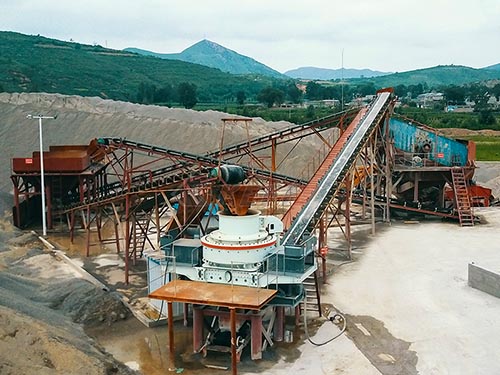
Direct Purchase vs Full-Service Contracts Some suppliers offer guaranteed performance contracts including wear parts fixed cost per ton providing predictable OPEX Financing Leasing Options Useful managing cash flow especially junior mid-tier miners Used Refurbished Equipment Viable option brownfield expansions budget constraints subject rigorous inspection condition assessment

Conclusion Optimizing Investment Decision

Selecting bulk gold ore crushing equipment best price requires holistic multidisciplinary approach It balances metallurgical requirements mechanical engineering principles economic analysis Successful outcome not cheapest sticker price but system delivering highest net present value through reliable efficient operation that maximizes gold liberation recovery Operations must invest thorough testwork piloting where necessary engage experienced engineering partners conduct rigorous TCO modeling Ultimately right crushing circuit forms robust foundation upon which entire gold extraction process rests making it one most crucial investments mining company will make Investing time resources into correct selection upfront pays perpetual dividends throughout mine life through sustained throughput reduced operating costs optimized metal recovery

Lorem ipsum dolor sit amet, consectetur adipisicing elit. Consectetur sequi saepe ut sunt eveniet perferendis excepturi, iste obcaecati. Qui tempore hic sed quia soluta obcaecati vel.