Bulk Crushing and Screening Equipment: The Cornerstone of Modern Aggregate Processing
In the world of aggregate production, mining, and construction material recycling, efficiency, reliability, and throughput are paramount. At the heart of these operations lies bulk crushing and screening equipment—the robust, high-capacity machinery designed to reduce large raw materials into specified sizes and separate them into usable products. This equipment forms the backbone of industries that supply the fundamental building blocks for infrastructure, from roads and bridges to buildings and concrete. This article provides a detailed exploration of bulk crushing and screening systems, covering their types, key components, technological advancements, selection criteria, and operational best practices.
1. Defining Bulk Crushing and Screening
Bulk crushing and screening refers to the integrated process of comminution (size reduction) and particle separation applied to large volumes of material. “Bulk” denotes the scale—handling hundreds to thousands of tons per hour (tph) of raw feed like quarry rock, blasted ore, demolition concrete, or river gravel. The primary objective is to transform heterogeneous raw feed into precisely graded, marketable aggregates (e.g., base course, chips, sand) or prepared feedstock for further mineral processing.
- Crushing: The progressive reduction of material size through compression, impact, shear, or attrition. It is typically staged (primary, secondary, tertiary/quaternary) to achieve optimal efficiency and product shape.
- Screening: The mechanical separation of crushed material into different size fractions using vibrating screens. It ensures product specification compliance, controls crusher feed (closed-circuit operation), and enhances overall plant efficiency.
2. The Crushing Circuit: Equipment Types and Applications
A bulk crushing plant is a carefully sequenced system.
A. Primary Crushers: These are the first line of defense against massive feed material.
- Jaw Crushers: Utilizing a fixed and a reciprocating jaw plate, they compress material until it fractures. Ideal for hard, abrasive materials. High capacity models like single-toggle jaw crushers offer throughputs exceeding 1,500 tph.
- Gyratory Crushers: Comprising a conical head gyrating within a concave mantle. They are continuous-action crushers suited for very high-capacity primary stations (often 2,000+ tph) in large mines and quarries. They excel in handling slabby material.
- Impact Crushers (Primary): Horizontal Shaft Impactors (HSIs) use hammers/blow bars to throw material against aprons/liners via impact. Suitable for softer, less abrasive materials like limestone and recycling applications; prized for excellent cubical product shape.
B. Secondary & Tertiary Crushers: These refine the product from the primary stage.
- Cone Crushers: The workhorse for secondary/tertiary duties. Material is compressed between a rotating mantle and stationary concave liner. Modern hydroset systems allow quick adjustment of the closed-side setting (CSS) for precise product size control under load. Multi-cylinder hydraulic cone crushers provide superior particle shape and fines production.
- Impact Crushers (Secondary/Tertiary): Both HSIs and Vertical Shaft Impactors (VSIs) are used. VSIs utilize a high-speed rotor to accelerate material against anvils or rock shelves via “rock-on-rock” or “rock-on-anvil” action. They are unparalleled for producing highly cubical sand (manufactured sand) and fine aggregates.
C. Specialized Units:
- Roll Crushers: For low-volume reduction of friable materials.
- Sizers: Low-profile machines using twin rotating shafts with teeth to crush via shear/compression; efficient for sticky or soft materials like coal.
3. The Screening Circuit: Precision at Scale
Screening equipment classifies crushed material by size.
- Vibrating Screens: The dominant technology in bulk operations.
- Inclined Screens: Most common type; uses circular vibration to stratify material while conveying it along the deck.
- Horizontal Screens: Use linear or elliptical motion for precise sizing at high efficiency; ideal for fine separations/dewatering.
- High-Frequency Screens: Employ rapid vibration (>3,600 RPM) near the screen surface to prevent blinding; critical for fine wet/dry screening.
- Screen Media: Critical for performance—options include woven wire cloth (most common), polyurethane panels (long life), rubber panels (for abrasion resistance),and trommel drums (for sticky/scalping applications).
- Functions: Scalping (removing oversize before primary crushing), sizing into final products,and closed-circuit screening where oversize is recirculated back to a crusher.
4. Key Technological Advancements
Modern bulk equipment is far more than simple mechanical devices:
- Automation & Control Systems: Integrated PLC/SCADA systems monitor parameters like crusher power draw,cavity level,motor amps,and screen loads.Automatic Setting Regulation(ASR) on cone crushers adjusts CSS in real-time.Optimization software maximizes yield of valuable products while minimizing energy consumption per ton.
- Telematics & Remote Monitoring: Equipment health data(vibration,temperature,lube analysis)is transmitted via IoT sensors.Predictive maintenance alerts prevent catastrophic failures,and remote diagnostics allow experts to troubleshoot from anywhere globally,dramatically reducing downtime.
- Advanced Wear Part Materials: Metallurgical innovations in manganese steel,martensitic/ceramic composites,and tungsten carbide extend wear life significantly.Robotic welding stations ensure precise rebuilds on-site.
- Hybrid & Electric Drives: Diesel-electric hybrid systems offer fuel savings on mobile plants.Fully electric stationary plants connected to grid power reduce carbon footprintand operational costs.Direct drive systems eliminate V-belts,increasing mechanical efficiency.
- Modular & Portable Designs: For semi-stationary applications,”plug-and-play” modular plants with integrated conveyors slash installation time.Massive track-mounted or wheeled portable plants can be relocated within large sites or between projects while maintaining high capacity.
5.Selection Criteria: Building an Efficient System
Choosing the right bulk equipment is a complex engineering decision based on:
1.Feed Material Characteristics:
- Abrasiveness Index(AI)& Hardness(Unconfined Compressive Strength)
- Feed Size Distribution(max lump size)
- Moisture & Clay Content
- Abrasion Index
2.Production Requirements:
- Required Capacity(tph)
- Final Product Specifications(size gradation,cubicity,fines content)
- Numberof Products Needed Simultaneously
3.Site & Operational Factors:
- Plant Mobility(Stationary,Semi-mobile,Fully Mobile)
- Feed Method(dump truck,grizzly feeder)
- Power Availability
- Space Constraints
• Environmental Regulations(dust.noise)
4.Lifecycle Cost Analysis:
Capital Expenditure(CAPEX) vs Operational Expenditure(OPEX).A higher initial investment in more efficient technology often yields lower cost per ton over 10-15 years through energy savings.higher availability,and reduced wear part consumption.
6.Operational Best Practices & Safety
Operating bulk equipment demands rigorous protocols:
•Preventive Maintenance:Scheduled inspections,lube oil sampling,and wear part rotation are non-negotiable.Condition-based monitoring extends component life.•Feed Control:A steady,tiered flow into crushers(choke-fed for cones,variable speed apron feeders).is critical.Eliminating “surge loading” protects equipment.•Safety by Design:Lock-out/tag-out(LOTO).systems.guarding on all rotating parts.automated tramp metal release(like hydraulic clearing in cone crushers).and dust suppression systems(water sprays,fog cannons.enclosures).are mandatory.•Training:Operators must understand not just howto run,but howto optimize the process flow based on real-time data.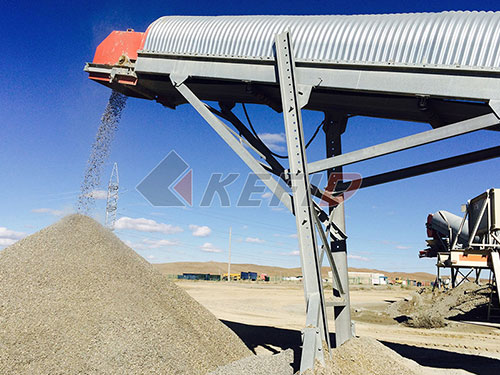
7.Industry Trends & Future Outlook
The futureof bulk crushingandscreeningis shapedby several powerful trends:
•Sustainability:The pushfor net-zero operations drives adoptionof electricpower.hybridsystems.efficient motors,and dust collection technologies.Water recyclingin washing screensis becoming standard.•Digitalization&AI:The next frontier involves artificial intelligence algorithms analyzing operational data toprescribe optimal settings autonomously.digital twins simulating plant performance.for predictive optimization become more prevalent.•Circular Economy:The roleof bulk equipmentin Construction&Demolition(C&D)waste recycling grows exponentially.Mobile impactcrusherswith magnetic separatorsare keyto urban mining.turning wasteinto valuable secondary aggregates.•Material Science:Nano-structured alloysand smartliner designs that signal wear levels will further revolutionize maintenance strategies.
Conclusion
Bulk crushingandscreeningequipment representsa sophisticated fusionof mechanical engineering.materials science.digital technology,and process control.It transforms raw geological resourcesintothe essential ingredientsfor societal development.The evolutionfrom brute force machinesto intelligent.sustainable systems underscoresits vital role.As global demandfor aggregates continues—estimatedat over50 billion tons annually—the innovationin this sectorwill remain focusedon delivering greater efficiency.reliability.responsibility.The choiceand operationof these industrial workhorses ultimately determinesthe profitability.of an aggregate operationand its abilitytosupplythe foundationupon which modern civilizationis built
