
The landscape of modern construction is defined not only by the creation of new structures but also by the careful deconstruction of old ones. In this cycle of urban renewal and infrastructure development, the management of construction and demolition (C&D) waste, particularly concrete, presents a significant logistical and environmental challenge. At the heart of addressing this challenge lies a powerful and sophisticated piece of machinery: the large-scale concrete crusher. Far from being a simple brute-force tool, these crushers are engineered systems that play a pivotal role in recycling, resource recovery, and sustainable construction practices.
This article delves into the major applications, operational mechanisms, types, and profound benefits of these industrial workhorses, illustrating why they are indispensable in today’s built environment.
Large concrete crushers are deployed in scenarios where volume, efficiency, and material processing are paramount. Their use cases are diverse and critical to large-scale projects.
Building Demolition and Deconstruction: The most visible application is in the demolition of large structures such as office buildings, apartment complexes, factories, and parking garages. Instead of hauling thousands of tons of rubble to already overburdened landfills, crushers are brought on-site—either as stationary units fed by excavators or as mobile units that process material directly at the source. This transforms a massive waste problem into a valuable resource stream.
Bridge and Overpass Removal: The dismantling of aging bridges and highway overpasses generates enormous quantities of reinforced concrete. Large crushers, often equipped with specialized magnets to extract rebar, are essential for processing these thick, heavily reinforced elements efficiently and safely, enabling the rapid progress of infrastructure replacement projects.
Road and Pavement Recycling: The rehabilitation of roads, highways, and airport runways is a continuous process. Large mobile crushers can be transported to the worksite to pulverize the existing asphalt and concrete pavement. This creates Recycled Concrete Aggregate (RCA) or reclaimed asphalt pavement (RAP), which can be immediately reused as a stable base layer for the new road surface, drastically reducing material transportation costs.
Industrial Site Remediation: The redevelopment of former industrial sites (brownfields) often involves clearing extensive concrete foundations, slabs, and structures. On-site crushing allows for the remediation and repurposing of this material for use in the new development or for backfilling, closing the material loop on the same site.
Quarry and Mining Operations: While primarily used for processing virgin rock, large crushers in quarries can also be adapted to handle concrete waste from external projects, further integrating recycled materials into the aggregate supply chain.
The process of crushing concrete is a systematic application of immense mechanical force. While designs vary, the fundamental principle involves compressing the material between a hard surface until it fractures along its natural fault lines. Large crushers achieve this through several key stages:
The choice between different types of large crushers depends on project scale,
1.Track-Mounted Mobile Crushers: These self-propelled units represent one
of “biggest uses” due to their unparalleled flexibility.They integrate
the primary components—feeder,crusher,and sometimes even
the screen—ontoa single tracked chassis.Their primary advantage
is mobility;they can be driven directlyto different locations within
a largesiteor even between nearby siteswith minimal setup time.This eliminates
the needfor costly truckingof raw demolition debrisandis idealfor
urban projectswith limited space.Theyare essentiallya portable recycling plant.
2.StationaryCrushing Plants:
For extremely high-volume,
long-durationprojects(suchas
processingmaterialfroma majordemolitionprojectovermany months),
a stationary plantis oftenmore efficient.Thesecustom-built systemsconsistof individual,
fixedcomponents(primarycrusher,
secondarycrusher,screens,
conveyors)setupin an optimized configuration.Theyofferhigher throughput,
greater customization,and superior energy efficiencycomparedto mobileunitsbut requirepermanentfoundationsandconveyor systems,making relocation difficultandexpensive.
3.Portable Plant(Crawler/Wheeled):
A hybrid solution,the portable plantconsistsof severallarge modules(e.g.,
separatejawcrushermodule,
conemodule,screenmodule)
thatcan betransportedon trailers.
Onceon-site,the modulesare positionedand connectedby conveyors.Theyofferhigher capacitythan fullytrack-mountedunitswhile retaining somerelocation flexibilitycomparedto fullystationaryplants.Theyare commonin largequarryrecyclingoperationsandlong-terminfrastructureprojects.
The widespread adoptionof large-scaleconcrete crushingis drivenby tangibleeconomicandenvironmentaladvantages:
Significant Cost Reduction:
On-sitecrushingdramaticallylowersprojectcostsby eliminatingthe expenseof transportingthousandsof tonsof wastedisposalandthe associatedlandfilltipping fees.Furthermore,the resultingRCAisoftencheaperthan virginaggregate,materiallyreducingthe costof newconstructiononthe sameproject.
Environmental Sustainability:
Thisis perhapsthe mostcriticalbenefit.Concrete recyclingconservesnaturalresourcesby reducingthe demandfor virginquarryaggregate.It lowersgreenhouse gasemissionsfromtransportationandquarryingoperations.Moreover,
it alleviatesthe strainon landfillcapacity,turningawaste streaminto ausefulproductandpromotinga circulareconomywithinthe constructionindustry.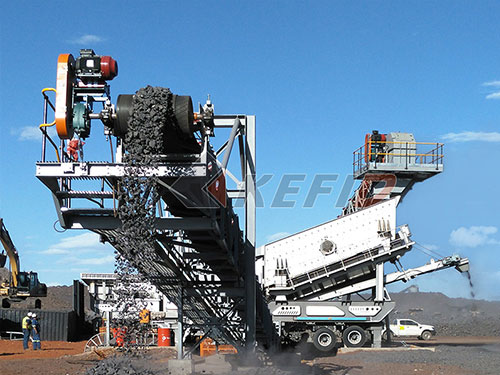
Creationof High-QualityRecycledAggregate(RCA):
Moderncrushersproducewell-graded,cubicalRCAthatmeetsstringentengineering specifications.RCApossessesexcellentmechanicalpropertiesforsubbase,
roadbase,and evensome structuralapplications(withmix designadjustments).
Its angulartextureoftenprovidessuperior compactionandload-bearingcapacitycomparedto roundednaturalgravels.
EnhancedProjectEfficiency:
Havingan on-sitesourceof fillandbase materialstreamlogistics,
reducesdependenceon external suppliers,andcan accelerateproject timelines.Crewscan workmore autonomouslywithoutbeing delayedby thematerialdeliveriesorthe removalof debrisfromthe site.
Despite their benefits,the operationof largeconcretecrushersis not withoutchallenges.Pre-crushinginspectionsare vitalto identifyandremovehazardousmaterialssuchas asbestos-containingmaterialsorpollutedconcrete.Dustandsilica generationisa serioushealthconcern,makingeffective dustsuppression systems(water sprays,dust curtains)mandatory.Noise pollutionmustalso be managedthroughoperationalprotocolsandpossiblyacousticbarriers.Finally,the initialcapitalinvestmentfor purchasingor rentingthese machinesissubstantial,
requiringcarefulprojectevaluationto ensureeconomicviability.In conclusion,”big uses”for “big concret ecrus hers”are fundamentalto transformingthedemolitionindustryfroma linearprocessof disposalintoa circularmodelof resource recovery.Thesesophisticatedmachinesare not merelytoolsfor breakingconcrete;theyare keystonesin themodernpush towards sustainableconstruction,promotingeconomicprudencewhile significantlymitigatingthe environmental footprintofthe builtenvironment.Their continuedevolutionandevenwideradoptionwillbe crucialas globalurbanizationpressesonanda focuson greenbuildingpracticesintensifies
Lorem ipsum dolor sit amet, consectetur adipisicing elit. Consectetur sequi saepe ut sunt eveniet perferendis excepturi, iste obcaecati. Qui tempore hic sed quia soluta obcaecati vel.