
In the complex ecosystem of coal handling plants (CHPs), the primary crusher stands as a critical workhorse, responsible for reducing large run-of-mine (ROM) coal into a manageable and consistent size for downstream processing and transportation. The selection, sizing, and operation of this crusher are paramount to the entire system’s efficiency, reliability, and cost-effectiveness. While the crusher itself is the focal point of size reduction, its performance is profoundly influenced by the equipment that feeds it. In this context, the engineering and implementation of Bevcon Wayors—a specialized type of reciprocating-plate feeder—have a significant and often underappreciated impact on coal crusher size selection, operational detail, and long-term viability.
This article delves into the technical interplay between Bevcon Wayors and coal crushers, exploring how this specific feeding technology influences crusher sizing decisions, optimizes performance, enhances protection, and contributes to a more holistic and efficient material handling system.
Before analyzing its impact, it is crucial to define what a Bevcon Wayor is. At its core, it is a heavy-duty reciprocating plate feeder. However, its design philosophy sets it apart from conventional apron or vibrating feeders.
A Bevcon Wayor consists of a series of overlapping plates mounted on crawler chains. These plates reciprocate in a cyclic motion: they travel forward to carry material from the hopper, then retract beneath the stationary bed of material. This “hold-back” feature is fundamental. Unlike continuous feed systems, it does not rely on gravity alone to draw material out of the hopper. This controlled, positive displacement action provides several inherent advantages that directly affect the connected crusher.
The selection of an appropriately sized crusher is a capital-intensive decision with decades-long implications. Oversizing leads to higher initial costs, increased power consumption, and potential inefficiency at partial loads. Undersizing results in bottlenecks, frequent blockages, and premature wear. The feeding mechanism plays a decisive role in this calculation.
1. Elimination of Segregation and Controlled Feed Rate:
ROM coal is notoriously heterogeneous, containing everything from fine dust to large lumps. Vibratory feeders can exacerbate segregation due to their shaking motion, leading to an inconsistent feed composition to the crusher—a phenomenon known as “separated feeding.” This can cause cyclical loading: moments of being choked with fines followed by sudden impacts from large lumps.
A Bevcon Wayor mitigates this by providing a “live” or dynamic extraction from the entire cross-section of the hopper outlet. The reciprocating action gently mobilizes the entire mass of material above it, preventing ratholing and ensuring a consistent blend of fines and lumps is presented to the crusher inlet. This consistency allows engineers to select a crusher based on a more predictable average capacity rather than having to over-size it to handle unpredictable peak loads from segregated feed. Consequently, a more optimally sized—and often slightly smaller—crusher can be specified without sacrificing throughput or risking choke conditions.
2. Regulation of Feed Volume and Surge Control:
CHPs often experience surges in material flow from upstream equipment like wagon tipplers or stacker-reclaimers. Dumping several hundred tons of coal directly onto a crusher can be catastrophic.
The Bevcon Wayor acts as an intelligent buffer or regulator. Its stroke length and speed are fully adjustable. By tuning these parameters, operators can meter the flow of coal into the crusher at a rate that matches its designed capacity perfectly. This prevents overloading,the single most common cause of crusher jams,motor tripping,and mechanical stress.This controlled feeding ensures thatthecrusheroperates within its ideal volumetric capacity,maximizing throughput while minimizingthe riskofdamage.In essence,theWayorenablesthecrusherto work at itspeakcontinuousratingratherthanbeing subjectedto destructivecyclicoverloading.
Beyond initial sizing,the influence oftheBevconWayorextendsinto theday-to-dayoperationandlong-termhealthofthecrusher.
1.Primary ScalpingandDe-stoning:
One ofthemostsignificantfeaturesofmanyBevconWayorinstallationsistheintegrationofascalping/de-stoninggrid.Thisisacriticaldetail.Thereciprocatingplatescanbedesignedtoincorporateagridattheirdischargeend.Asthematerialisconveyedforward,finesandsmallercolumngothroughthegridopeningsandbypass-thecrusheerentirely,directedtoasides chuteorrejectconveyor.
Onlytheoversize material(lumpsand,inparticular,theabrasivenon-coalrefuse like shaleandsandstone,i.e.,”stone”)is fedintothecrus her.
2.EnhancedCrus herProtection:
The true impact oftheBevconWayorisfully realizedwhenit isviewednotasastandalonecomponent,butasanintegralpartofaBevcon-engineeredsystem.Bevconspecializesinturnkeybulkmaterialhandlingsolutions,andtheirdesignphilosophyofteninvolvestightintegrationbetweenthefeeder,crus her,andsurroundingstructure.
1.Hopper DesignInterface:
TheefficiencyofaBevconWayoris dependentona properlydesignedhoppertopromotemassflow.Thecompany’sexpertiseensuresthatthehoppergeometry,surfac efriction,andoutletsizearealloptimizedtopreventarchingandratholing,therebymaximizingthefeeder’seffectiveness.Thisseamlessinterfaceguaranteesthatthec rus herreceivesacontinuousanduninterruptedfeed,somethingthatcannotbeassumedwhenmixingequipmentfromdifferentmanufacturers .
2.SpaceConsiderationsandLayout:
Reciprocatingplatefeederslike th eBev conWayoroftenhavealowerprofilethanheavy-dutyapronfeedersrequiringdeepskirts.Thiscanleadto amorecompacttransfertowerdesignoral lowfor alowerheadroominstallation.Forthesamecapacity,a well-integratedBevconsystemcansometimesfitinto atighterfootprint,influencingtheoveralllayoutandcivilcostsoftheCHP .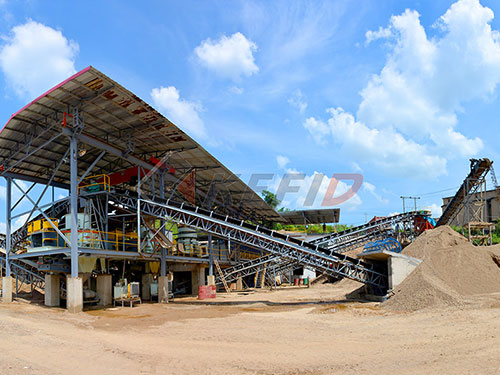
Conclusion
The relationship betweenaBev conWayorandacoalc rus heris asym bioticone,ratherthanasimple sequentialconnection.Thechoiceoffeedertechnologydirectlyimpactsthefundamentalengineeringdecisionofcr us hers izebyensuringaconsistent ,non-segregatedfeedthateliminates t heneedfor excessivecapacitybuffering.Itsoperationaldetails—particularlyit sscalpingcapability— profoundlyaffectth ec rus her’sefficiency ,wearprofile,andmaintenancecycle,s leadingoperationalexpensesandincreasingavailability .
Ultimately,theimplementationofaB ev conW ay or representsamove towardsapreventativeandholisticengineeringapproach.Itacknowledgesthat protectingacapital-intensiveassetlik eapr imarycoalc rus herman datescontrollingwhatgoesintoit .By actingasa competentgatekeeper ,regulator ,an dpre-processor ,th eBe v conW ay ornotonlyoptimizesthec rus he r’sperformancebutalso redefinesitsrolewithinthematerialhandlingstream,makingtheentiresystemmorerobust ,reliable ,andeconomical inthelongrun .
Lorem ipsum dolor sit amet, consectetur adipisicing elit. Consectetur sequi saepe ut sunt eveniet perferendis excepturi, iste obcaecati. Qui tempore hic sed quia soluta obcaecati vel.