
In the competitive and capital-intensive aggregates industry, the decision to invest in a crushing plant is pivotal. For quarry operators seeking optimal efficiency, product specificity, and long-term viability, a bespoke stone quarry crushing plant often emerges as the superior choice over standardized, off-the-shelf solutions. However, the term “price” in this context transcends a simple capital expenditure figure. It represents a complex equation where initial investment intertwines with lifecycle costs, operational efficiency, and ultimate return on investment (ROI). This article provides a detailed, professional examination of the factors that determine the price of a bespoke crushing plant and offers a framework for evaluating its true value.
A bespoke crushing plant is engineered from the ground up to meet the unique requirements of a specific quarry site and its market objectives. Unlike modular or standardized setups, it involves a custom-designed process flow that considers:
This tailored approach inherently affects pricing but aims to maximize profitability over the plant’s lifespan.
The upfront price of a bespoke plant is influenced by numerous interconnected factors:
1. Process Design and Flow Sheet Complexity:
The heart of the bespoke price. A simple single-stage primary crushing circuit for producing base material is far less expensive than a multi-stage circuit involving primary jaw crushers, secondary cone crushers, tertiary impact crushers for shaping, and a sophisticated closed-circuit system with screens and classifiers for manufactured sand production. Each additional stage introduces more equipment, conveyors, chutes, and structural supports.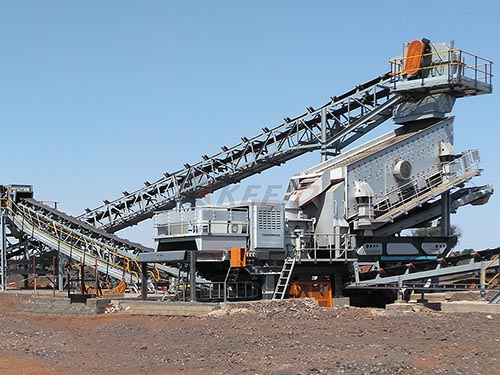
2. Equipment Selection and Sizing:
3. Mobility & Foundation Requirements:
A stationary plant with deep concrete foundations and massive steel structures is costly to install but offers long-term stability for high-volume sites. A semi-mobile or skid-mounted bespoke design may reduce civil work costs but involves different engineering complexities. Fully mobile/track-mounted plants offer flexibility but at a high per-unit cost and are rarely truly “bespoke” for large-scale quarrying.
4. Auxiliary Systems Integration:
A significant portion of the price lies beyond the crushers:
5. Engineering,Fabrication,and Commissioning:
The “bespoke” premium includes detailed engineering(mechanical,civil,electrical),3D modelingfor interference checking,custom fabricationof chutes,platforms,and structures,and on-site supervisionfor erectionand commissioning.This intellectualand labor input can constitute15-25%of total project cost.
The intelligent evaluationof a bespoke plant focuseson TCO,which amortizesthe initial price over its operational life:
1. Operational Efficiency(Cost per Ton):
A well-designed bespoke plant optimizes flow,reducing bottlenecksand idle time.It ensures correct equipment matchingto minimize recirculation loads(which wastes energyand wear parts).Superior product shapeand gradation consistencycan command higher market prices.
2.Wear Parts Consumption:
Proper selectionof crusher liners(mantles,concaves,jaws)for the specific material dramatically affects ongoing costs.A bespoke design choosescrusher cavitiesand eccentric throwsto optimize wear life.Cheaper initial equipment often has higher cost-per-ton wear rates.
3. Energy Consumption:
Modern,variable-speed driveson conveyorsand crushers,efficient screen motion,and optimally loaded motorsare hallmarksof good design.The energy savings over 10-15 years can offseta substantial partof the initial price premium.
4. Maintenance& Downtime Costs:
Designfor maintainability(easy liner changes,good access platforms,modular components)is built into bespoke solutions.Higher-quality componentsfail less frequently.Predictive maintenanceenabled by advanced controls prevents catastrophic failures.The valueof increased availability(>90%vs.<80%)in terms of lost productionis enormous.
5. Flexibility& Future-Proofing:
A thoughtfully designedplant can incorporate flexibilityfor future changesin feed materialor product specifications(e.g.,addinga tertiary stage),protectingthe long-term investment.
Providinga single priceis impossible due to project specificity。However,as indicative ranges(for equipmentand key structural components,excludingfull civil works):
Justification requiresa detailed financial model comparingthe bespoke optionagainst基准alternatives。Key metrics include:
The priceofa bespokestone quarrycrushingplant is not merelyan expense;it is acapitalizationof future operational excellence。Whilethe initial outlayis undeniablysubstantial,a meticulously engineeredbespokesolution targetsthe lowest possiblecost per tonover its lifespan—the only metricthat truly matters。The decision hingesona thorough analysisof site-specific geology,market demands,and rigorousTCO modeling。Investingin customizationwith reputable engineering partnersmitigates riskby ensuringthe plant is not justa collectionof machinery,but acohesive,synergistic production systemdesignedfor profitabilityfromthe first load offeed material。In an industrywhere marginsare dictatedby efficiencyandreliability,the premiumfor abespokeplant often provesnot just justified,but essentialforsustainable competitive advantage。
If you have any questions about our products, please feel free to contact us. We take all inquiries and suggestions very seriously.