Bespoke Iron Ore Crushing Plant Bulk Order: A Strategic Investment for Large-Scale Mining Operations
In the fiercely competitive and capital-intensive world of mining, efficiency, reliability, and cost-per-ton are the ultimate determinants of profitability. For major mining corporations, consortiums, or national entities undertaking large-scale, long-term iron ore projects, the procurement of crushing and screening equipment moves beyond simple asset acquisition. It becomes a strategic cornerstone. This is where the concept of a Bespoke Iron Ore Crushing Plant Bulk Order emerges as a critical, high-level decision. It represents the coordinated purchase of multiple, custom-engineered primary, secondary, and tertiary crushing plants, designed from the ground up to meet the specific geological, geographical, and production goals of a mega-project or across multiple satellite sites.
1. Defining the “Bespoke Bulk Order”
A bespoke bulk order is fundamentally different from purchasing standard catalog units in volume. It is a holistic partnership between the client and a select group of engineering-led OEMs (Original Equipment Manufacturers).
2. Core Technical Considerations in Design
The engineering philosophy behind such an order prioritizes life-cycle value over initial capital cost.
- Primary Crushing Station: The first line of defense. For bulk orders, stationary or semi-mobile gyratory crushers (like 60×113” or larger) are typically specified for their high capacity and robustness. Design focuses on dump pocket geometry, feeder selection (vibrating grizzly vs. apron), and strategies to handle occasional oversize (“tramp steel”) from drilling/blasting.
- Secondary & Tertiary Crushing Stages: Here, cone crushers dominate. The bulk order allows for strategic selection across different models—high-capacity machines for secondary duty and fine-liners for tertiary closed-circuit configurations. Modern designs emphasize hydraulic adjustment systems (like ASRi) for real-time optimization and advanced chamber designs for improved particle shape.
- Screening Technology: High-capacity banana or multi-slope screens are critical for efficiency. Bulk procurement enables standardization of screen panels (polyurethane vs. rubber vs. wire mesh) across all sites, simplifying spare parts inventory.
- Material Handling & Conveying: Overland conveyors linking crushing modules become arteries of the operation. Designs focus on high-tensile strength steel cord belts, regenerative drives for downhill sections, advanced transfer point design to minimize dust and wear, and sophisticated health monitoring systems (conveyor belt rip detection, misalignment sensors).
- Drive & Power Systems: A key advantage of a bulk order is the ability to negotiate standardized drive packages (MV motors,VSDs) across all plants. This simplifies maintenance training and spare parts holding. Options like gearless drive systems for large conveyors may be evaluated for their efficiency benefits at scale.
- Dust Suppression & Control: Given heightened environmental regulations globally,turnkey dust control systems—combining spray systems at transfer points with baghouse filters or scrubbers at crusher discharge points—are non-negotiable elements of the bespoke design.
3. Strategic Advantages & Economic Rationale
The decision to pursue a bespoke bulk order is driven by compelling long-term economic benefits:
- Significant Capital Expenditure (CAPEX) Leverage: Procuring multiple complex plants as a single package provides immense negotiating power with suppliers.Economies of scale apply not just to equipment,but to engineering hours,freight,and commissioning services.Discounts of 15-25% compared to piecemeal procurement are not uncommon.
- Optimized Operational Expenditure (OPEX): Standardization across plants drastically reduces operational complexity.Commonality in wear parts (mantles,bowl liners,screen panels), mechanical components,and control system interfaces minimizes spare parts inventory costs,facilitates cross-site personnel transfers,and streamlines maintenance procedures.Predictable performance leads to better budget forecasting.
- Enhanced Reliability & Availability: Bespoke designs inherently address known failure points based on prior operational experience.Bulk orders often include comprehensive service agreements with guaranteed availability metrics(OEE – Overall Equipment Effectiveness).Shared remote monitoring infrastructure allows OEM experts to perform predictive maintenance across all sites from a central support center.
- Accelerated Project Timeline: Parallel engineering,fabrication,and commissioning of standardized modules can shave months off a mega-project’s critical path.Site preparation,civil works,and installation crews follow repeatable patterns,increasing efficiency with each successive unit.
- Future-Proofing & Flexibility: Forward-thinking designs incorporate provisions for future expansion(e.g.,stronger foundations,larger motors space).Modularity allows for potential reconfiguration or relocation of entire plants as mine plans evolve or new satellite deposits are developed.
4. The Procurement & Execution Process
Managing such an order requires meticulous project management: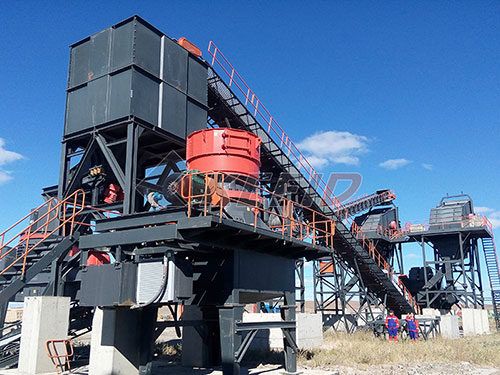
- Pre-Feasibility & Specification Development: Internal teams define exhaustive technical specifications covering every aspect from noise limits to paint standards.This document becomes the project bible.
- Selective Tendering: Invitations are extended only to OEMs with proven capability in designing,supplying,and supporting large-scale iron ore systems globally.Evaluation criteria heavily weight technical solution(60-70%) over commercial offer(30-40%).
- Collaborative Front-End Engineering Design(FEED): The selected vendor(s) engage in deep collaborative design workshops with the client’s engineers.This phase finalizes flow sheets,P&IDs,single-line diagrams,and layout models.It de-risks the project before full fabrication begins.
- Contract Structuring: Contracts are complex.Elements include milestone payments,liquidated damages for performance shortfalls,OEE guarantees,intellectual property ownership of custom designs,and long-term service support agreements(LTSAs).
- Project Management & Commissioning: A dedicated joint project management office(PMO) oversees global logistics,factory acceptance tests(FATs),and staged site commissioning.A “train-the-trainer” approach ensures client personnel achieve operational mastery.
5。 Challenges与风险缓解
The path is not without challenges:
- Management Complexity: Coordinating design,fabrication across global workshops,and logistics for thousands of components requires world-class project management。
- Over-Customization: There is risk in designing overly complex solutions。The mantra should be “as simple as possible,but no simpler。” Standardizing subsystems while customizing core process parameters is key。
- 供应商锁定: Long-term reliance on a single OEM technology can be risky。Contracts must ensure ongoing support,fair pricingfor spares,and access to design data。
缓解措施包括 rigorous FEED studies,clear performance-based specifications,and incorporating multi-sourcing possibilitiesfor critical wear parts。
Conclusion
A bespoke iron ore crushing plant bulk order transcends mere procurement; it is an exercise in strategic industrial engineering。 It representsa conscious decision by mining leaders to optimize their most critical physical asset—the comminution circuit—at an enterprise level。 By leveraging scalefor customization rather than accepting compromise through standardization, operators can achieve unparalleled levelsof efficiency,predictability,and cost control over decadesof operation。 In an industry where marginsare perpetually scrutinizedand asset productivityis paramount, this integrated approachto buildingthe heartof themine’s processinfrastructure standsas one ofthe most impactfuldecisionsa mining companycan make。 It transforms acapital expenditureinto adefinitive competitiveadvantage。
