
In the vast landscape of industrial processing, from pharmaceuticals and food production to mineral recycling and biomass energy, the humble hammer mill stands as a workhorse of particle size reduction. While standard, off-the-shelf hammer mills serve many applications adequately, a significant segment of industry demands more: precision, specialized materials, unique configurations, and adaptability to novel feedstocks. This is the domain of the bespoke hammer mill producer, where engineering transitions from mass manufacturing to collaborative artistry tailored to solve specific industrial challenges.
A bespoke hammer mill producer is not merely a manufacturer but a solutions partner. They engage in a deep-dive analysis of a client’s unique requirements—raw material characteristics, desired final particle size distribution, production capacity, hygiene standards, and operational environment—to design, engineer, and fabricate a machine that is uniquely suited to its task. The “bespoke harga” (the custom price) reflects not just the cost of materials and labor, but the immense value of specialized R&D, proprietary design expertise, and the promise of optimized process efficiency.
The decision to invest in a custom-built hammer mill is driven by several critical factors that standard models cannot address.
1. Unique or Challenging Material Characteristics:
Standard mills are designed for common materials like corn, wood chips, or limestone. However, many modern applications involve complex materials:
2. Stringent Particle Size Distribution (PSD) Requirements:
While changing a screen size on any mill alters the maximum particle size, controlling the entire distribution of particles is a more complex endeavor. Industries like pharmaceuticals or fine chemicals require extremely tight PSD curves for product consistency and bioavailability. A bespoke producer can engineer rotor speeds (variable frequency drives), hammer configuration (number, shape, and articulation), internal air dynamics, and even integrate an internal classification system to ensure the output consistently meets these rigorous specifications.
3. Integration into Existing Production Lines:
A custom hammer mill is often designed as a seamless component within a larger system. This requires precise physical dimensions for fitting into constrained spaces; custom inlet and outlet configurations to match existing conveyors; specific mounting points; and tailored control systems that can communicate with the plant’s central SCADA (Supervisory Control and Data Acquisition) system.
4. Enhanced Operational & Safety Features:
Bespoke builds allow for the integration of advanced features not available on standard models:
Engaging with a custom hammer mill producer is a multi-stage collaborative process.
Phase 1: In-Depth Consultation & Feasibility Study
This initial phase is diagnostic. Engineers work with the client to define all parameters:
Phase 2: Conceptual & Detailed Design
Based on the initial data engineers create conceptual designs focusing on:
Phase 3: Engineering & Fabrication
Using CAD/CAM software detailed drawings are produced Modern producers utilize CNC machining laser/plasma cutting robotic welding to ensure precision repeatability in fabrication Quality control at this stage involves material certification dimensional checks non-destructive testing (NDT) like magnetic particle or dye penetrant inspection on critical welds.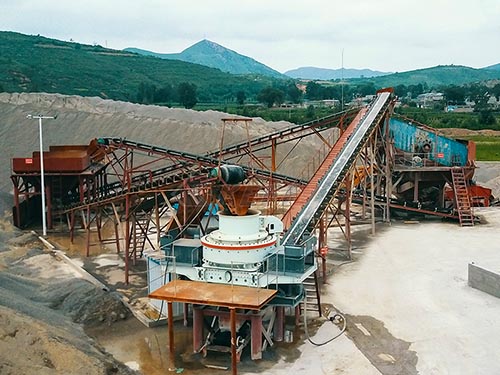
Phase 4: Factory Acceptance Testing (FAT) & Commissioning
Before shipment most reputable producers conduct an FAT The client is invited to witness their custom machine running often with their actual feedstock This verifies throughput power consumption noise levels PSD Client feedback at this stage can lead to minor final adjustments Finally technicians assist with installation commissioning at the client’s facility ensuring optimal performance.
The price tag of a custom hammer mill is invariably higher than that of an equivalent-sized standard model However viewing this purely as an expense misses the point It is an investment in process optimization total cost ownership includes:
In conclusion while standardized hammer mills form backbone bulk processing industries move towards higher-value specialized materials complex formulations stringent regulatory requirements role bespoke hammer mill producer becomes increasingly vital These specialists bridge gap between generic machinery highly specific industrial need transforming simple concept size reduction into precise reliable efficient engineered solution Therefore “bespoke harga” represents not just cost customized equipment but strategic investment superior technology operational resilience long-term competitive advantage marketplace
Lorem ipsum dolor sit amet, consectetur adipisicing elit. Consectetur sequi saepe ut sunt eveniet perferendis excepturi, iste obcaecati. Qui tempore hic sed quia soluta obcaecati vel.