Bespoke Gold Ore Crushing Equipment Vendors: A Strategic Guide for Modern Mining Operations

In the competitive and technically demanding world of gold mining, the efficiency of the comminution circuit—the process of crushing and grinding ore—is a primary determinant of profitability. While standard, off-the-shelf crushing equipment is suitable for many bulk commodities, gold ore presents unique challenges that often render generic solutions suboptimal. This is where the role of a Bespoke Gold Ore Crushing Equipment Vendor becomes critical. These specialized engineering partners design, manufacture, and support custom crushing systems tailored to the specific mineralogical, geographical, and economic parameters of a gold deposit. Engaging with such a vendor is not merely a procurement exercise; it is a strategic partnership aimed at optimizing recovery rates, minimizing operational costs, and ensuring long-term project viability.

The Imperative for Customization in Gold Ore Processing

Gold ores are notoriously heterogeneous. Their characteristics vary dramatically, influencing every aspect of crushing circuit design:

  1. Ore Competency and Abrasiveness: Gold can be hosted in soft, clay-rich saprolite, massively hard quartz veins (often associated with sulphides), or highly abrasive conglomerates (as seen in paleoplacer deposits like South Africa’s Witwatersrand). A standard jaw crusher suited for hard rock may choke on clayey ore, while an unsuitable liner material in an abrasive environment will lead to exorbitant maintenance costs and downtime.
  2. Gold Particle Size and Liberation: The crucial “grind size” required for effective gold liberation is a key driver. Free-milling ores with coarse, native gold may only require primary crushing followed by gravity circuits. Refractory ores with fine-grained gold locked within sulphide minerals necessitate ultra-fine crushing as a precursor to grinding and oxidation (e.g., POX, roasting). The crushing circuit must be designed to achieve the target feed size for the downstream process optimally.
  3. Throughput and Plant Configuration: A large-scale open-pit operation demands high-capacity, robust primary crushers (often gyratory), whereas an underground narrow-vein mine requires compact, modular units that can be transported underground and handle lower tonnages. Modularity itself is a bespoke consideration for remote or phased projects.
  4. Environmental and Energy Constraints: Water scarcity dictates dry crushing systems (like HPGRs). Energy costs drive the selection of highly efficient technologies to reduce overall power consumption per tonne of ore processed.

A bespoke vendor analyzes these variables holistically to engineer a solution that balances capital expenditure (CAPEX) with operational expenditure (OPEX), maximizing net present value (NPV) over the mine’s life.

Core Competencies of a Leading Bespoke Vendor

A true bespoke equipment vendor distinguishes itself through deep engineering integration and lifecycle support.

1. Advanced Testwork and Simulation Capabilities:
Before any design begins, comprehensive ore characterization is non-negotiable. Premier vendors operate dedicated test centers where client ore samples undergo rigorous analysis: Bond Work Index tests, JK Drop Weight tests, abrasion index (Ai) tests, and pilot-scale trials with technologies like High-Pressure Grinding Rolls (HPGR) or vertical shaft impactors (VSI). Advanced discrete element method (DEM) software simulates particle flow and breakage within proposed crusher designs, optimizing chamber geometry, liner profiles, and machine kinematics for the specific ore type.

2. Technology-Agnostic Engineering Design:
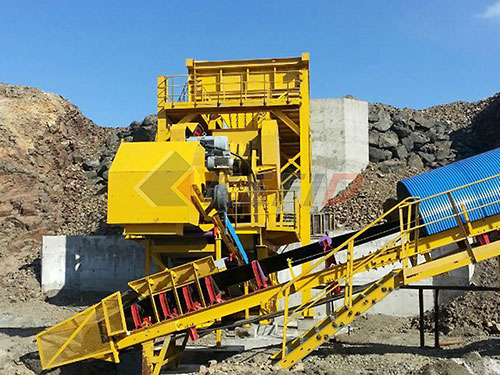
The vendor should not be wedded to a single technology but act as a consultant-engineer. The solution may integrate various technologies:Bespoke Gold Ore Crushing Equipment Vendor

  • Primary Stage: Selection between heavy-duty jaw crushers or gyratory crushers based on capacity, feed size, and required reduction ratio.
  • Secondary/Tertiary Stage: A choice between cone crushers (for hard, abrasive ores), HPGRs (for energy-efficient pre-grinding or diamond liberation), or impact crushers for softer ores.
  • Specialized Units: Incorporation of pre-concentration scavenger jigs after primary crushing to remove waste rock (“deporting barren mass”), significantly reducing load on downstream processes—a critical cost saver.

The vendor designs the entire system layout, including feed arrangements, discharge conveyors, dust suppression systems (critical for cyanide-based operations), and noise encapsulation.

3. Material Science and Component Customization:
This is the heart of bespoke manufacturing. It involves:

  • Alloy Development: Casting manganese steel or chromium iron liners with specific microstructures to combat unique abrasion-corrosion wear patterns from the host rock.
  • Chamber Geometry Optimization: Designing crusher cavity profiles that promote inter-particle crushing for higher efficiency and produce a more desirable product shape (less slabby).
  • Modular & Mobile Designs: Creating containerized or skid-mounted crushing plants for rapid deployment in remote locations or mines with multiple small satellite pits.

4. Automation and Intelligent Control Systems:
Modern bespoke systems are digitally integrated. Vendors provide advanced process control systems that use real-time sensor data (power draw, pressure, cavity level) to automatically adjust settings like closed-side setting (CSS) or hydraulic pressure via PLCs/SCADA systems. This ensures operation at peak efficiency 24/7 while protecting equipment from uncrushable material (“tramp metal”). Predictive maintenance analytics are increasingly part of the package.

5. Lifecycle Support & Remote Operational Expertise:
The relationship extends far beyond commissioning. Leading vendors offer global service networks with guaranteed response times; remote monitoring from centralized operation centers; digital twin simulations for operator training; guaranteed performance metrics (e.g. throughput per kWh); comprehensive spare parts logistics; liner change-out optimization services; performance re-profiling as ore characteristics change over time.

The Strategic Vendor Selection Process

Choosing the right partner requires due diligence:Bespoke Gold Ore Crushing Equipment Vendor
  1. Evaluate Technical Depth: Review their testwork portfolio for projects with similar ore types.
  2. Assess Manufacturing Prowess: Visit facilities to assess quality control in casting fabrication machining assembly.
    3 .Analyze Financial Stability & Longevity: The vendor must be viable partner throughout your mine’s life which could span decades
    4 .Scrutinize Reference Projects: Speak directly existing clients about performance reliability support responsiveness
    5 .Consider Total Cost Ownership(TCO) : Look beyond initial price tag evaluate projected energy consumption liner wear rates maintenance labor requirements over years
    6 .Examine Digital Integration Roadmap: Ensure their control data analytics capabilities align with your smart mining strategy

Economic Justification & Return on Investment

The higher initial CAPEX associated with bespoke equipment is justified through substantial OPEX savings enhanced recovery:

  • Energy Efficiency: Properly configured HPGR circuit can reduce overall grinding energy by up compared conventional SAG/ball mill routes
  • Increased Recovery: Optimal particle size distribution liberation improves leach kinetics gravity recovery yields
  • Reduced Downtime: Durable customized components robust design minimize unplanned stoppages maximizing availability
  • Lower Consumable Costs: Tailored liner materials last longer reducing cost per tonne crushed
  • Operational Flexibility: System designed handle variable feed conditions maintaining performance throughout mine’s life

For mid-tier high-grade deposit these savings can difference between marginal profitable operation For major project they translate hundreds millions dollars NPV over lifetime

Future Trends Shaping Bespoke Crushing

The evolution continues towards greater integration sustainability intelligence:

  • Hybrid & Fully Electric Systems: Development electric-driven crushers using renewable power sources reducing carbon footprint diesel dependency especially underground mines
  • Advanced AI & Machine Learning: Next-generation control systems using AI optimize performance real-time predict failures schedule maintenance autonomously
  • Pre-concentration At Coarser Sizes: More sophisticated sensor-based sorting XRF laser technologies integrated post-primary crush remove significant waste early process dramatically reducing energy water consumption downstream
  • Circular Economy Designs: Equipment designed easier refurbishment remanufacturing end life use recycled materials construction

Conclusion

In conclusion engaging with bespoke gold ore crushing equipment vendor represents strategic investment fundamental process optimization modern mining These partners provide far more than machinery; they deliver engineered system born from rigorous testwork advanced simulation deep metallurgical understanding In face complex variable ores rising energy costs heightened environmental scrutiny need precision-engineered comminution solutions has never been greater The right vendor becomes extension owner’s technical team collaborating ensure crushing circuit not bottleneck but catalyst unlocking maximum value from precious metal deposit delivering resilience efficiency profitability throughout entire mining lifecycle Ultimately path optimal gold recovery begins with precise application force—and that force best delivered by system designed from ground up singular purpose processing your specific ore

Lorem ipsum dolor sit amet, consectetur adipisicing elit. Consectetur sequi saepe ut sunt eveniet perferendis excepturi, iste obcaecati. Qui tempore hic sed quia soluta obcaecati vel.