Bespoke 250-300tph Stone Crushing Plant: A Comprehensive Guide to Customized Aggregate Production

In the world of aggregate production, where raw material characteristics, final product specifications, and site-specific constraints vary dramatically, the concept of a “one-size-fits-all” crushing plant is often a path to inefficiency and lost profitability. This is where the bespoke 250-300 tons per hour (tph) stone crushing plant emerges as a superior solution. Designed from the ground up to meet precise operational requirements, such a plant represents the pinnacle of engineering customization in medium-to-large-scale aggregate processing. This article delves into the intricacies, components, design considerations, and economic rationale behind investing in a tailor-made 250-300tph crushing and screening system.

Understanding the Capacity Benchmark: 250-300tph

A production rate of 250 to 300 tons per hour places a plant firmly in the category of medium-to-high-capacity operations. This range is strategically significant:

  • It serves major infrastructure projects: Such output can reliably supply aggregates for large road constructions, railway ballast projects, dam building, and significant commercial real estate developments.
  • It balances scale with manageability: While being highly productive, it remains within a scale where operational control and material flow management are optimized without the extreme complexities of mega-quarries.
  • It offers strong ROI potential: When correctly configured, this capacity meets high market demand while allowing for efficient use of equipment and manpower.

However, achieving consistent, high-quality output at this rate is not merely about assembling large machines. It requires a holistic, bespoke design philosophy.

The Core Philosophy of “Bespoke” in Crushing Plants

A bespoke plant is engineered based on a detailed analysis of specific parameters:

  1. Feed Material Characteristics: Hardness (compressive strength), abrasiveness (Silica content), moisture content, clay contamination, and initial feed size distribution (e.g., blasted rock from a quarry vs. alluvial deposits).
  2. Required Final Products: The number of product grades (e.g., base course, sub-base, chippings, sand), their precise size specifications (gradation curves), and their shape requirements (cubicity for asphalt vs. angularity for concrete).
  3. Site-Specific Conditions: Available footprint (layout constraints), topography (need for gravity flow), climate (dust suppression needs, freezing temperatures), environmental regulations (noise, dust emissions), and power availability.
  4. Operational Goals: Desired level of automation, manpower availability for maintenance, planned operational hours per day/year.

Key Components and Their Customization in a 250-300tph Layout

A bespoke plant integrates several subsystems into a cohesive workflow.

1. Primary Crushing Station:

  • Choice of Crusher: This is dictated by feed size and material hardness.
    • Jaw Crusher: The default choice for hard, abrasive materials with large feed size (>600mm). For 250-300tph output, a robust jaw crusher with an opening around 1200x900mm or larger would be selected.
    • Gyratory Crusher: For very high abrasiveness and need for higher capacity at similar feed sizes; often considered for larger permanent installations.
    • Primary Impact Crusher: Suitable for less abrasive, softer limestone or recycled concrete where shape is a priority from the first stage.
  • Customization: Feeder design (vibrating grizzly feeder with adjustable grizzly bars to bypass fines), hopper capacity to buffer haul truck cycles, and discharge conveyor sizing for peak loads.

2. Secondary and Tertiary Crushing Stages:
This is the heart of product shaping and size reduction.

  • Cone Crushers: Essential for producing high-quality aggregates from hard rock. In a bespoke setup:
    • Multiple cone crushers may be used in parallel to achieve the target tonnage while allowing for different closed-side settings (CSS) to produce varied products simultaneously.
    • Modern hydroset systems allow quick adjustment of CSS via automation to adapt to changing feed or product demands.
  • Impact Crushers (Horizontal Shaft Impactor – HSI): Preferred when producing excellent particle shape (cubical) from medium-hard stone or for recycling applications.
  • Customization: The circuit design—open or closed-loop—is critical. A closed circuit with screening after secondary crushing allows oversize material to be recirculated back to the crusher(s), ensuring precise control over top size.

3. Screening Station:
Screens are the classifiers that separate crushed material into saleable products.

  • For a 250-300tph plant,multi-deck vibrating screens are mandatory.
  • A bespoke design will specify:
    • Number of screen decks (typically 3 or 4).
    • Screen media type (wire mesh vs. polyurethane panels) based on wear life and application.
    • Screen box sizing and inclination to handle the volumetric flow without blinding or pegging.
    • Strategic placement within the circuit—typically primary screens after secondary crushing and final product screens before stockpiling.

4. Conveying System:
The plant’s circulatory system must be custom-designed for peak load handling,
transfer points engineered to minimize dust generation
and belt wear,
and fitted with appropriate safety devices
(pull cords,
zero-speed switches).
Radial stackers
for building segregated stockpiles are sized based on stockpile volume requirements.Bespoke 250 300tph Stone Crushing Plant Quote
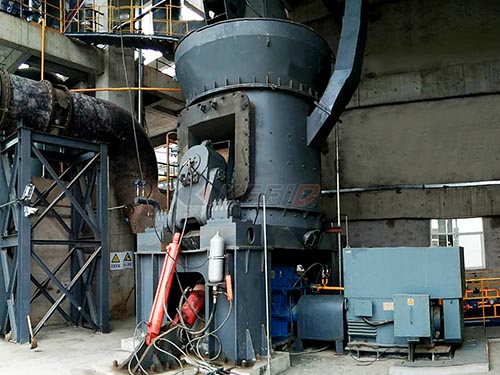
5. Ancillary Systems – Where Bespoke Engineering Shines:Bespoke 250 300tph Stone Crushing Plant Quote
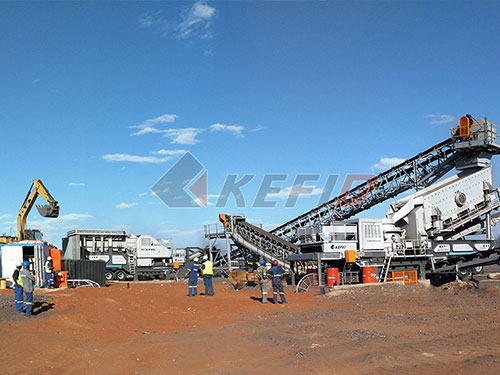
  • Dust Suppression & Control: A fixed plant requires a comprehensive system tailored to local environmental codes
    This can range from strategically placed spray nozzles
    to fully enclosed conveyors
    and high-efficiency baghouse filter systems
    for crusher discharges
    and screening towers
    The choice depends on climate,
    water availability,
    and regulatory stringency
  • Electrical & Control System:
    The nerve center
    of a modern bespoke plant
    is its Programmable Logic Controller(PLC)-based automation system
    A custom-designed control panel allows:
    Centralized start/stop sequences,
    real-time monitoring of power draw,
    crusher settings,
    and conveyor weights via load cells,
    remote operation capabilities,
    and data logging for production reporting
    and predictive maintenance alerts

Design Process & Technical Considerations

The creation of such a plant follows an iterative process:

1.Feasibility Study & Data Collection: Comprehensive testing of raw material samples( Petrographic analysis,
crushability tests)
and definition of product specs

2.Process Flow Sheet Development: Engineers create detailed diagrams(P&IDs)
showing every piece of equipment,
material flow rates at each transfer point,
and expected product splits

3.Plant Layout Design: Using CAD software,
the entire system is laid out in 2D/3D considering:
Accessibility for maintenance(crusher mantle changes,screen media replacement),
safe walkways,
optimized conveyor angles to minimize transfer points &
capitalize on gravity where possible

4.Structural & Civil Engineering: Design of heavy-duty support structures &
foundations capable of handling dynamic loads &
vibrations from crushers &
screens over decades

5.Commissioning & Optimization: Once installed,
the plant undergoes rigorous testing &
fine-tuning( adjusting feeder rates,
crusher CSS,
screen deck angles)
to achieve promised performance metrics

Economic Justification: Capex vs Opex Benefits

While the initial capital expenditure(Capex)
for a bespoke solution is typically higher than thatofa standardized “package”plant,
the long-term operational expenditure(Opex) benefits are compelling:

Higher Uptime & Reliability: Equipment sized correctlyfor duty experiences less stress &
fewer breakdowns;maintenance schedulesare optimizedbasedon actual load conditions。

Superior Product Quality & Flexibility: Abilityto produce premium-priced specification aggregates consistently;
quick adjustmentsto meet changing market demandsor contract requirements。

Lower Operating Costs: Optimized energy efficiency through correct motor sizing;
reduced wear part consumption due tomatching crusher liners& screen media preciselyto material abrasiveness。

Future-Proofing: Design can incorporate provisionsfor future expansion(e.g.,
adding another tertiary crusher)
or modificationsto process different feed materials。

Conclusion: An Investment in Precision Production

A bespoke250-300tph stone crushingplantis not merelya collectionof machinery;
itisan integrated production systemengineeredasa capital assettailoredtoa specific resource& business objective。
It representsa strategic decisionto move beyond generic solutions towardmaximizing yield,
quality control,
operational efficiency,
and ultimately,
profitability overthe asset’s lifecycle。
For serious aggregate producersfacing specific geological challenges,
stringent product specifications,
or competitive market pressures,
the investmentin acustom-designedplantis notan expensebuta foundational step towardssustainable,controllable,andefficientproductionatascale thatmeetsthedemandsofmoderninfrastructuredevelopment。
The precisionengineeringembodiedinsuchaplantensures thatevery tonprocessedthroughitdeliversmaximumvalue,justifyingits statusasthe preferredchoicefordiscriminatingoperatorsworldwide。

Lorem ipsum dolor sit amet, consectetur adipisicing elit. Consectetur sequi saepe ut sunt eveniet perferendis excepturi, iste obcaecati. Qui tempore hic sed quia soluta obcaecati vel.