
In the complex and demanding world of mineral processing, the selection of comminution equipment is a critical decision that directly impacts operational efficiency, product quality, and overall profitability. Among the array of crushing technologies available, the dual roll crusher stands as a robust, reliable, and highly effective solution for specific stages within the processing circuit. While not a one-size-fits-all replacement for jaw or cone crushers in primary or tertiary roles, its unique operating principle and design confer a distinct set of advantages in secondary, tertiary, and quaternary crushing applications, particularly when a controlled product size with minimal fines is desired. This article delves into the multifaceted benefits of dual roll crushers, exploring their operational mechanics, key advantages in mineral processing, and their role in enhancing modern plant performance.
A dual roll crusher operates on a straightforward yet highly effective mechanism. It consists of two parallel cylindrical rolls mounted horizontally, rotating in opposite directions towards each other. The gap between the rolls, known as the nip angle and setting, determines the final product size. Feed material is drawn into the crushing chamber through friction and gravity. As the rolls rotate, the material is subjected to compressive forces in the “nip” zone—the converging area between the two rolls—resulting in its fragmentation. The crushed product then passes through the gap between the rolls.
The simplicity of this action belies its sophistication. Rolls can be equipped with different surface textures:
This fundamental mechanism is the foundation upon which numerous operational benefits are built.
1. Controlled Product Size and Minimal Fines Generation
One of the most significant advantages of dual roll crushers is their ability to produce a well-defined product with a narrow particle size distribution and a notably low percentage of ultra-fine material (“fines”). Unlike impact crushers that rely on high-speed hammers to shatter rock—which often generates excessive fines—roll crushers utilize low-speed, high-torque compression.
By providing precise control over the gap setting (which can often be adjusted hydraulically under load), operators can dial in an exact top-size product with remarkable consistency.
2. Robust Simplicity and Operational Reliability
The mechanical design of a dual roll crusher is inherently simple. With fewer moving parts compared to cone or impact crushers—no complex eccentric assemblies or high-speed rotors—the potential for mechanical failure is reduced.
3. High Efficiency in Specific Applications: Liberation and Low Energy Consumption
Dual roll crushers are exceptionally well-suited for materials that are friable or cleave easily along natural grain boundaries.
4. Compact Design and Flexibility in Circuit Configuration
The physical footprint of a dual roll crusher is typically smaller than that of a jaw or cone crusher with comparable capacity.
Their ability to handle moist or clay-rich materials better than cone crushers (which are prone to choking) adds another layer of operational flexibility.
5. Cost-Effectiveness: Capital and Operational Expenditure
From an economic standpoint, dual roll crushers present a compelling case.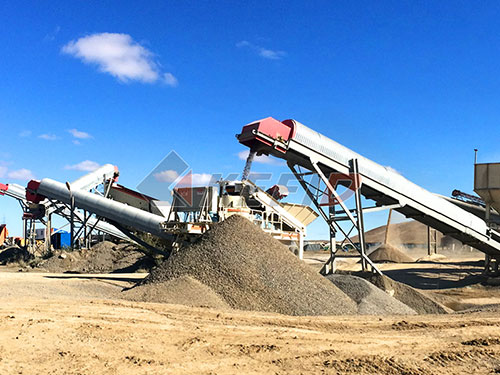
To provide a fully balanced perspective, it is crucial to acknowledge the limitations where other crusher types may be superior:
The dual roll crusher remains an indispensable tool in mineral processing not as a universal solution but as a specialized instrument offering unparalleled benefits within its optimal application window. Its core strengths—producing a controlled product with minimal fines; operational reliability born from mechanical simplicity; energy efficiency on friable materials; compact design; and overall cost-effectiveness—make it an intelligent choice for specific circuit configurations.
In an industry increasingly focused on energy efficiency; water conservation (as fine generation complicates dewatering);and optimizing downstream process performance;the ability ofthedualrollcrushertoprovideapredictable,cubicalproductwithlowfinescontentisamajortacticaladvantage.Whenprocessingcoal,saltpotash,bauxite,andcertainindustrialmineralsorwhenaprecisesecondaryortertiarycrushingstageisrequired,thedualrollcrusherprovestobeanenduringlyviableandeconomicallysoundtechnologythatcontinuestodelivertangiblebenefitstomodernmineralprocessingoperations
Lorem ipsum dolor sit amet, consectetur adipisicing elit. Consectetur sequi saepe ut sunt eveniet perferendis excepturi, iste obcaecati. Qui tempore hic sed quia soluta obcaecati vel.