Ball Mill Maker Customization: Engineering Precision for Diverse Industrial Needs
In the realm of industrial processing, from mining and cement production to advanced materials synthesis and pharmaceuticals, the ball mill stands as a workhorse of particle size reduction and mixing. However, the notion of a one-size-fits-all ball mill is a profound misconception. The true efficacy of this critical equipment lies in its precise adaptation to specific process requirements—a domain defined by ball mill maker customization. This process transcends mere manufacturing; it is a sophisticated engineering partnership between client and manufacturer to develop a comminution or blending solution that optimizes efficiency, product quality, and total cost of ownership.
The Imperative for Customization
Standard ball mills serve as excellent benchmarks, but industrial processes are inherently unique. Variables such as feed material characteristics (hardness, abrasiveness, moisture content, initial size), desired final fineness, required capacity, operational environment (explosive, corrosive), and integration with existing plant systems create a complex matrix of demands. Customization addresses these variables systematically:
- Process-Specific Performance: Achieving target particle size distribution (PSD) is often the primary goal. Customization allows for the precise design of grinding media type/size, mill speed, and liner profile to impart the correct impact and shear forces.
- Material Compatibility: Processing corrosives like certain metal oxides or acidic slurries requires specialized alloy constructions (e.g., stainless steel 316L, high-chrome alloys, or rubber lining). For food or pharmaceutical grades, electropolished surfaces and sanitary designs are non-negotiable.
- Efficiency and Energy Optimization: Grinding is notoriously energy-intensive. Customized designs can incorporate high-efficiency drives (e.g., gearless/pinionless drives for very large mills), advanced control systems for optimal load management, and internal classifying systems to prevent over-grinding.
- Operational Longevity & Maintenance: In abrasive applications, customized liner shapes (wave, step, etc.) made from specialized materials can double or triple service life before replacement, drastically reducing downtime and maintenance costs.
Core Dimensions of Ball Mill Customization
A comprehensive customization effort involves multiple interdependent engineering domains:
1. Mechanical Design & Fabrication:
- Size & Dimensional Scaling: While standard diameters and lengths exist, custom mills can be engineered from lab-scale (a few liters) to colossal mills exceeding 28 feet in diameter and 50 feet in length for mega-mining operations. The aspect ratio (length-to-diameter) is critically customized: longer mills promote finer grinding through increased residence time.
- Shell & Head Construction: Material thickness, welding procedures (including stress-relieving), and head design (flat, conical, or hemispherical) are engineered based on internal pressure, dynamic loads, and fatigue analysis.
- Liner System Engineering: This is a paramount customization area. Liners protect the shell and transmit energy to the charge. Options include metal alloys (manganese steel for impact resistance, Ni-hard for abrasion resistance), rubber (for corrosion/noise reduction), and ceramic bricks (for ultra-pure contamination-free grinding). The lifter bar profile—height, spacing, and angle—is meticulously designed to optimize charge trajectory (cascading vs. cataracting) for specific media and material.
- Drive System Selection: The drive train must deliver reliable torque under varying load conditions. Choices range from standard pinion-and-gear drives with synchronous motors to advanced solutions like wrap-around gearless ring motors for extreme power requirements (>20 MW), offering variable speed control with superior reliability.
2. Process & Internal Configuration:
- Grinding Media Customization: The “ball” in ball mill is often a misnomer. Media can be spherical balls (for impact crushing), cylindrical rods (for selective coarse grinding), or even ceramic cylinders/pebbles. Size distribution within the mill is carefully calculated; a mix of sizes can enhance grinding efficiency by creating different grinding actions.
- Discharge System Design: How product exits the mill profoundly affects performance.
- Overflow Mills: Simpler design where pulp flows freely out; suitable for finer grinding.
- Grate Discharge Mills: Incorporate a grate at the discharge end to retain media while allowing ground material to pass through via pulp lifters; ideal for coarser grinds or where faster throughput is needed.
- Diaphragm Mills: Feature intermediate diaphragms between compartments in multi-chamber mills to separate media sizes progressively from feed to discharge end.
- Specialized Mill Types: Customization may lead to selecting or designing a variant:
- Batch Mills: For small-volume or multi-product facilities like ceramics R&D or pharmaceuticals.
- Continuous Mills: For large-scale industrial production.
- Air-Swept Mills: Where drying occurs simultaneously with grinding by passing hot gas through the mill; common in cement raw meal preparation.
3. Control & Automation Integration:
Modern customization mandates smart operation. Integrated systems can include:
- Load Cells: For real-time measurement of total mill weight (charge + material).
- Advanced Sensors: Such as acoustic sensors (“mill sound”) or bearing pressure sensors to infer fill level and optimize performance.
- PLC/SCADA Systems: To automate start-up/shutdown sequences, control feed rates based on power draw or sensor feedbacks ensuring consistent product quality.
The Customization Workflow: A Collaborative Journey
A professional ball mill maker follows a structured phase-gate process: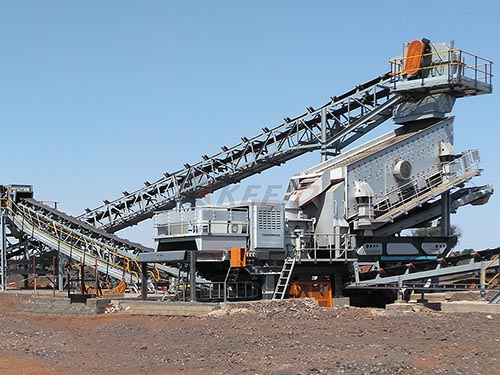
- Process Auditing & Feasibility: Detailed consultation with the client’s process engineers to define objectives constraints capacity PSD targets etc Often involves testing samples in pilot-scale mills at the manufacturer’s facility
- Conceptual & Basic Engineering: Development of preliminary flow sheets mechanical layouts performance guarantees specifications sheets PIDs
- Detailed Design & Simulation: Using CAD FEA Finite Element Analysis tools DEM Discrete Element Method simulations model internal charge dynamics predict wear patterns optimize liner life CFD Computational Fluid Dynamics may be used for air-swept designs
- Manufacturing & Quality Assurance: Fabrication under strict quality protocols including material certification non-destructive testing NDT dimensional verification
- Factory Acceptance Testing FAT: Critical step where assembled components are tested before shipment may include no-load run tests alignment checks control system validation
6 Commissioning Support & After-Sales Service On-site installation supervision operator training spare parts strategy condition monitoring recommendations
Economic Considerations
Customization represents an upfront investment but delivers long-term ROI through:
- Reduced specific energy consumption kWh/ton
- Higher throughput capacity
- Lower media consumption rates
- Extended intervals between maintenance shutdowns
- Consistent product quality reducing downstream processing waste
Future Trends in Customization
The frontier of ball mill customization is increasingly digital:
- Digital Twins Virtual models fed with real-time operational data enabling predictive maintenance process optimization without physical intervention
- AI-Driven Optimization Machine learning algorithms analyzing historical operational data recommending optimal operating parameters feed rates media charging schedules
- Advanced Materials Development New composite liner materials offering unprecedented wear resistance lighter weight further enhancing efficiency
Conclusion
Ball mill maker customization is not an optional luxury but a fundamental requirement for modern efficient industrial operations It represents the synthesis of mechanical engineering metallurgy process technology automation into a cohesive optimized system By engaging in this deep collaborative partnership with an experienced manufacturer clients move beyond purchasing mere equipment they invest in a tailored process solution that enhances productivity ensures product integrity provides sustainable competitive advantage Ultimately customized ball milling embodies principle that most effective industrial machinery seamlessly fits unique contours application it serves delivering precision reliability heart material transformation processes
