Ball Mill Design Service: A Critical Foundation for Optimal Comminution and Process Efficiency
The ball mill stands as a quintessential piece of equipment in the comminution circuits of numerous industries, from mineral processing and cement production to the manufacturing of fine chemicals and advanced materials. Its principle is deceptively simple: a rotating cylindrical shell, partially filled with grinding media (balls), imparts kinetic energy to the charge, resulting in impact and attrition that reduce the size of the feed material. However, the journey from this simple concept to a high-performance, efficient, and reliable industrial machine is profoundly complex. This is where a specialized Ball Mill Design Service transitions from a mere consultancy to a critical engineering partnership, fundamentally impacting the profitability, safety, and longevity of an operation.
A comprehensive Ball Mill Design Service is not merely about selecting a standard machine from a catalog. It is an integrated, multi-disciplinary process that translates ore characteristics and production targets into a meticulously engineered system optimized for its specific duty. This service encompasses everything from initial feasibility studies and fundamental calculations to detailed mechanical design, auxiliary system integration, and operational support.
1. The Core Pillars of a Professional Ball Mill Design
A robust design service is built upon several interconnected pillars, each requiring deep expertise.
A. Ore Characterization and Testwork
This is the non-negotiable starting point. You cannot design what you do not understand. The physico-chemical properties of the feed material dictate every aspect of the mill design.
- Grindability: Tests like the Bond Ball Mill Work Index (BWi) provide a standardized measure of the ore’s resistance to grinding, which is fundamental for calculating the required motor power.
- Particle Size Distribution (PSD): The target feed size (F80) and desired product size (P80) are critical parameters that influence mill dimensions, media sizing, and circuit configuration.
- Abrasiveness: The mineral composition (e.g., silica content) determines the rate of liner and media wear. The JK Drop Weight Test and Abrasion Index (Ai) tests help in selecting appropriate materials for construction to minimize maintenance costs and downtime.
- Moisture Content and Slurry Rheology: For wet grinding applications, moisture affects flow characteristics. Understanding slurry viscosity and percent solids is vital for designing discharge systems (grate/pulp lifters) to avoid overgrinding or discharge problems.
B. Process Engineering Calculations
Using the data from characterization, process engineers perform critical calculations to define the mill’s core parameters:
- Power Draw: Using established models (Bond, Morrell’s Power Model), engineers calculate the gross and net power required to achieve the target grind. This directly dictates the size of the motor and gearbox.
- Mill Sizing: Determining the optimal length-to-diameter (L/D) ratio is crucial. A higher L/D ratio promotes a more plug-flow regime suitable for finer grinding, while a lower ratio is often used for coarse grinding. Internal diameter and effective grinding length are calculated to provide sufficient residence time for particle breakage.
- Critical Speed Calculation: The mill’s rotational speed is expressed as a percentage of its “critical speed” –the speed at which centrifugal force pins the media to the shell lining. Operating typically between 65% and 80% of critical speed ensures an effective cascading or cataracting motion of the charge.
- Charge Dynamics Optimization: This involves calculating:
- Media Fill Level: The volumetric filling of balls in the mill (usually 25-35%).
- Media Sizing & Composition: A blend of ball sizes (e.g., 80mm, 50mm, 30mm) is often required to effectively break down different particle sizes within the mill. The choice between high-chrome steel, forged steel, or ceramic media depends on abrasion/corrosion concerns.
C. Mechanical Design Integrity
The process design sets the targets; mechanical engineering makes them physically realizable under harsh operating conditions.
- Shell & Head Design: Finite Element Analysis (FEA) is employed to model stress distributions under static (self-weight) and dynamic (rotating charge) loads. This ensures structural integrity over decades of service.
- Trunnion Design: The trunnions are critical components acting as both bearings and feed/discharge conduits. Their size, material (often steel castings), and machining tolerances must be precise to handle immense loads without failure.
- Liner System Design: Liners protect the shell and transmit energy to the charge. Their profile (e.g., wave, step, rib) significantly influences charge trajectory and grinding efficiency. Modern design services use Discrete Element Method (DEM) modeling to simulate charge motion with different liner profiles before fabrication.
- Drive System Selection: Engineers evaluate various drive systems—Gear & Pinion drives for smaller mills or Girth Gear & Pinion drives for large mills—and compare them with advanced solutions like Central Drive/Side Drive with wrap-around motors based on torque requirements, efficiency goals,and maintenance philosophies.
2.The Deliverables: From Blueprint to Operational Reality
A professional design service provides a complete package that enables procurement,fabrication,and commissioning:
- Process Flow Diagrams (PFDs) outliningthe entire grinding circuit.
- Piping & Instrumentation Diagrams(P&IDs) detailing all componentsand control loops.
3.Detailed General Arrangement(GA) drawings showing overall dimensionsand layout
4.Comprehensive fabrication drawingsfor themill shellheads trunnionsand liners
5.Billof Materials(BOM) listing all required materialscomponentsand specifications
6.Foundation load drawings specifyingall dynamicand static loadsfor civil engineeringdesign
3.The Tangible Value Proposition: Why Invest ina SpecializedDesignService?
The upfront investmentin athoroughdesignservicepaysdividendsthroughoutthemill’sentirelifecycle
Risk Mitigation
The primary valueis risk reduction An improperly designedmillcanleadto catastrophicfailures suchas trunnionbreakageor shellcrackswhichresultin monthsofdowntimeand millionsin lostrevenueandrepaircosts AprofessionaldesignvalidatedthroughFEAensuresstructuralreliability
Optimized Operational Expenditure(OPEX)
An optimizedmillconsumeslessenergypertonofgroundproductwhichis themajorsourceofOPEXincomminutionPrecisechargemodelingandefficientlinerdesignsdirectlytranslateto lowerpowerdrawFurthermorecorrectmediaselectionandreliablelinerdesignsextendwearlife reducingmedia consumptionandlinerchangeoutfrequency
Enhanced Product QualityandCircuit Stability
Awell designedmillproducesaconsistentproductsizewithminimalovergrindingThis stabilityhasarippleeffectondownstreamprocessessuchasflotationorreachingimprovingoverallplantrecoveryandreducingreagentconsumptionItpreventsthegenerationoffines slimes thatcanhinderfiltrationorseparationprocesses
Operational FlexibilityandFuture Proofing
AgooddesignconsidersfutureneedsItmayincorporatethecapacityforamoderatemotorpowersurgeorallowforchangesinlinerdesignstoaccommodatevariationsinorehardnessovertimeThisflexibilityprotectsthecapitalinvestmentagainstchangingoperationalparameters
4.EvolutionofDesignServices:TheDigitalTransformation
Modernballmilldesignhasbeenrevolutionizedbydigitaltools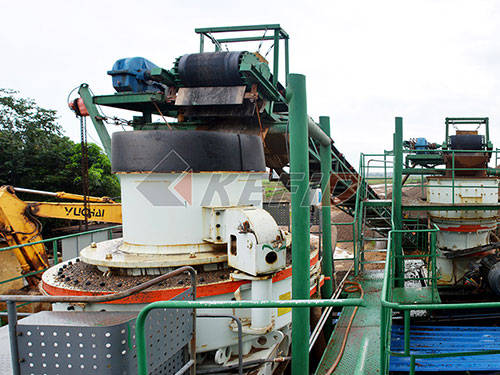
- DiscreteElementModeling(DEM): DEMsoftware simulates themotionofeveryparticleandballinthe millprovidingavisualandquantitativeunderstandingofchargetrajectory wearpatterns energyimpactzonesandthroughputThisallowfordigitalprototypingoflinerprofilesandspeedoptimizationbeforeanymetaliscut
FiniteElementAnalysis(FEA): Asmentioned FEAisnowstandardpracticeforvalidatingthestructuralintegrityofallmajorcomponentsundercomplexloadingconditions
ComputationalFluidDynamics(CFD): Forwetmills CFDcanmodel slurryflow ventilationandheattransferwithinthemill ensuringefficientdischargeandtemperaturecontrol
Conclusion
In conclusionaBallMillDesignServiceisfar morethananengineeringexercise itisastrategicinvestmentthatlaysthefoundationforadecades longoperationalasset Inthehighstakesworldofmineralprocessingwheremarginsaretightandefficiencyisparamountthedecisiontoskiparigoroustechnically sounddesignprocessinfavorofa”standard”solutionprovestobeafalseeconomyThesynergybetweenadvancedorecharacterization preciseprocesscalculations robustmechanicalengineeringvalidatedbystate oftheartdigitaltoolsdeliversamillthatnotonlymeetsitsspecificationsbutdoesso safely efficiently andreliablymaximizingreturnoninvestmentthroughoutitsentireoperatinglife
