
In the high-stakes world of large-scale gold mining, efficiency and throughput are paramount. A 500-ton-per-hour (TPH) gold mining washing plant represents a significant capital investment aimed at processing vast quantities of alluvial or eluvial material to maximize gold recovery. The term “price” for such a project is not a single figure but a complex summation of numerous variables, from the core equipment and assembly to site-specific logistics and operational readiness. This article provides a detailed, objective breakdown of the factors influencing the total cost of establishing a 500 TPH gold washing plant assembly.
Before delving into costs, it is crucial to understand the plant’s function. A “washing plant” in gold mining typically refers to a facility designed to process unconsolidated, free-milling gold-bearing material, such as that found in riverbeds (alluvial) or weathered slopes (eluvial). The primary goal is to liberate gold particles from the clay, sand, and gravel that encapsulate them.
The process generally involves:
A 500 TPH capacity signifies an industrial-scale operation capable of processing 12,000 tons of material per day (assuming a 24-hour operation), requiring robust machinery and substantial infrastructure.
The price tag for a complete 500 TPH assembly plant can range dramatically from $2 million to $10+ million USD, with highly customized or advanced setups exceeding this range. This variance stems from several key cost centers.
1. Core Processing Equipment Costs
This forms the heart of the capital expenditure. For a 500 TPH plant, equipment must be heavy-duty and built for continuous operation.
2. The “Assembly Plant” Concept: Modularity vs. Fixed Structure
The term “assembly plant” often implies modular construction.
The cost difference lies in the engineering design; modular plants often have a higher upfront equipment cost but lower installation costs.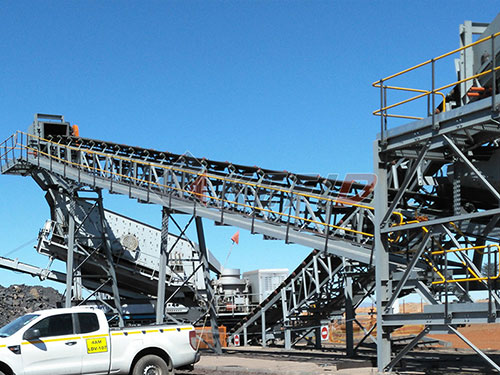
3. Assembly, Installation & Commissioning
The price of equipment is only part of the story. Assembling it into a functional plant incurs substantial additional costs.
Total assembly and commissioning costs can easily reach 30% to 60% of the total equipment cost.
4. Ancillary Systems & Infrastructure
A washing plant cannot operate in isolation.
1。 Material Characteristics (Feed Type): Hard,cemented gravel requires more powerful scrubbing than soft clay。 The presence of heavy minerals (”black sands”) may necessitate more complex concentration circuits。
2。 Gold Particle Size & Distribution: Fine,”flour” gold is notoriously difficult to recover和may require additional equipment like flotation cells, drastically increasing costs。
3。 Location & Logistics: Remote sites incur higher transport costs for equipment和fuel。 Labor availability和costs vary globally。 Environmental regulations can mandate expensive containment和water treatment systems。
4。 Level of Automation: A basic manually controlled plant is cheaper than one with a full PLC (Programmable Logic Controller) system, sensors,and remote monitoring capabilities。
5。 New vs。 Used Equipment: While used equipment can reduce initial outlay by 30-50%, it carries risks of downtime,hidden repair costs,and lower energy efficiency。
Focusing solely on an advertised “assembly plant price” is misleading。 For any serious investor considering a project as substantial as installing an efficient washing facility capable at handling up-to date technology standards within today’s market conditions—the real metric should be Total Project Cost which includes:
Therefore while you might procure core processing units within certain budget parameters around few millions dollars range—the true investment required before first ounce gets poured will likely be multiples higher when accounting all necessary components needed run successfully at scale sustainably over time without compromising safety standards environmental compliance obligations modern industry demands today。
In summary investing into such venture requires meticulous feasibility study comprehensive budget accounting all aforementioned factors rather than seeking simple price list item because success hinges not just on what you buy but how well you integrate into your specific mining operation context
Lorem ipsum dolor sit amet, consectetur adipisicing elit. Consectetur sequi saepe ut sunt eveniet perferendis excepturi, iste obcaecati. Qui tempore hic sed quia soluta obcaecati vel.