The 250-300 TPH Stone Crushing Plant: A Comprehensive Guide for Wholesalers and Customization
In the global construction and infrastructure development sector, the demand for high-quality aggregates is insatiable. At the heart of meeting this demand efficiently lies the medium-to-large-scale stone crushing plant, with production capacities of 250 to 300 tons per hour (TPH) representing a critical sweet spot. For wholesalers, project contractors, and large-scale aggregate suppliers, investing in or sourcing from a 250-300 TPH plant is a strategic decision that balances high output with operational flexibility. This article delves into the technical composition, market rationale, and extensive customization options that define this pivotal class of crushing and screening installations.
Understanding the 250-300 TPH Capacity Tier
A stone crushing plant with a 250-300 TPH output is classified as a medium-large stationary or semi-stationary setup. It is designed for sustained, high-volume production to feed major projects like highways, railways, large commercial complexes, and concrete batching plants serving metropolitan areas.
- Scale & Significance: This capacity range is substantial enough to justify significant capital investment in durable machinery yet remains manageable in terms of footprint, energy consumption (typically requiring a total connected power of 400-550 kW), and operational complexity compared to mega-quarries. It reliably produces between 2 to 2.4 million tons of aggregate annually (assuming 8,000 operational hours), making it a cornerstone asset for regional aggregate supply.
- Typical Feed & Output: Such plants are engineered to process hard stones like granite, basalt, or river gravel with feed sizes up to 600-750mm. The final products are precisely graded crushed stones—from coarse base materials (e.g., 1½” down) to fine aggregates (e.g., 3/8″, manufactured sand)—essential for various construction specifications.
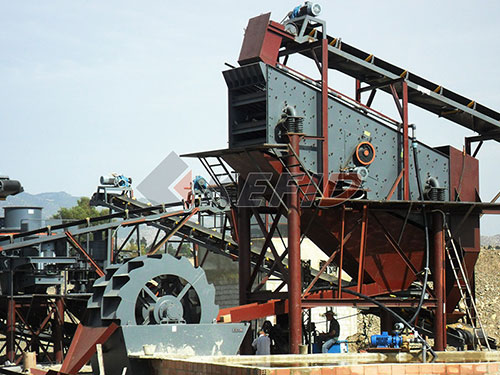
Core Components and Circuit Design
The performance of a 250-300 TPH plant hinges on a robustly designed circuit and correctly sized equipment. A standard three-stage crushing circuit is most common for achieving optimal shape and gradation control.
- Primary Crushing Station: This stage handles the raw, blasted feed. A heavy-duty jaw crusher (e.g., 1200x1500mm) or a gyratory crusher is typical, reducing material to ~200-250mm.
- Secondary Crushing Station: Here, cone crushers reign supreme. One or two units (e.g., mid-range models like the HP300 or equivalent) further reduce the material to ~40-60mm. This stage is crucial for producing cubical particles for asphalt and concrete.
- Tertiary/Fine Crushing Station: For producing high-value chips and sand, vertical shaft impact (VSI) crushers or additional cone crushers are employed. VSI crushers are particularly valued for their superior particle shaping and sand-manufacturing capabilities.
- Screening & Material Handling: Multiple large-screen vibrating screens (usually two or three decks) are the plant’s control center, sorting material into required fractions. Conveyor belts—critical arteries of the plant—must be dimensioned for the high tonnage (widths of 800-1000mm are standard), with proper transfer points and dust sealing.
- Supporting Systems: No plant is complete without:
- Dust Suppression: A comprehensive system combining water sprays at transfer points and potentially a baghouse filter system is mandatory for environmental compliance.
- Power Supply: Often relies on a dedicated high-voltage connection or large-capacity diesel generators.
- Control System: A centralized PLC-based automation system monitors operations, optimizes throughput, and enhances safety.
The Wholesaler’s Perspective: Value Proposition and Sourcing
For wholesalers who supply aggregates or sell complete plants to end-users, the 250-300 TPH segment offers compelling advantages:
- Economies of Scale: Per-ton operating costs (power, labor) decrease significantly compared to smaller (<150 TPH) mobile or portable setups.
- Supply Reliability: The consistent high output allows wholesalers to secure long-term supply contracts with large clients and government projects.
- Market Flexibility: With proper customization (discussed below), one plant can switch between producing different aggregate blends to meet shifting market demands—from road base to concrete aggregates.
- Sourcing Considerations: Wholesalers can source these plants from established global OEMs (Metso Outotec, Sandvik), strong regional manufacturers in Turkey or China offering cost-effective solutions with international component standards.
The Imperative of Customization: Beyond “One-Size-Fits-All”
No two quarries or projects are identical. Therefore, customization is not a luxury but an engineering necessity to maximize return on investment (ROI). Key customization areas include:
- Site-Specific Layout Engineering:
- Plant design must adapt to available space terrain elevation changes feed source location stockpile arrangements
- Modular designs allow sections primary secondary tertiary screening
- Feed Material Adaptation:
- Crusher type selection jaw vs gyratory primary depends rock abrasiveness hardness
- For highly abrasive rock secondary tertiary stages might prioritize robust multi cylinder hydraulic cone crushers over VSI
- Special wear liners metallurgy can be specified extend component life reduce downtime
- Final Product Configuration:
- Number sizing screens deck configurations screen cloth types determine number product grades
- Demand manufactured sand necessitates integrating VSI crusher air classifier dewatering screen produce consistent fineness modulus
- Washing systems log washers sand screws added if clay contamination present requiring clean spec products.

