
In the realm of aggregate production for construction, mining, and infrastructure development, the 250-300 tons per hour (TPH) stone crushing plant represents a critical mid-to-large-scale production benchmark. This capacity range is highly sought after for major road projects, large concrete batching plants, railway ballast production, and commercial quarry operations. Choosing the right supplier and effectively customizing such a plant is not merely a procurement decision but a strategic investment that determines long-term profitability, operational efficiency, and project viability. This article provides a detailed examination of the technical considerations, supplier evaluation criteria, and customization processes essential for deploying a successful 250-300 TPH crushing and screening installation.
A plant in this capacity range is a complex system far beyond a simple collection of machines. It is an integrated material processing circuit designed to receive raw feed (typically run-of-quarry rock up to 600-800mm in size) and transform it into specified, marketable aggregates (e.g., 0-5mm sand, 5-10mm, 10-20mm, 20-31.5mm chips). The core configuration usually involves:
No two projects are identical; hence, off-the-shelf solutions often lead to bottlenecks or underutilization. Customization is the process of tailoring every aspect of the plant to specific project parameters.
Key Drivers for Customization:
Selecting a supplier for such a capital-intensive asset requires rigorous due diligence.
1. Engineering Capability & Technical Support:
A reputable supplier must have in-house engineering teams capable of conducting feasibility studies, providing detailed flow diagrams (PFDs), general arrangement drawings (GAs), and foundation load drawings. They should offer lifecycle simulations using software like Bruno™ or AggFlow™ to predict output gradations and optimize equipment selection before fabrication begins.
2.Core Equipment Manufacturing vs.Trading/Assembling:
Distinguish between manufacturers who produce their own core crushers,screens,and motors versus trading companies that source components globally.The former typically offers better technical synergy,warranty consistency,and direct after-sales support.They control quality from castings to assembly.
3.Portfolio of Reference Projects:
Request detailed case studies of installed plants in similar capacity ranges(250-300 TPH)and material types.A site visit to an operational reference plant is invaluable.It reveals build quality,ease of maintenance,and real-world performance.
4.Supply Chain & Delivery Reliability:
Assess their ability to deliver on schedule.Inquire about their sourcing for critical components(bearings,motors,electric panels).Delays in commissioning can derail entire construction projects.
5.After-Sales Service & Parts Supply Network:
The real test begins post-installation.Evaluate their service network availability:Do they have trained engineers for installation supervision&commissioning?What is their guaranteed response time?Is there a local parts warehouse?Examine their proposed spare parts package list critically.
A successful customization follows structured phases: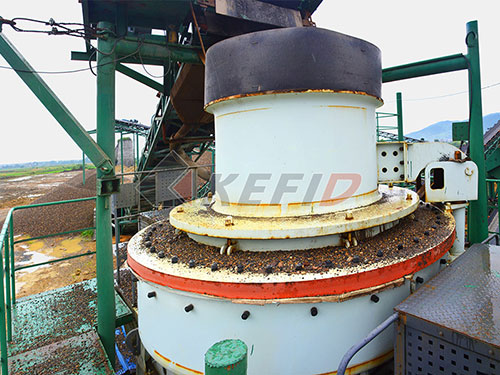
Phase1:Data Collection & Feasibility Analysis
The client provides data on feed material(test reports),required products,site layout drawings,and production goals.The supplier analyzes this data using simulation tools to propose preliminary flow sheets.
Phase2:System Design & Quotation
Based on agreed concepts,the supplier engineers detailed designs.This includes equipment lists with technical specs,material flow diagrams(P&IDs),plant layout in2D/3D,a comprehensive quotation,and proposed project timelines.The contract should clearly define scope,supplier/client responsibilities,warranties(typically12 months on machinery),and performance guarantees(e.g.,output tonnage at specified product gradations).
Phase3:Fabrication & Factory Acceptance Test(FAT)
During manufacturing,the client may conduct progress inspections.Upon completion,a FAT at the supplier’s factory verifies equipment functionality before disassembly for shipping.This minimizes risks during field erection.
Phase4:Erection&Commissioning(E&C)
Supplier engineers supervise local contractors during installation,followed by mechanical&electrical commissioning.Test runs with material calibrate settings.Final performance tests validate contractual guarantees.
Phase5:Training & Handover
Comprehensive operator&maintenance training ensures smooth transition.Final documentation(as-built drawings,O&M manuals,lubrication schedules)is handed over.
Investing in a250-300TPH stone crushing plant is amajor capital decision with decades-long implications.The choice between suppliers should hinge not on price alone but on proven engineering expertise,a commitment to deep customization,and robust lifecycle support.A meticulously customized plant,meticulously matched to its specific material,duty,and site constraints will deliver superior return on investment through higher uptime,better product quality control,and lower cost per ton over its operational life.Ultimately,the most successful projects result from treating the supplier as atechnology partner rather than avendor,fostering collaboration from conceptual design through to long-term operation.This partnership approach ensures that this significant industrial asset becomes acornerstoneof productivityand profitabilityfor years
Lorem ipsum dolor sit amet, consectetur adipisicing elit. Consectetur sequi saepe ut sunt eveniet perferendis excepturi, iste obcaecati. Qui tempore hic sed quia soluta obcaecati vel.