A Comprehensive Guide to 250-300 TPH Stone Crushing Plant: Specifications, Components, and Manufacturer Considerations
In the realm of aggregate production for construction, mining, and infrastructure development, the 250-300 tons per hour (TPH) stone crushing plant represents a critical mid-to-large-scale production solution. This capacity range is highly sought after for major road projects, large concrete batching plants, and significant quarry operations, balancing substantial output with manageable operational complexity. This article provides a detailed, professional examination of the specifications, key components, technological considerations, and selection criteria for plants in this category.
1. Plant Overview and Market Positioning
A 250-300 TPH stationary crushing and screening plant is designed to process hard rocks (such as granite, basalt, river stone) or recycled concrete into specified aggregate sizes—typically from coarse fractions (like 1.5″ to 3″) down to fine aggregates (sand). This output range places it beyond small quarry operations and into the domain of serious contractors and dedicated aggregate producers requiring consistent, high-volume supply.
The “makers” or manufacturers of these plants are typically global heavy machinery giants alongside specialized regional fabricators. Key global players include Metso Outotec, Sandvik Mining and Rock Technology, Terex MPS (Cedarapids), Kleemann (Wirtgen Group), and Thyssenkrupp. Chinese manufacturers like SBM Machinery, Liming Heavy Industry (LIMING), and Shanghai Dongmeng have also gained significant market share by offering cost-competitive solutions.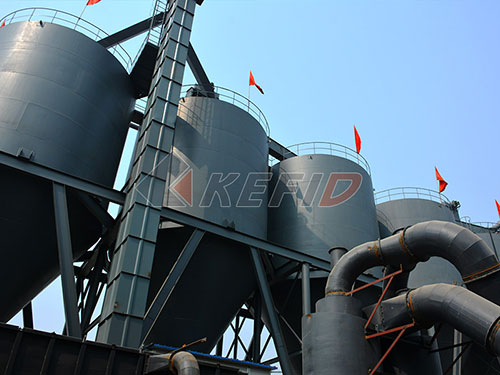
2. Core Specifications & Performance Parameters
While specific configurations vary, a standard 250-300 TPH plant must meet certain performance benchmarks:
- Throughput: The defining specification is the ability to process 250 to 300 metric tons of material per hour under standard conditions. This is measured with a defined feed material hardness (e.g., Wiener index Ai > 0.3), size (typically max feed size of 500-750mm), and moisture content.
- Final Product Sizes: Capable of producing 3-5 different calibrated products simultaneously (e.g., 0-5mm manufactured sand, 5-12mm chips, 12-20mm aggregate).
- Power Requirement: Total installed power typically ranges from 350 kW to 550 kW, depending on the circuit design and automation level.
- Plant Footprint: A modular layout may occupy approximately 80m x 100m of leveled ground area, accounting for stockpiles.
- Operational Staff: Can be managed by a crew of 3-5 persons in a well-automated setup.
3. Detailed Breakdown of Key Components & Configuration
The plant’s configuration is paramount to achieving the target specification. The classic three-stage crushing circuit is most common for this capacity.
a) Primary Crushing Station:
- Crusher Type: Jaw Crusher or Gyratory Crusher.
- Jaw Crusher Specification: A robust jaw crusher with a feed opening of approximately 1200mm x 900mm or larger (e.g., C120/C125 series). It should handle feed sizes up to ~750mm.
- Gyratory Alternative: For abrasive rock or higher throughput demands in the upper range (>280 TPH), a small gyratory crusher offers lower wear cost per ton.
- Feeder: A heavy-duty vibrating grizzly feeder (VGF) with dimensions around 1500mm x 4500mm. It scalps off fine material before the primary crusher to improve efficiency.
b) Secondary Crushing Stage:
- Crusher Type: Cone Crusher is standard.
- Specification: One large or two medium-sized cone crushers with high-performance hydraulics for automatic setting adjustment and clearing. Models like an HP300 or equivalent are typical. Key features include constant liner cavity performance and advanced crushing chamber designs.
c) Tertiary/Fine Crushing & Sand Making Stage:
- Crusher Type: Cone Crushers for cubical aggregate shaping or Vertical Shaft Impactors (VSI) for high-quality manufactured sand production.
- VSI Specification: A VSI crusher with a dual motor drive up to ~400 kW can reshape aggregates and produce premium sand by rock-on-rock or rock-on-anvil principles.
d) Screening System:
This is the brain of product classification. For this capacity:
- A multi-deck primary screen (~2.4m x 6m) after secondary crushing.
- Secondary/Tertiary screens (~2m x 6m) in closed circuits with cone crushers.
- High-frequency screens for dewatering and precise sand grading.
- Screens must be sized for efficiency; total screening area often exceeds 40 m².
e) Conveying System:
A network of heavy-duty belt conveyors with widths from 800mm to 1200mm, speeds around ~1.6 m/s, and capacities exceeding rated plant throughput by ~20% to handle surges.
f) Electrical & Control System:
A centralized PLC-based control panel with SCADA interface is essential. It provides:
- Sequential start/stop with interlocking.
- Real-time monitoring of power draw, pressures, temperatures.
- Remote control capability from an operator cabin.
- Fault diagnostics and production data logging.
4. Critical Technological & Design Considerations
Beyond basic components:
- Automation & Optimization: Modern plants incorporate crusher automation systems like ASRi™ (Sandvik) or IC™ (Metso), which optimize CSS based on load to maximize throughput while protecting machinery.
- Dust Suppression & Environmental Compliance: A comprehensive system including water spray nozzles at transfer points and baghouse filters for enclosed zones is mandatory in most regions.
- Mobility vs. Stationary Design: While most plants are stationary foundations in quarries; some makers offer semi-mobile skid-mounted modules that can be relocated within a large site using transport crawlers—a significant consideration for phased mining operations.
- Energy Efficiency: Variable Frequency Drives (VFDs) on major motors can lead to substantial power savings by matching motor speed to actual load demand.
5. Selection Criteria: Evaluating Plant Makers
Choosing among different manufacturers requires careful evaluation:
- Rock Characteristics Test Data: Reputable makers will request samples for crushability testing before finalizing recommendations—avoid those who do not ask about your specific material properties such as abrasion index (
Ai), silica content (SiO2), moisture content etc..
2 .Total Cost Of Ownership(TCO): Look beyond initial capital expenditure(CAPEX). Evaluate projected wear part costs(liner life expressed in tons produced per set ), energy consumption figures ,and availability/spare parts logistics .
3 .Reference Projects : Request contactable references operating similar configurations under comparable conditions .
4 .After-Sales Support Structure : Assess local service engineers availability ,training programs offered ,and warranty terms covering both parts&labor .
5 .Flexibility Of Design : Can configuration adapt if future product mix requirements change? Is there room within design envelope upgrade certain components?
In conclusion,a well-specified250–300TPH stone crushing plant represents sophisticated integration mechanical engineering,material science,and process control technologies.It transforms raw blasted rock into precisely graded commodities fundamental modern civilization’s built environment.Selecting right maker involves rigorous technical due diligence focusing long-term reliability,efficiency,and adaptability rather than just sticker price alone.The investment made here will determine profitability sustainability aggregate production business years come making informed choice absolutely paramount success any large-scale operation today’s competitive market landscape
