The 250-300 TPH Stone Crushing Plant: A Cornerstone of Modern Aggregate Production
In the realm of industrial-scale aggregate production, the 250-300 tons per hour (TPH) stone crushing plant stands as a definitive benchmark. It represents the sweet spot for medium-to-large scale operations, balancing substantial output capacity with manageable capital investment and operational complexity. This detailed exploration delves into the technical specifications, core components, operational considerations, and strategic importance of these plants, which serve as the backbone for infrastructure projects worldwide.
1. Defining the Scope and Strategic Significance
A 250-300 TPH crushing plant is a semi-fixed or stationary installation designed to process hard rock (granite, basalt) or softer materials (limestone, sandstone) into specified aggregate sizes—from coarse base materials (e.g., 1.5” down) to fine manufactured sand (0-5mm). This capacity range is strategically significant for several reasons:
- Project Scale Alignment: It perfectly matches the material demands of major infrastructure projects such as highway construction, large residential/commercial developments, railway ballast production, and ready-mix concrete plants supplying city-scale needs.
- Economic Viability: It offers a high return on investment by producing a large volume of saleable product while remaining within a capital expenditure range that is accessible to established contracting firms and dedicated aggregate producers.
- Operational Efficiency: Plants of this size are typically automated and incorporate multiple crushing stages, optimizing yield and product cubicity while controlling fines generation.
2. Core Components and Plant Configuration
A 250-300 TPH plant is not a single machine but a sophisticated system engineered for sequential size reduction. The typical configuration involves three or four stages of crushing.
a) Primary Crushing Station:
- Equipment: A robust jaw crusher or a large-capacity gyratory crusher.
- Specification: For 300 TPH hard rock, a primary jaw crusher would typically be in the range of 1,200mm x 900mm (48”x36”) or larger. Its function is to receive dump truck-fed boulders up to ~800mm in size and reduce them to ~150-200mm.
- Feeding: Accompanied by a heavy-duty vibrating grizzly feeder (VGF), which scalps off fine natural material before the crusher and ensures steady, controlled feed.
b) Secondary Crushing Stage:
- Equipment: One or two cone crushers are standard here.
- Function: Receives primary crushed material for further reduction to intermediate sizes (e.g., 40-70mm). Cone crushers are chosen for their ability to provide consistent output and handle abrasive materials. Modern models feature hydraulic adjustment and clearing systems for quick product size changes and tramp iron protection.
c) Tertiary/Fine Crushing Stage:
- Equipment: High-speed cone crushers configured for finer settings or vertical shaft impactors (VSIs).
- Critical Role: This stage shapes the final product. Cone crushers produce well-graded chip-like aggregates. VSIs are indispensable for producing high-quality, cubical manufactured sand (“M-sand”) by employing a rock-on-rock or rock-on-anvil crushing principle.
d) Screening and Material Handling:
This is arguably as crucial as crushing itself.
- Vibrating Screens: Multiple decks of heavy-duty screens (typically 2 or 3 decks) sort material into precise size fractions (e.g., 0-5mm sand, 5-10mm chips, 10-20mm aggregate). For a 300 TPH flow, large screen surfaces (e.g., 2.4m x 6m or larger) are required.
- Conveyor System: An extensive network of belt conveyors—often exceeding hundreds of meters in total length—connects all stages. They must be designed with proper width, speed, and horsepower to handle peak capacities without spillage or bottlenecking.
- Control System: A centralized PLC-based control panel monitors motors, feeders, crusher parameters, and conveyor sequences. Advanced plants feature automated level sensors and interlocks to optimize material flow.
3. Design Considerations & Factory Production
When sourcing from factories specializing in such plants—where Minimum Order Quantities (MOQ) may apply—understanding key design variables is critical:
- Feed Material Characteristics: Hardness (compressive strength), abrasiveness (Silica content), moisture content, and initial feed size dictate equipment selection and liner metallurgy.
- Desired Final Products: The ratio of required products determines the entire plant flow sheet. A need for high sand output mandates a VSI; a need for more coarse aggregates emphasizes cone crushers.
- Plant Layout & Mobility: While often stationary, modular designs on skid-mounted or trailer frames are popular for semi-mobility between large project sites.
- Dust Suppression & Environmental Compliance: Factories must integrate comprehensive dust encapsulation systems at transfer points with spray nozzles; some regions require baghouse filters. Noise enclosures may also be specified.
- Power Requirements: A plant of this capacity is power-intensive, often requiring an electrical supply in the range of 500-700 kVA depending on configuration.
Factories producing these complete plants operate on an engineering-to-order basis within standardized model ranges. The MOQ typically refers to one complete plant unit due to its custom-engineered nature involving significant design work per client specification.
4. Operational Economics & Market Application
The economic justification for investing in a 250-300 TPH plant is compelling: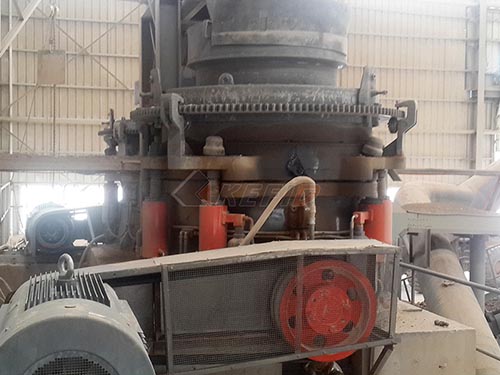
- With an average operational uptime of ~75% (~18 hours/day), daily production can reach ~4,500 tons.
Supplying major infrastructure contracts requires this level of reliable output to meet tight schedules.
It enables economies of scale in labor and energy consumption per ton produced compared to smaller setups.
Key markets include:
- Government-funded road/highway projects
- Large-scale dam construction
- Railway network expansion
- Supply agreements with pre-cast concrete manufacturers
- Commercial quarry operations supplying metropolitan regions
Challenges & Future Trends
Operating at this scale presents challenges:
High initial capital expenditure necessitates thorough feasibility studies
Wear part consumption costs can be significant; thus liner life optimization through proper alloy selection is vital
Skilled maintenance personnel are essential to maintain availability
Future trends shaping these plants include:
Smart automation with IoT sensors monitoring vibration temperature wear allowing predictive maintenance rather than reactive fixes
Hybrid power solutions incorporating solar during daylight hours reducing grid dependency especially in remote sites
Advanced automation software that dynamically adjusts crusher settings based on feed conditions optimizing throughput product shape
Conclusion
The modern stone crushing plant represents far more than simple machinery it embodies integrated process engineering where mechanical design electrical control systems material science converge Its strategic role lies not just breaking rock but reliably manufacturing precisely graded foundational materials upon which global infrastructure depends As technology advances these plants become increasingly efficient sustainable intelligent solidifying their status as indispensable assets within construction mining industries worldwide
