
In the world of aggregate processing, mineral beneficiation, and recycling, the specification of a crushing plant’s capacity is a primary indicator of its scale, intended application, and economic potential. A plant rated at 120 tons per hour (TPH) represents a robust, mid-to-large-scale solution designed for consistent, high-volume production. When this plant is engineered and manufactured by CRIFI Crushing Plant, an established Italian leader in the sector, it embodies a synthesis of European design principles, mechanical reliability, and process efficiency. This article provides a comprehensive examination of a 120 TPH CRIFI crushing plant, delving into its typical configurations, core components, technological integrations, and the diverse industrial applications it serves.
The figure “120 Tons Per Hour” is not merely a marketing term; it is a carefully calculated design output based on specific material and operational conditions. This capacity typically assumes the processing of material with a bulk density of approximately 1.6 tons per cubic meter (e.g., standard granite or limestone) and refers to the final product output after all stages of crushing and screening. It signifies a plant capable of producing around 960 tons in a standard 8-hour shift or nearly 2,900 tons in a 24-hour continuous operation. This level of output is ideally suited for:
Achieving this sustained throughput requires a meticulously balanced system where every component, from feeding to final product stacking, operates in harmony.
A 120 TPH plant is rarely a single machine but an integrated system—a production line. CRIFI specializes in designing these plants in modular formats, allowing for customization based on feed material (hard rock vs. soft stone) and required final products (e.g., base course, chippings, sand). A typical three-stage crushing and screening configuration might include the following key components:
1. Primary Feeding and Crushing Stage:
The process begins with a vibrating feeder (or an apron feeder for heavier, more abrasive material), which regulates the flow of raw material from a hopper into the primary crusher. Its role is crucial: an inconsistent feed leads to inefficiency and potential blockages downstream.
For a 120 TPH hard rock application, the primary crusher is almost invariably a Jaw Crusher. A model like a CRIFI CJ 412 or an equivalent would be selected for its ability to accept large feed sizes (up to 800-1000mm) and reduce them to a manageable 150-200mm product. The robust design of the jaw crusher, with its fixed and movable jaw plates, provides high reliability and high reduction ratio at this first stage.
2. Secondary Crushing Stage:
The output from the primary crusher is conveyed to the secondary crushing unit. This stage is responsible for further refining the material and shaping the aggregate. The most common choice for secondary crushing in such a plant is a Cone Crusher.
A model like a CRIFI CC 200 or similar would be employed. Cone crushers excel at producing well-shaped particles by employing compression crushing within a gyrating mantle and concave liner. For softer materials or when more fines are acceptable, an impact crusher could be used here for its high reduction ratio and excellent cubical shape.
3. Tertiary Crushing and Screening Stage:
This is where precise product sizing occurs. The material from the secondary crusher is sent to one or more vibrating screens. Screens are the control centers of any modern crushing plant; they sort the material by size.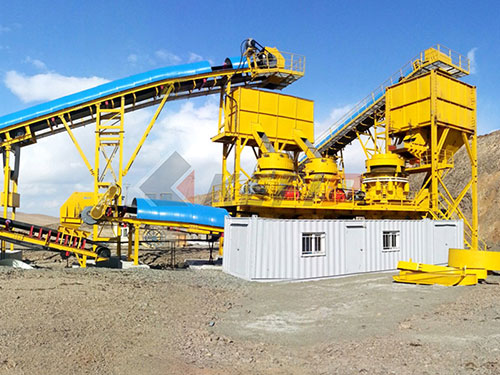
For complex product requirements involving sand production (0-5mm), CRIFI often integrates Vertical Shaft Impactors (VSIs). These crushers utilize a “rock-on-rock” or “rock-on-anvil” principle to fracture stone along its natural cleavage lines, producing high-quality manufactured sand with optimal particle shape—a critical requirement for high-strength concrete.
4. The Conveying System:
A network of belt conveyors acts as the circulatory system of the plant. In modular designs like those from CRIFI conveyors link each stage efficiently while allowing for flexibility in plant layout.
A modern 120 TPH plant cannot operate efficiently on manual control alone. The true value-add from an engineering firm like CRIFI lies in its automation systems.
This level of control ensures that design capacity can be consistently met while maximizing energy efficiency minimizing wear parts consumption reducing operational manpower requirements
While designed primarily for virgin aggregates different configurations allow these plants versatility
1 Hard Rock Quarrying Limestone Granite Basalt For these applications durability wear resistance are paramount Plants feature heavy duty jaw cone crushers manganese steel liners
2 Sand Gravel Pit Processing Naturally rounded gravel softer requires different approach may rely more on screening impact crushing than cone crushing
3 Construction Demolition Waste Recycling A specialized configuration would include powerful electromagnets for ferrous metal removal wind sifters for removing light materials like wood plastic pre screening decks to remove soil
Investing capital expenditure CAPEX into such significant involves careful consideration total cost ownership TCO beyond initial purchase price Key factors include
Conclusion An Integrated Solution For Demanding Markets
CRIFI Ton Per Hour represents sophisticated piece industrial machinery far simple collection individual machines embodies complete process solution engineered deliver consistent reliable output demanding market From rugged mechanical design primary stages precision final sizing screening advanced automation ensures operational stability such stands testament mature well understood field mineral processing Its success field depends not only quality its components but holistic integration them into cohesive efficient production system capable powering infrastructure development resource recovery projects worldwide
Lorem ipsum dolor sit amet, consectetur adipisicing elit. Consectetur sequi saepe ut sunt eveniet perferendis excepturi, iste obcaecati. Qui tempore hic sed quia soluta obcaecati vel.