
In the realms of construction, landscaping, and civil engineering, few materials are as fundamental and widely used as Crusher Run. Known for its versatility and cost-effectiveness, it serves as the unsung hero beneath our driveways, roadways, and building foundations. A question that perpetually arises for professionals and DIY enthusiasts alike is one of basic quantification: How many kilograms are in one cubic meter of Crusher Run? While a single, universal answer is elusive due to the material’s inherent variability, a deep understanding of its composition, compaction factors, and testing standards reveals that a typical conversion falls within the range of 1,400 to 1,600 kilograms per cubic meter (kg/m³).
This article delves into the intricacies of Crusher Run, moving beyond the simple conversion to explore why this range exists, how it impacts practical application, and the engineering principles that make this material a cornerstone of modern infrastructure.
Crusher Run, often referred to as CR-6, Dense Grade Aggregate (DGA), or Quarry Process (QP), is a composite material manufactured from a blend of coarse aggregate (stone) and fine aggregate (stone dust). It is produced in a quarry by crushing gravel or limestone through a mechanical crusher, hence its name. The key to its performance lies in its graded particle size distribution.
When compacted, this combination results in a hard, stable, and semi-permeable surface that is highly resistant to displacement under load. Unlike clean stone, which lacks fines and remains loose, Crusher Run binds together to form a near-monolithic layer.
The conversion from cubic meters (a unit of volume) to kilograms (a unit of mass) is governed by a property known as bulk density. Bulk density is the mass of many particles of a material divided by the total volume they occupy. This total volume includes both the volume of the solid particles themselves and the volume of the voids (air spaces) between them.
For Crusher Run, bulk density is not a fixed number but a variable dependent on several factors:
Understanding this weight-volume relationship is critical for every phase of a project.
A) Estimation and Procurement
For initial budgeting and ordering materials from quarries or suppliers using metric units: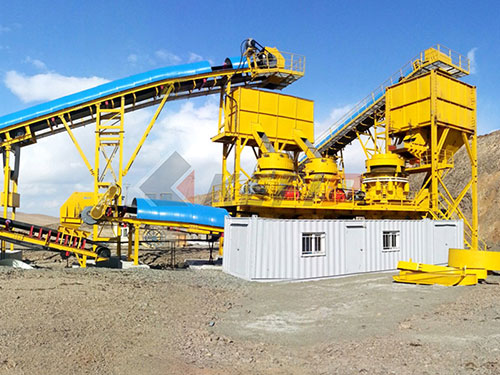
22.5 m³ × 1,500 kg/m³ = 33,**750 kg**1000 kg).
33,**750 kg ÷1000=33.**75 tonnes`It is always prudent to confirm this factor with your supplier before placing an order.
B) Geotechnical Engineering
For engineers designing foundations or pavements using Imperial units like pounds per square foot (psf), understanding this conversion becomes paramount for calculating overburden pressure—the pressure exerted by soil/aggregate layers on underlying strata or structures.
The calculation involves converting cubic yards (yd³) into pounds (lbs). A common industry standard for Crusher Run used in these calculations is approximately 2700 lbs/yd³.
To connect this back:
0.**7646 cubic meters1224.**7 kg1224.**7 kg / 0.**7646 m³ ≈ 1602 kg/m³This demonstrates how an Imperial standard aligns directly with our established range at its upper end (~1600 kg/m³).
The transformation from loose aggregate to stable base course occurs during compaction—a critical step often overlooked by amateurs but meticulously planned by professionals using geotechnical standards like ASTM D698/D1557 (Standard Proctor Test) which determines maximum dry density achievable under controlled conditions along with optimum moisture content required achieving said densities – typically expressed either kN/m³ OR pcf (pounds per cubic foot) where:
Thus if lab tests indicate maximum dry Proctor Density equals say…135 pcf then converting yields:
135 pcf × ~16.**018 ≈ ~2162 Kg/Cubic Meter? Wait! That seems too high!
Herein lies another crucial distinction between absolute particle/solid rock densities versus bulk densities measured including void spaces – Proctor densities represent MAXIMUM achievable field compaction states whereas actual installed product may still contain some residual void space depending upon quality control during placement/compaction operations themselves meaning actual field-measured values will generally be slightly less than laboratory-derived maxima yet still fall comfortably within our previously stated range once fully accounted for all variables involved including water weight etcetera…
The question “How many kilograms are in one cubic meter?” opens a door into applied materials science within civil engineering disciplines where seemingly simple queries demand nuanced answers rooted deeply within principles governing particulate mechanics behavior under varying environmental constraints encountered daily across global construction sites worldwide today tomorrow forevermore until new technologies eventually replace traditional methods altogether someday perhaps but until then knowledge remains power empowering builders designers homeowners alike make informed decisions ensuring safe durable structures stand test time thanks largely part humble yet mighty workhorse known simply as…Crusher Run
Lorem ipsum dolor sit amet, consectetur adipisicing elit. Consectetur sequi saepe ut sunt eveniet perferendis excepturi, iste obcaecati. Qui tempore hic sed quia soluta obcaecati vel.